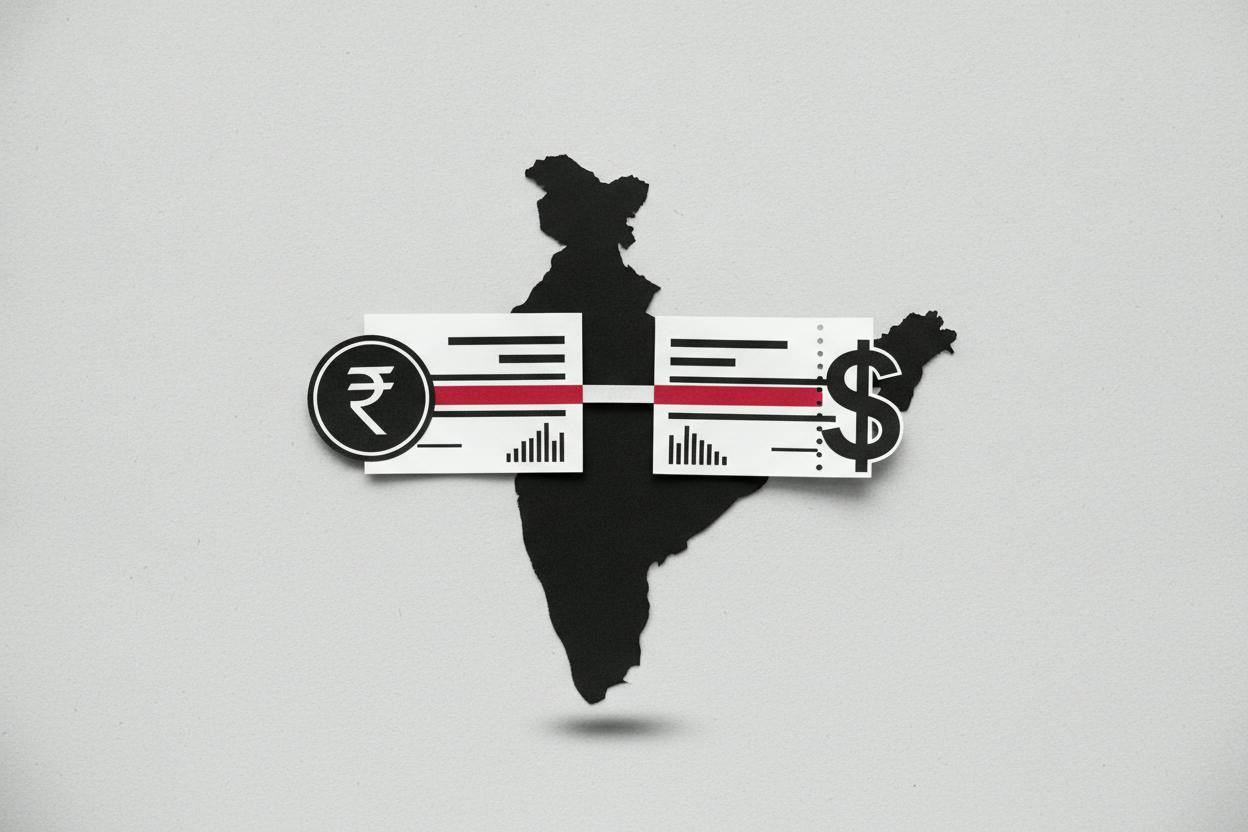
India's financial regulators are weighing a proposal that would allow companies to list two classes of shares: one in rupees on domestic exchanges and another in dollars at GIFT City, the government-backed financial hub in Gujarat. The move, reported by Reuters, is designed to make it easier for foreign investors to buy into Indian companies without having to deal directly with the rupee.
How the dual-listing would work
Under the plan, a company would issue two lines of stock with identical economic and voting rights. The rupee-denominated shares would trade on India's main stock exchanges, while the dollar-denominated shares would trade at GIFT City, which is being developed as an international financial services center. For overseas investors, the dollar line could simplify things: they would avoid the currency conversion and related costs, even though their underlying exposure would still be to the same business.
The proposal is still in the discussion stage, and regulators have not yet set a timeline. But the idea is to solve a classic chicken-and-egg problem: GIFT City needs liquidity to attract listings, but it needs listings to attract liquidity. By letting companies dual-list, the hope is that dollar shares will draw in global capital, which in turn could make the hub more vibrant.
Why GIFT City matters
GIFT City is a key part of India's ambition to become a global financial center, competing with hubs like Singapore and Dubai. It offers tax incentives and a more liberal regulatory regime for international finance. However, since its launch, it has struggled to gain the same traction as established centers. A dual-listing framework could give it a much-needed boost, especially if it attracts large Indian companies that currently list only domestically or choose to list abroad.
The proposal comes at a time when Indian markets have been volatile, with recent Indian stocks slipping from nine-month highs as the global AI trade cools. A more accessible dollar-denominated route might appeal to foreign funds that are cautious about currency risk.
What it means for investors
For everyday investors, the dual-listing plan is unlikely to change much in the short term. If it goes through, it could offer more options for those who want to invest in Indian companies but prefer to hold dollars. It might also increase liquidity in GIFT City, which could lead to better pricing and more efficient markets over time.
However, investors should note that the two share classes would represent the same underlying company, so the performance would be tied to the same fundamentals. The main difference would be the currency in which the shares trade. That means currency fluctuations could affect returns for dollar-based investors, even if the company's business is stable.
The broader context is that India is trying to deepen its capital markets and attract more foreign investment. If the plan succeeds, it could be a step toward making GIFT City a real rival to other international financial centers. But regulatory hurdles remain, and the details—such as how the two lines would interact and whether they would be fully fungible—are still to be worked out.
For now, investors should watch for further announcements from the regulators. The proposal is a sign that India is serious about boosting its financial infrastructure, but it's still early days.