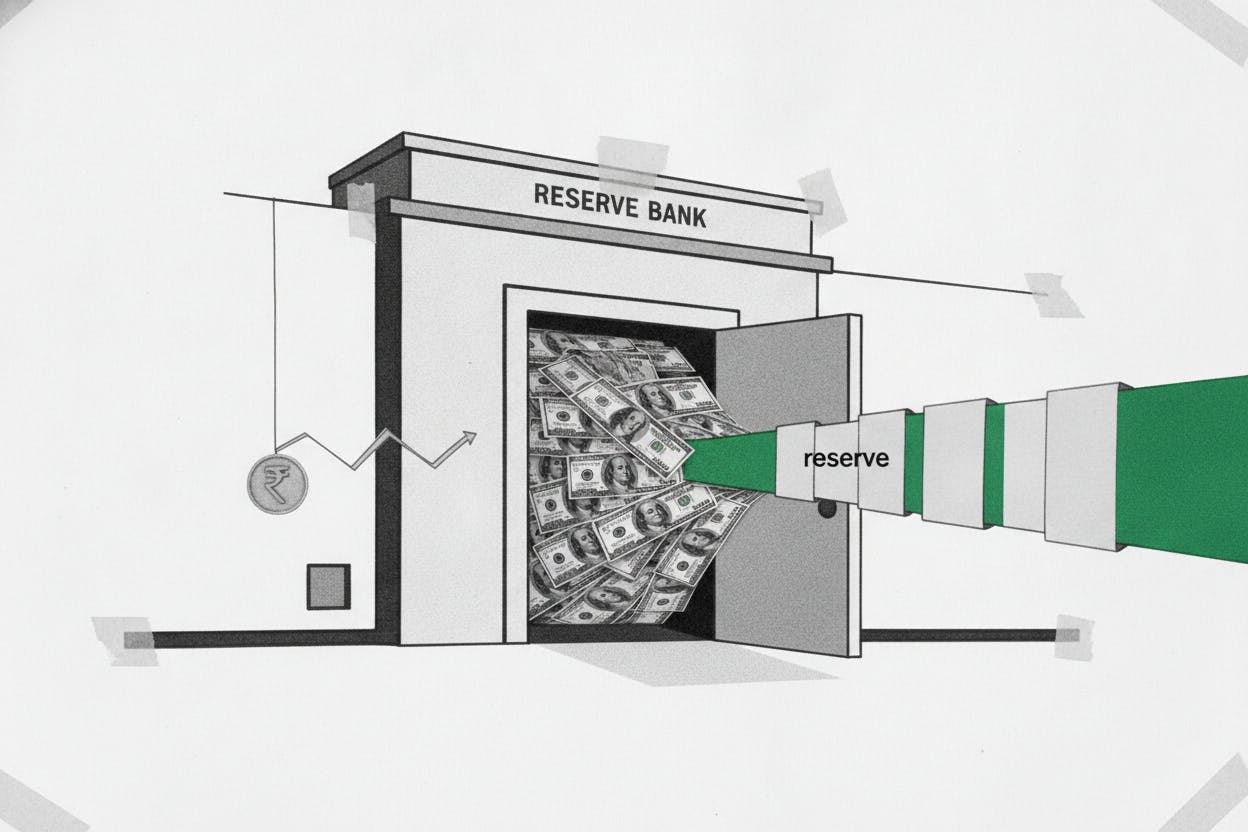
India's foreign exchange reserves rose by $6.1 billion to reach $682.3 billion as of July 24, according to the latest weekly data from the Reserve Bank of India (RBI). The increase was largely driven by a central bank deposit program that attracted roughly $40 billion in fresh dollar inflows.
Foreign exchange reserves are a country's stockpile of liquid foreign assets, such as US dollars, euros, and gold. They act as a financial cushion, helping a central bank pay for imports, service external debt, and intervene in currency markets to manage the exchange rate.
What's behind the climb?
The RBI's deposit drive, which offered attractive rates to banks and overseas investors, brought in a significant amount of dollars. This influx boosted the reserves even as the central bank has been actively selling dollars in the market to prevent the rupee from depreciating too sharply.
The latest weekly increase extends a four-week run of gains that has added roughly $16 billion to the reserves. Most of the rise came from foreign-currency assets, while gold holdings also edged higher. The totals can fluctuate partly because of valuation changes—when the dollar weakens globally, the value of non-dollar assets in the reserves rises.
The rupee has been under pressure this year, trading near record lows against the dollar. The RBI has intervened by selling dollars to smooth volatility, which typically reduces reserves. However, the deposit inflows have more than offset those sales, allowing the reserves to grow.
Why it matters for investors
A healthy level of foreign exchange reserves is a sign of economic resilience. It gives the central bank firepower to defend the currency during turbulent times, which can help stabilize markets and reduce the risk of sudden capital outflows.
For everyday investors, a stronger reserve buffer can mean less volatility in the rupee and in domestic markets. It also supports India's creditworthiness, which can influence borrowing costs for companies and the government.
The RBI's ability to attract dollars through deposit schemes shows that global investors are willing to park money in India, even as the AI trade cools and IT stocks have seen a recent jump. This inflow of foreign capital can also support Indian equities, as seen in recent sessions where foreign inflows lifted Indian shares.
However, the central bank's ongoing dollar sales to support the rupee are a reminder that currency pressures remain. The rupee has steadied near 95.50 as the RBI continues to intervene, and the deposit program is one tool in a broader toolkit.
What to watch next
Investors will be watching whether the RBI extends its deposit drive and how long the reserve buildup can continue. The central bank's next policy meeting and any commentary on currency management will be closely scrutinized.
Also on the horizon are key economic data releases and corporate earnings, which could influence market sentiment. As India's July 31 data and earnings set up a busy day for markets, the focus will be on inflation, industrial output, and company results.
For now, the rising reserves provide a reassuring backdrop. They give the RBI room to manage the rupee without depleting its buffers, and they signal that India remains an attractive destination for foreign capital. But the sustainability of these inflows will depend on global conditions, including the path of US interest rates and the strength of the dollar.
As always, investors should focus on their own financial goals and risk tolerance, rather than reacting to short-term currency or reserve movements. A diversified portfolio that aligns with your time horizon is the best defense against market volatility.