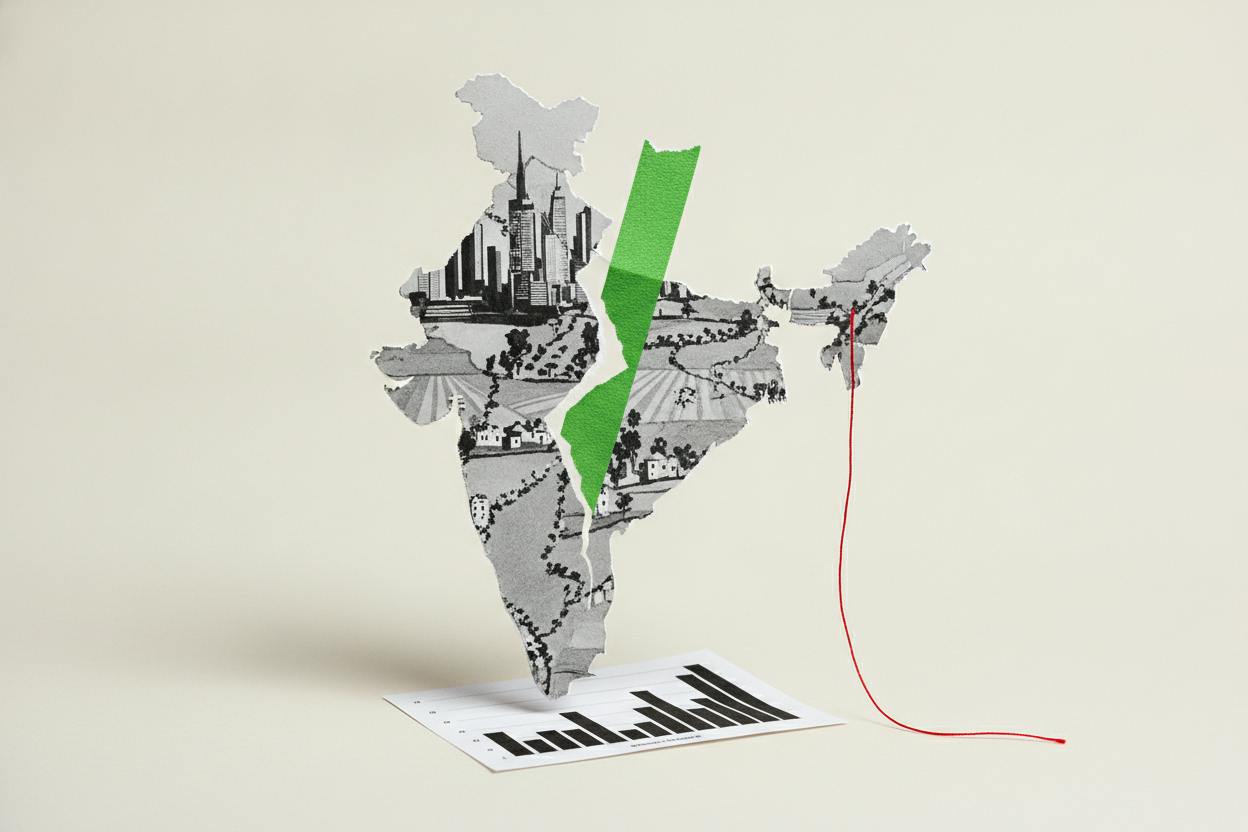
India's unemployment rate fell to 5% in August, the lowest in six months, according to government data cited by Reuters. The improvement was driven by a sharp drop in rural joblessness, even as urban unemployment edged higher, painting a picture of a two-speed jobs market.
The figures, from the National Statistics Office's Current Weekly Status numbers based on the Periodic Labour Force Survey, came in slightly better than economists had expected. A Reuters poll had forecast a rate of 5.2%, while July's reading was 5.1% and February's was 4.9%.
Rural vs. urban: a tale of two job markets
The headline improvement was powered by rural areas, where the unemployment rate fell to 4.1% from 4.5% in July. That suggests farm and rural non-farm work absorbed more workers during the month, possibly helped by seasonal factors such as the monsoon and harvesting activity.
In contrast, urban unemployment ticked up to 6.8% from 6.7% in July. While the increase is small, it points to persistent challenges in cities, where formal job creation often lags behind the number of people entering the workforce.
This divergence matters because India's economy is still heavily dependent on agriculture and rural livelihoods, even as urban centers drive much of its growth. A healthy rural jobs market can support consumption in smaller towns and villages, while urban weakness may weigh on demand for housing, services, and discretionary goods.
Why the jobs data matters for investors
For investors, unemployment is a key gauge of the economy's health. When more people are working, they tend to spend more, which boosts corporate revenues and profits. Conversely, high joblessness can dampen consumer demand and slow economic growth.
The August data suggests the overall jobs picture is stabilizing, but the urban-rural split is a reminder that recovery is uneven. Companies with heavy exposure to rural markets—such as those in fast-moving consumer goods, tractors, and two-wheelers—may benefit from the rural improvement. Meanwhile, businesses reliant on urban discretionary spending might face a more cautious consumer.
It's also worth noting that India's official unemployment figures only capture a narrow slice of the labor market. Many workers are self-employed or in informal jobs, and underemployment remains a concern. So while the headline rate is encouraging, it doesn't tell the whole story.
Broader economic backdrop
The jobs data comes at a time when India's economy is navigating several crosscurrents. Global factors, such as dollar strength and oil prices near four-month highs, are putting pressure on emerging markets, including India. Higher oil prices can stoke inflation and widen the trade deficit, which may influence the central bank's policy stance.
India's central bank, the Reserve Bank of India (RBI), has been managing liquidity and bond yields carefully. Recently, the RBI announced a plan to sell $12 billion in bonds, which pushed the 10-year yield higher. That move is part of the central bank's efforts to manage inflation and support the currency.
On the regulatory front, Indian markets are seeing several developments. For instance, the Securities and Exchange Board of India (SEBI) is considering a new settlement mechanism to reduce volatility in derivatives trading, and there are discussions about a small fee on large UPI payments. These changes could affect market participants and fintech companies.
Investors are also watching the potential IPO of NSE India, which has attracted interest from global asset managers. A successful listing could boost sentiment in Indian equities.
What to watch next
Going forward, investors will be looking at whether the rural improvement is sustainable and whether urban joblessness can be brought down. The government's spending on infrastructure and rural welfare programs could provide support, but structural reforms are needed to create enough formal jobs for the millions entering the workforce each year.
For now, the August data offers a modestly positive signal. But with global headwinds and domestic challenges, the jobs market remains a key metric to monitor for clues about the economy's direction.