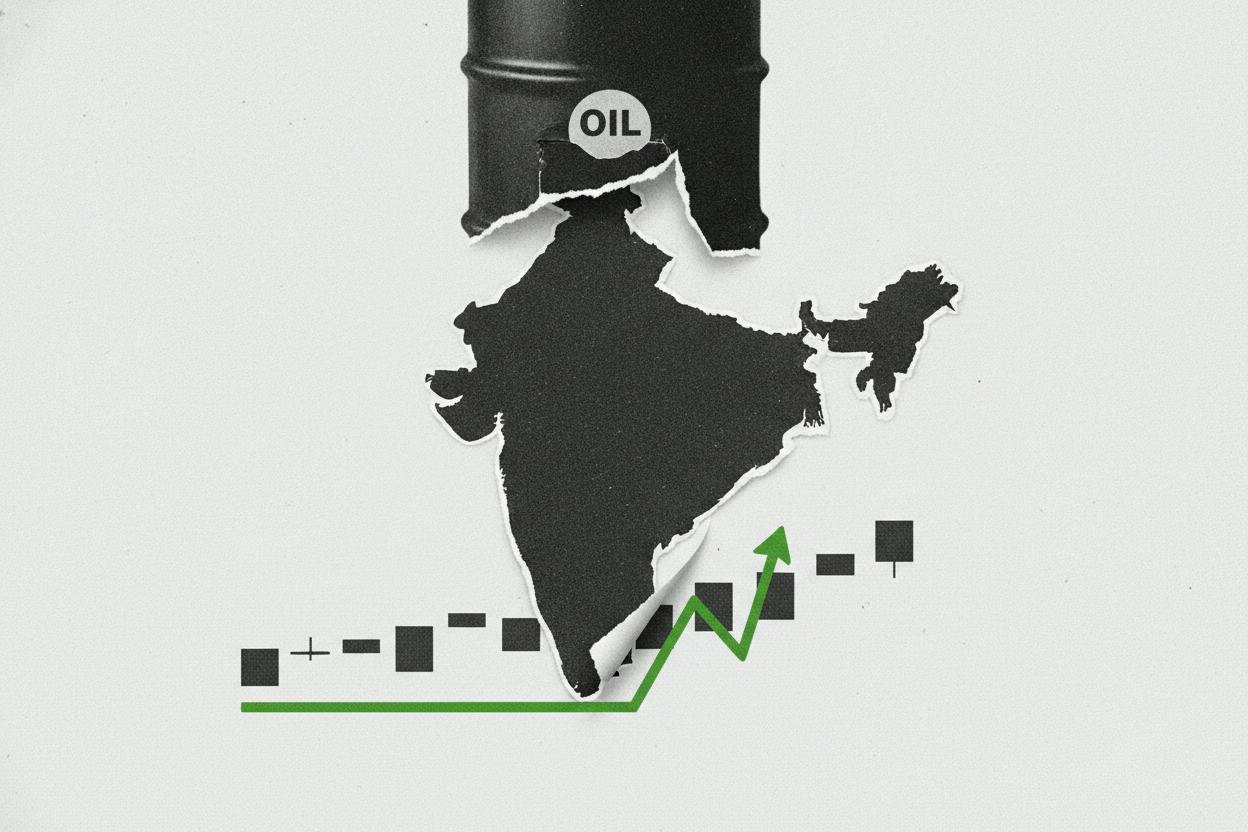
India's two main stock benchmarks, the Nifty 50 and the BSE Sensex, rose about 0.5% in early trading on Wednesday, recovering some ground after hitting a five-month low in the previous session. The bounce, however, was tempered by higher crude oil prices and a sense of caution as investors awaited the U.S. Federal Reserve's latest policy decision.
By 9:21 a.m. IST, the Nifty 50 was up 0.51% to 23,240.6, while the Sensex had gained 0.51% to 74,390.57. All 16 major sectoral indices were trading higher, with small-cap and mid-cap stocks modestly outperforming their larger peers.
Why the rebound?
The uptick comes after a sharp selloff that dragged the benchmarks to levels not seen in five months. Some traders described the market as "oversold," a technical condition that occurs when prices fall too quickly and too far, often prompting a short-term bounce. In such situations, even a small piece of positive news or a pause in selling can trigger a relief rally.
But the gains were not broad-based or forceful. The rise was described by market participants as more of a technical rebound than a sign of renewed conviction. The fact that all sectors were up but only modestly suggests that investors were not rushing back in with confidence.
Crude oil and the Fed overhang
Two key factors are keeping a lid on the rally. First, crude oil prices have been climbing, which is a concern for India, a major oil importer. Higher oil prices can widen the country's trade deficit, put upward pressure on inflation, and hurt corporate margins in sectors like aviation, transportation, and consumer goods. The recent rise in oil prices, partly driven by supply concerns, has been a persistent drag on Indian equities.
Second, all eyes are on the U.S. Federal Reserve, which is set to announce its interest rate decision later on Wednesday. While the Fed is widely expected to hold rates steady, investors will be parsing the accompanying statement and press conference for clues about the future path of monetary policy. A hawkish tone—signaling that rates may stay higher for longer—could strengthen the U.S. dollar and put pressure on emerging market assets, including Indian stocks. Conversely, a dovish stance could provide a boost to risk appetite.
The Fed's decision also has implications for the Indian rupee and foreign capital flows. If U.S. yields remain elevated, foreign institutional investors may continue to pull money out of Indian equities, adding to the selling pressure.
What it means for investors
For everyday investors, the key takeaway is that the rebound, while welcome, is not necessarily the start of a sustained recovery. The market is still navigating a tricky environment of elevated oil prices, global monetary policy uncertainty, and domestic inflation concerns. The "oversold" bounce could easily fizzle out if the Fed surprises to the hawkish side or if oil prices keep climbing.
Investors should watch the Fed's decision and the commentary that follows, as well as crude oil price movements, for near-term direction. Also worth monitoring is the performance of small- and mid-cap stocks, which have been more volatile and could signal whether risk appetite is truly returning.
In the broader context, Indian equities have been under pressure for several weeks, and the current rebound is a reminder that markets rarely move in a straight line. For those with a long-term horizon, such dips can be opportunities to review portfolios, but it's important to stay diversified and not make impulsive decisions based on short-term market moves.
As the day progresses, the focus will shift to the Fed's announcement, and Indian markets will likely take their cue from that. Until then, the bounce remains tentative, and caution is the watchword.