As the Federal Reserve prepares to announce its latest interest rate decision on Wednesday, options markets are flashing a clear signal: investors are increasingly worried about the possibility of a market downturn.
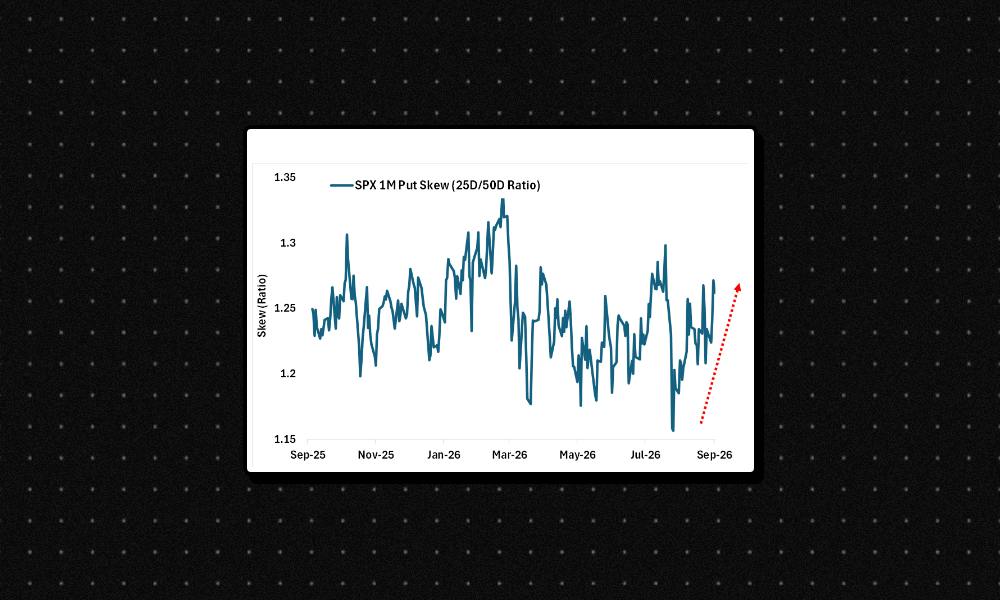
Data from the options market shows that demand for downside protection has picked up sharply in recent days. Specifically, the S&P 500 one-month put skew—a measure of how much investors are willing to pay for insurance against a market fall—has risen. This means traders are paying up for options that would pay off if the index drops significantly.
What is put skew and why does it matter?
To understand what's happening, it helps to know a bit about how options work. A put option gives the buyer the right to sell an asset at a set price within a certain timeframe. It's like an insurance policy: if the market falls, the put increases in value, offsetting losses in a portfolio.
The put skew compares the cost of different types of puts. A 25-delta put is further out of the money—meaning it only pays off if the market drops substantially. A 50-delta put is closer to the current market price and pays off after a smaller decline. When the skew rises, it means investors are paying relatively more for that deeper protection, indicating they're bracing for a potentially larger selloff.
This shift in sentiment began last week, as investors started paying more attention to what could go wrong. The upcoming Fed decision is the focal point, but other factors—such as inflation data, corporate earnings, and global economic concerns—are also weighing on minds.
Why investors are hedging now
The Fed's decision on Wednesday is widely expected to be a key market catalyst. While the central bank has signaled it may hold rates steady, any surprise in the accompanying statement or press conference could move markets sharply. Investors are hedging against the possibility that the Fed sounds more hawkish than expected—perhaps signaling that rate cuts are further off than hoped—or that it expresses concern about inflation or economic weakness.
This cautious mood isn't isolated to the options market. African markets are also watching US yields and oil prices ahead of the decision, reflecting the global ripple effects of Fed policy. Similarly, foreign investors have been shifting from US Treasuries to stocks, which could add to volatility if sentiment turns.
In the broader market, consumer stocks have slipped as patchy retail demand offsets some positive earnings news, and the Bank of France trimmed its 2026 growth forecast to 0.4% as demand cools. These are just a few examples of the mixed signals investors are juggling.
What it means for everyday investors
For the average investor, rising put skew is a sign that professional traders are nervous. But it doesn't necessarily mean you should panic. Markets often price in risks that don't materialize, and hedging activity can be a normal part of portfolio management.
Still, it's a reminder that volatility can spike around major events like a Fed decision. If you have a long-term investment plan, the best approach is usually to stay the course rather than make sudden moves based on short-term market sentiment. Diversification and a clear understanding of your risk tolerance are your best defenses.
If you're considering adding protection to your own portfolio, options can be complex and carry their own risks. It's often wise to consult a financial advisor before using them. But simply being aware that market participants are hedging can help you interpret market moves and avoid being caught off guard.
As the Fed's decision approaches, expect continued attention on the put skew and other sentiment indicators. A sharp move in either direction could follow, but for long-term investors, the key is to focus on your own financial goals rather than the noise of the options market.