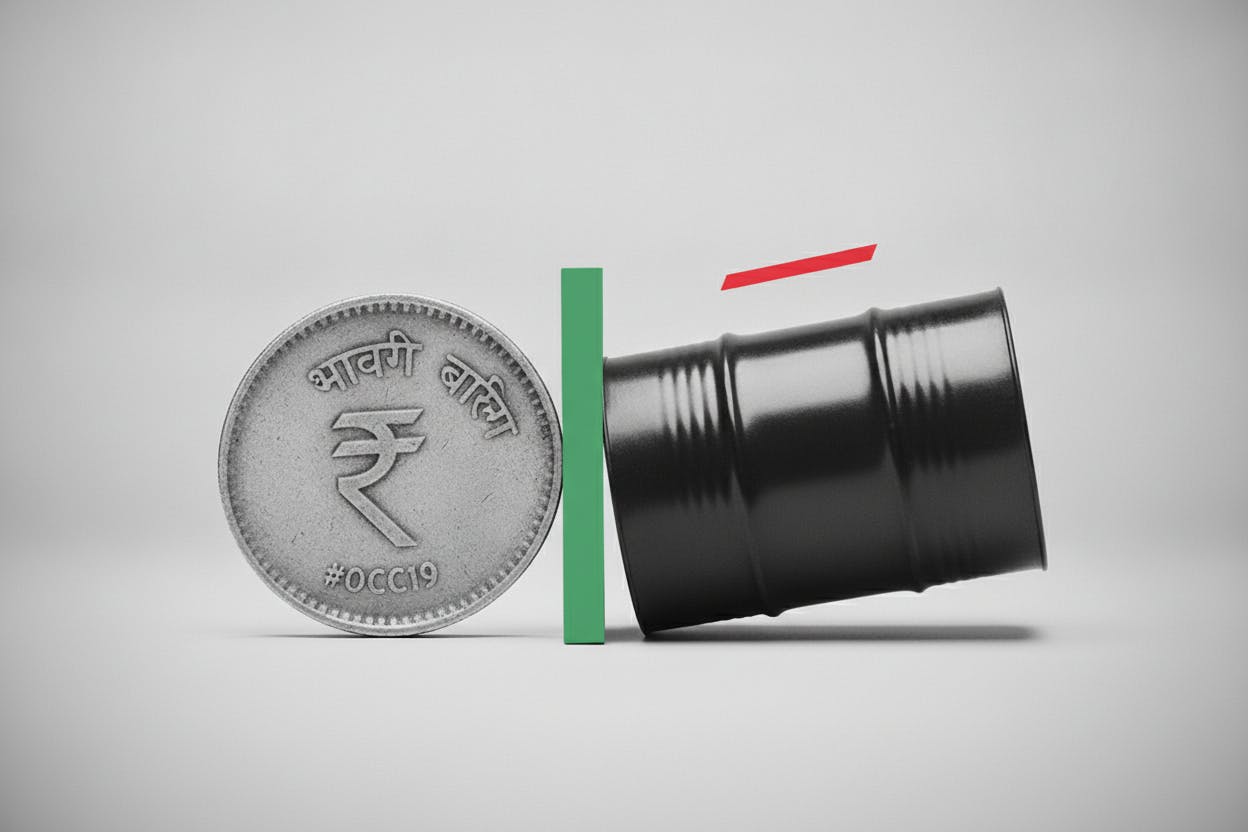
The Indian rupee edged lower on Tuesday, slipping to 95.16 against the US dollar as a fresh flare-up in Middle East hostilities sent oil prices surging nearly 3%. The move underscores the vulnerability of India's currency to global energy shocks, given the country's heavy reliance on imported crude.
Despite the pressure, the rupee's decline was tempered by portfolio inflows and dollar-selling by foreign banks, which helped absorb some of the demand for the greenback. Traders said the Reserve Bank of India may have also stepped in to smooth volatility, though no official confirmation was available.
Why Oil Matters for the Rupee
India imports about 85% of its oil needs, making it one of the world's most energy-dependent large economies. When crude prices jump, Indian refiners and fuel importers must buy more US dollars to pay for the same volume of oil. That extra demand for dollars pushes the rupee lower.
Higher oil prices also widen India's current-account deficit—the gap between what the country earns from exports and pays for imports. A wider deficit typically puts further downward pressure on the currency, as it signals more dollars flowing out than in.
Inflation is another concern. Pricier crude raises the cost of petrol, diesel and other fuels, which feeds into transportation and manufacturing costs across the economy. That can push consumer prices higher, complicating the Reserve Bank of India's efforts to keep inflation within its target range.
What's Driving Oil Higher
The latest spike in oil prices follows renewed tensions in the Middle East, a region that accounts for roughly a third of global crude production. While the brief did not specify the exact trigger, any escalation in the region tends to rattle energy markets because of the risk of supply disruptions.
Brent crude, the international benchmark, rose nearly 3% on the day, adding to gains from earlier in the week. The move also rippled through other markets: European stocks fell, and safe-haven assets like gold saw modest buying.
For India, the timing is tricky. The economy is still navigating uneven global demand and elevated interest rates. A sustained rise in oil prices could squeeze corporate margins, particularly in sectors like aviation, logistics and consumer goods that are sensitive to fuel costs.
What It Means for Investors
For everyday investors, a weaker rupee has several implications. It makes imported goods more expensive, from electronics to machinery, which can feed into inflation. It also reduces the rupee-denominated returns on foreign investments, which matters for anyone holding international stocks or mutual funds.
On the flip side, a weaker rupee can benefit export-oriented sectors like IT services, pharmaceuticals and textiles, since their earnings in dollars become worth more in rupees. However, the net effect for the broader market is often negative when oil spikes, because higher input costs and inflation fears tend to weigh on sentiment.
Indian equities have already been under pressure from rising oil prices. In a related development, Indian stocks fell as the surge in crude raised concerns about import costs and corporate earnings. Bond markets are also feeling the heat: rising oil prices and US yields have weighed on Indian government bonds, pushing yields higher.
What to Watch Next
Investors will be watching for any further escalation in the Middle East, as well as cues from the Reserve Bank of India on its currency management strategy. The RBI has a history of intervening in the forex market to prevent sharp moves, using its foreign exchange reserves to sell dollars and support the rupee.
Portfolio flows will also be key. Foreign investors have been returning to Indian markets in recent weeks, with foreign investors returning to Indian bank stocks after a four-month selloff. Continued inflows could help offset some of the pressure from higher oil prices.
For now, the rupee's path hinges on oil's next move. If crude stabilizes or retreats, the currency could recover some ground. But if tensions escalate further, the rupee may face additional headwinds, testing the 95.50 level and beyond.