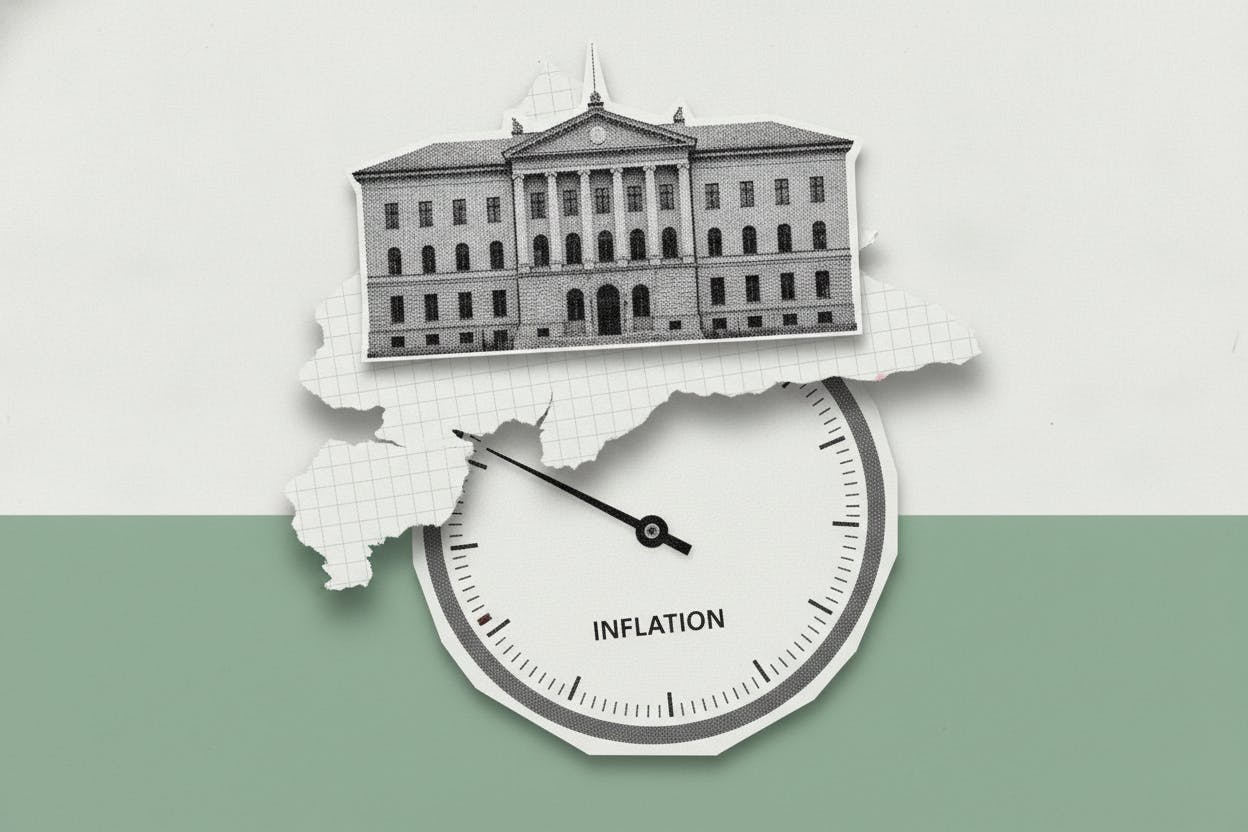
Sweden's central bank is staying patient after the country's preferred inflation gauge cooled again in June, keeping the Riksbank in wait-and-see mode as its August 20th rate decision approaches.
Statistics Sweden's preliminary reading for June showed the CPIF — the consumer price index with fixed interest rates — rose 1.3% year-on-year. That's down from May's pace and slightly above what analysts and the central bank had expected. The CPIF excluding energy, which the Riksbank treats as its key "underlying" measure, came in at just 0.4%.
Lower food prices and transport costs did much of the heavy lifting to cool price pressures. Separate figures showed Sweden's economy grew in May, suggesting demand is improving even as inflation stays muted.
What is CPIF and why does it matter?
The CPIF strips out the effect of changes in the Riksbank's policy rate on mortgage costs, giving a cleaner view of underlying inflation trends. It's the central bank's main target measure. The Riksbank aims for CPIF inflation of 2% over the medium term, so June's reading of 1.3% remains below that goal.
The "underlying" CPIF excluding energy — at just 0.4% — is even more telling. It shows that price pressures outside volatile energy components are very subdued. That gives the Riksbank room to keep rates where they are without worrying about overheating the economy.
What this means for the Riksbank's August decision
The Riksbank has been on a tightening cycle, raising its policy rate to combat inflation that peaked well above target. But with inflation now falling back, the central bank has paused to assess the economic outlook. The June data reinforces that pause.
Analysts widely expect the Riksbank to hold its policy rate steady at the August 20 meeting. The combination of cooling inflation and improving economic growth creates a delicate balancing act: the central bank doesn't want to choke off the recovery by keeping rates too high, but it also doesn't want to cut too early and risk reigniting inflation.
Sweden's economy grew in May, a positive sign after a period of sluggishness. That growth, coupled with low inflation, suggests the Riksbank can afford to wait before making any move.
What it means for investors
For everyday investors, the key takeaway is that Swedish interest rates are likely to stay where they are for now. That has implications for bonds, stocks, and the krona.
- Bonds: With the Riksbank on hold, Swedish government bond yields may remain relatively stable. Investors looking for income from bonds can expect current yields to persist in the near term.
- Stocks: Lower inflation and steady rates are generally positive for equities, especially for companies that rely on consumer spending. Lower food and transport costs could boost margins for retailers and logistics firms. However, the overall economic growth picture is still mixed, so stock gains may be gradual.
- Currency: The Swedish krona has been under pressure against the euro and US dollar. A patient Riksbank may not provide much support for the krona, as higher rates elsewhere continue to attract capital.
Investors should also watch how global factors — such as oil price movements and geopolitical tensions — affect Sweden's inflation outlook. For example, recent oil price surges linked to US-Iran tensions have stirred inflation fears in other economies, as seen in gold price wobbles and Australian stock market reactions. If oil prices spike further, that could eventually feed into Swedish transport costs and push inflation higher, potentially forcing the Riksbank to reconsider its stance.
Similarly, the Reserve Bank of Australia has warned that oil spikes could fuel second-round inflation effects, a risk that also applies to Sweden. For now, though, the data points to a steady hand from the Riksbank.
Bottom line
Sweden's inflation is cooling, the economy is growing, and the Riksbank is in no rush to change course. The August 20 rate decision will likely be a non-event, with rates held steady. Investors should focus on the broader trend: inflation is moving in the right direction, but the central bank will need to see sustained evidence before making any cuts.