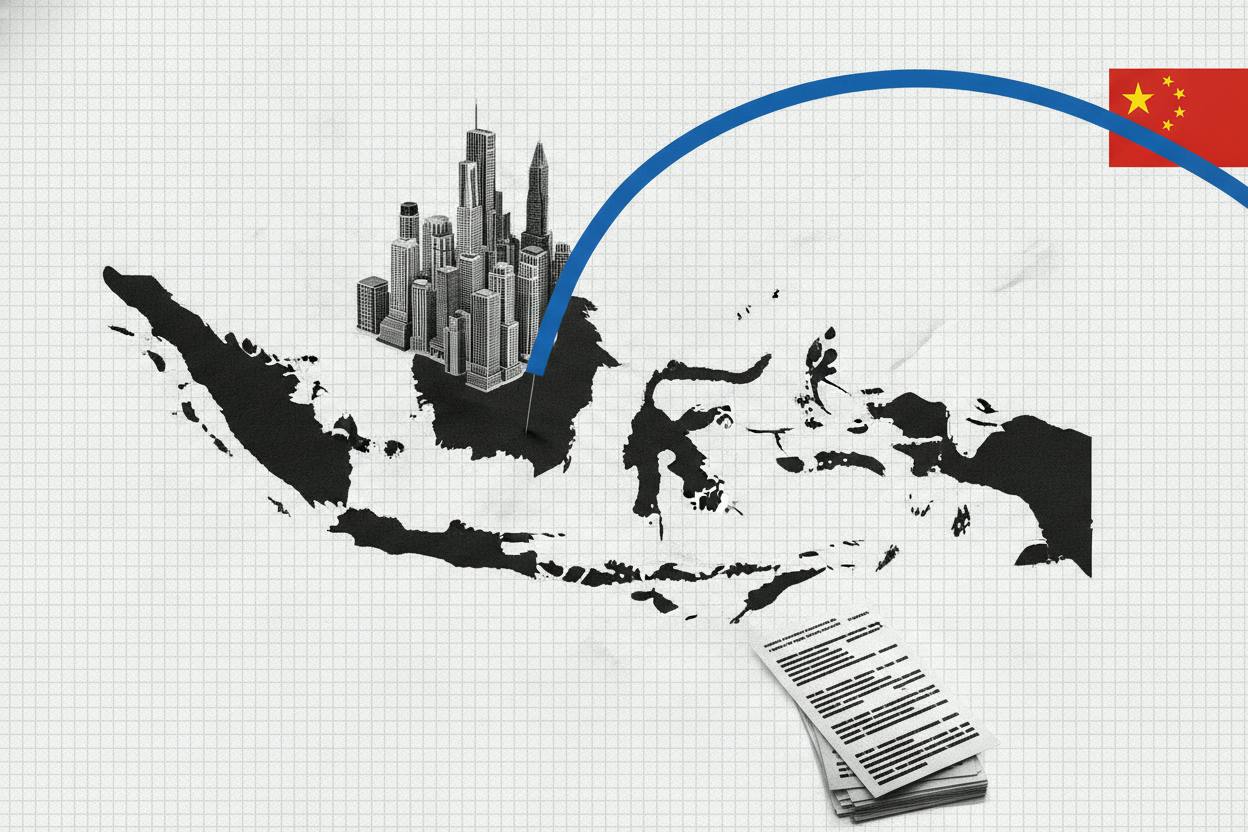
Indonesia and China have deepened their economic ties with the signing of four agreements worth a combined $71.8 billion, led by an ambitious plan to build 10 “smart cities” across the Indonesian archipelago. The deals were signed in China and witnessed by Indonesian President Prabowo Subianto during his visit for the Asia-Pacific Economic Cooperation (APEC) summit.
The largest component is a roughly $50 billion project to develop 10 integrated urban areas, a consortium led by Shaanxi Construction Engineering Group, a major Chinese state-backed construction firm. Danantara, Indonesia’s sovereign wealth fund, is playing a central role in the partnerships. Danantara CEO Rosan Roeslani said work is expected to begin early next year, building on the fund’s plans for self-contained urban zones that bundle housing, campuses, and hospitals.
What are smart cities?
“Smart cities” is a broad term for urban developments that use digital technology and data to improve infrastructure, transportation, energy use, and public services. In this context, the projects are expected to include residential areas, educational facilities, and healthcare centers, all designed to be integrated and efficient. For Indonesia, a fast-urbanizing nation, such developments could help ease pressure on existing cities like Jakarta and spread economic activity to other regions.
The scale of the investment is notable. $71.8 billion is roughly equivalent to 5% of Indonesia’s gross domestic product, underscoring how significant these agreements are for the country’s infrastructure pipeline. For China, the deals reinforce its role as a major investor in Southeast Asia, particularly in construction and digital infrastructure, areas where Chinese firms have deep expertise.
Why this matters for investors
For everyday investors, this news signals a few things. First, it highlights the growing economic relationship between Indonesia and China, which could benefit companies involved in construction, materials, and technology. However, it also carries risks: large infrastructure projects often face delays, cost overruns, and political hurdles. The involvement of a sovereign wealth fund like Danantara adds a layer of state backing, but also means the projects are tied to government priorities.
Investors should also note the broader context. Indonesia has been actively courting foreign investment to fund its infrastructure needs, and China has been a key partner. This deal comes at a time when Bank Indonesia has raised rates to 6% as the rupiah hit record lows, reflecting currency pressures that could affect the cost of dollar-denominated debt and imports. A weaker rupiah makes imports more expensive, which could impact the economics of these projects.
For those with exposure to Indonesian assets, the deals could be a positive signal for long-term growth, but they also underscore the importance of monitoring currency and policy developments. For global investors, this is another example of China’s expanding influence in regional infrastructure, a trend that has implications for supply chains and trade flows.
What to watch next
The key dates to watch are the early 2025 start of construction on the first smart city projects. Investors will be looking for concrete milestones, such as land acquisition, financing details, and the awarding of contracts. The role of Danantara will also be scrutinized, as the fund is relatively new and its ability to manage such large-scale projects is untested.
Additionally, the broader relationship between Indonesia and China will be in focus, especially as China's state buyer tightens its grip on commodity markets, which could affect Indonesia’s exports of coal, nickel, and other resources. Indonesia is a major supplier of these commodities, and any shifts in Chinese demand or pricing could have ripple effects.
For now, the signing of these deals is a headline event that underscores the deepening economic integration between the two countries. But as with any mega-project, the real test will be in execution. Investors should keep an eye on progress reports and any signs of delays or cost overruns, which are common in large infrastructure ventures.
In the meantime, the news adds to a growing list of mega-deals returning across energy and banking, suggesting that global deal-making is picking up pace. For Indonesia, this could be a catalyst for further investment, but it also brings the usual risks of large-scale projects.