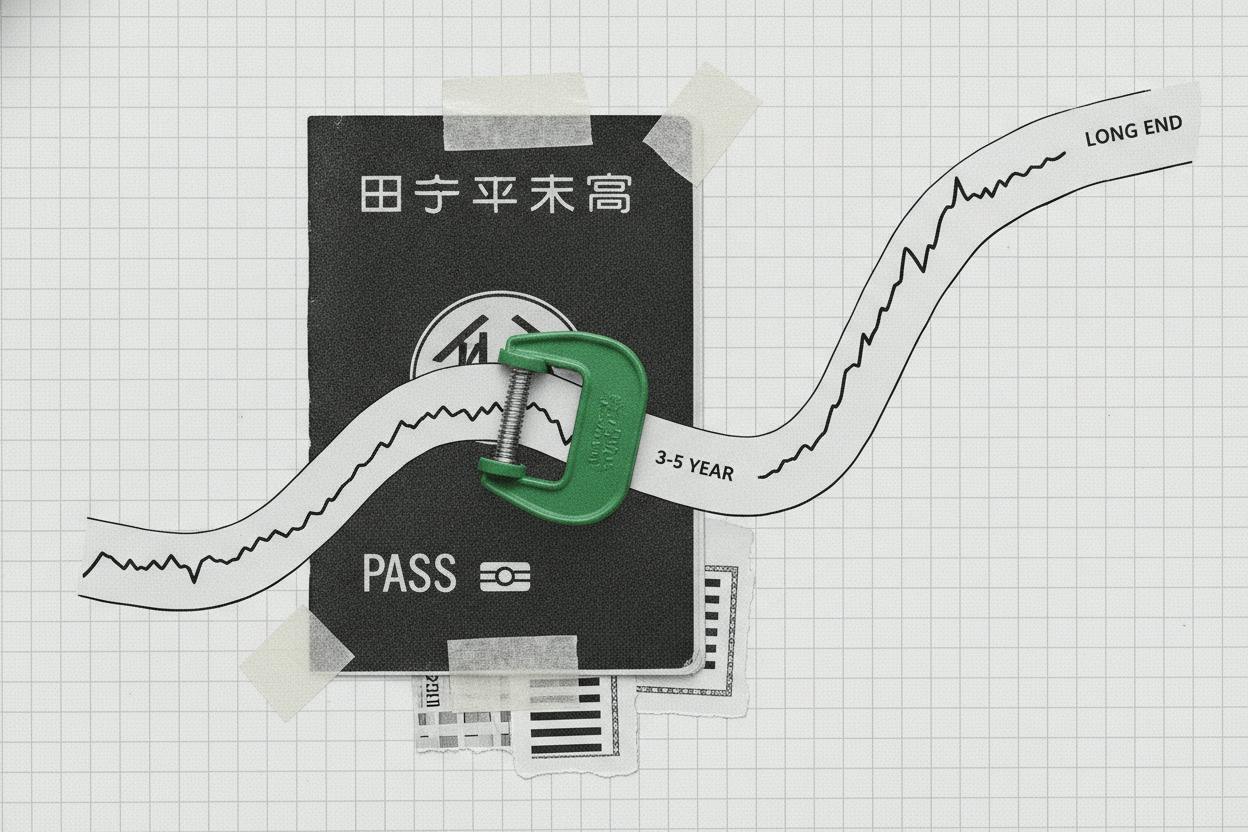
Japan Post Insurance, one of the country's largest institutional investors, says it is finally buying shorter-term Japanese government bonds (JGBs) again. After years of ultra-low and negative yields pushed big money further out along the curve, the firm now sees three- to five-year bonds as offering a worthwhile return.
The shift comes as JGB yields have climbed back to levels not seen in years. With the 10-year yield recently around 2.9%—a level that would have been unthinkable during the Bank of Japan's long yield-curve-control era—shorter maturities are starting to pay enough to attract a giant, risk-averse investor like Japan Post Insurance.
Why this matters
Japan Post Insurance, often referred to as Kampo, manages trillions of yen in policyholder savings. Its investment decisions are closely watched because of its sheer size and its traditionally conservative approach. For years, with short-term rates pinned near zero or below, the firm was forced to stretch into longer-dated bonds and riskier assets to generate income.
Now that yields have risen, the calculus has changed. Three- to five-year JGBs offer a decent yield without the duration risk that comes with 20- or 30-year bonds. For an insurer that needs to match long-term liabilities, this is a meaningful shift in strategy.
The move also signals that Japan's bond market is normalising after decades of central bank dominance. The Bank of Japan ended its negative interest rate policy in 2024 and has been gradually reducing its bond purchases, allowing market forces to push yields higher.
BOJ rate hike expectations
Japan Post Insurance also said it expects the Bank of Japan to raise interest rates again in December and March. That would be a continuation of the BOJ's tightening cycle, which began after years of ultra-loose policy.
If the BOJ does hike as expected, short-term yields could rise further, making the three- to five-year segment even more attractive. But it also means the cost of borrowing in Japan will keep climbing, which could ripple through the economy and corporate earnings.
The firm's view aligns with market pricing, which has been leaning toward further BOJ action. However, the exact timing and size of any hikes remain uncertain, and the central bank has stressed it will be data-dependent.
What it means for investors
For everyday investors, this is a sign that Japan's bond market is becoming more normal. Higher yields on JGBs mean that Japanese savers and institutions can finally earn a meaningful return on government debt without taking on excessive risk.
It also has implications for global markets. Japan is a major holder of foreign bonds, and if domestic yields become more attractive, Japanese investors may repatriate some of their overseas investments. That could affect demand for US Treasuries and other foreign debt.
For those with exposure to Japanese assets, the BOJ's expected rate hikes could strengthen the yen and put pressure on Japanese equities, particularly exporters. But it could also be a sign of a healthier economy, with inflation finally above target and wages rising.
As always, it's important to remember that central bank policy is uncertain. The BOJ could pause or change course if economic data disappoints. But the direction of travel is clear: Japan is moving away from the era of ultra-cheap money.
For now, Japan Post Insurance's move into shorter-term JGBs is a vote of confidence in the new regime. It's a small but telling sign that the world's third-largest economy is adjusting to a higher-rate environment.



