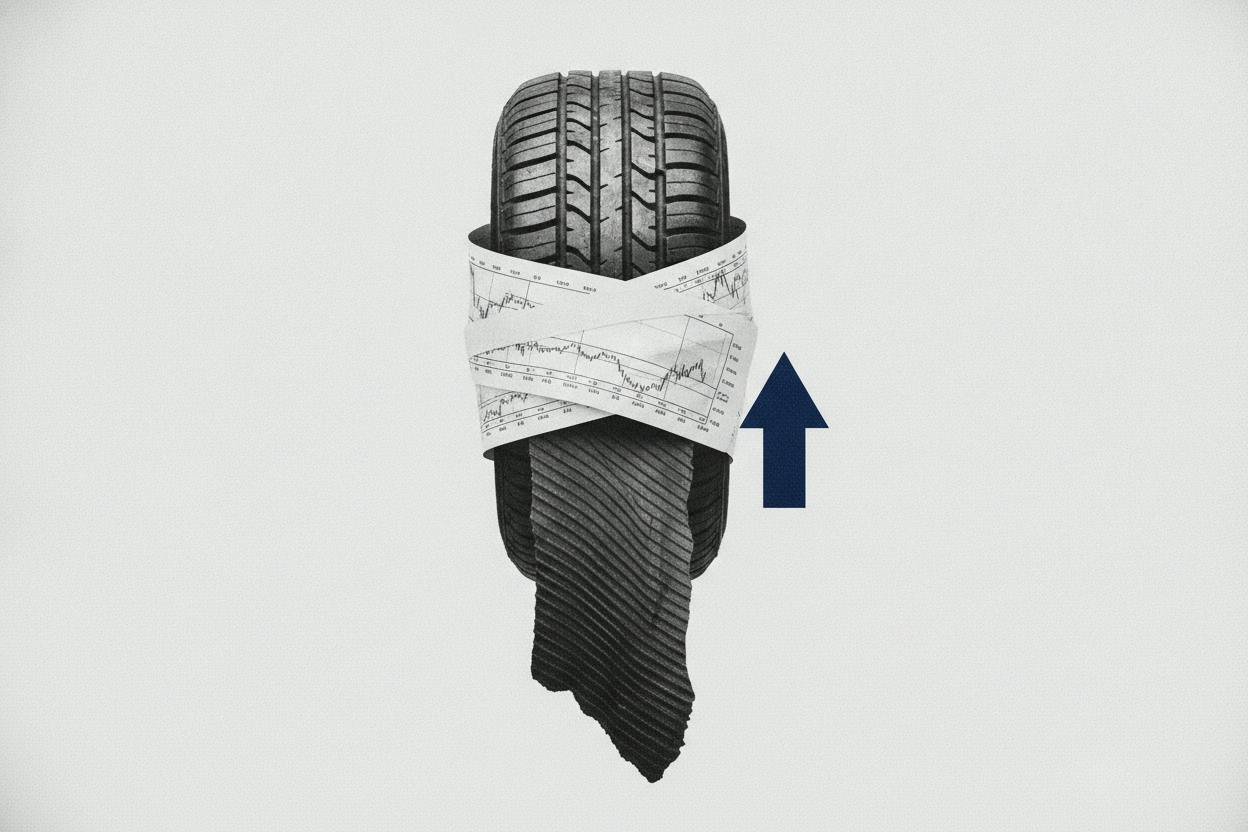
Rubber futures in Japan rose for a second straight session on Tuesday, with the Osaka Exchange's April contract gaining 2.22% to close at 433 yen per kilogram. The advance came as tyre manufacturers stepped up raw-material purchases after a recent price dip, and as a softer yen made yen-priced futures more attractive to overseas buyers.
The move was not isolated to Japan. Shanghai's January natural rubber contract also climbed 2% to 19,170 yuan per ton, suggesting a broader improvement in sentiment across related markets. However, analysts caution that the rally reflects near-term positioning rather than a surge in end-user demand.
What's driving the bounce?
According to Huatai Futures, tyre demand remains lackluster. The buying that lifted exchange-traded contracts came mainly from manufacturers looking to restock inventories at lower prices, not from a sudden pickup in consumer or industrial activity. This kind of restocking can provide a temporary floor under futures, even when physical market conditions are soft.
Indeed, Thailand's physical rubber benchmarks moved in the opposite direction. RSS3 grade fell 1.94% to 90.9 baht per kilogram, while STR20 dropped 1.88% to 81.25 baht. The divergence between futures and cash prices is a key signal for investors: it suggests the market is paying a premium for future supply certainty rather than reacting to today's spot conditions.
Currency dynamics also played a role. A weaker yen makes yen-denominated futures cheaper for overseas buyers, which can add incremental support when global macro news pushes the dollar higher. This is a familiar pattern in commodity markets, where exchange rates often influence short-term price moves.
Supply concerns loom
The bigger watch item is supply. Huatai notes that rubber output is nearing the end of its seasonal cycle, and some feedstock is being diverted into concentrated latex, which is used in products like gloves. If more raw material goes into concentrated latex, less is left for whole-latex rubber, tightening expected availability and potentially keeping a floor under futures even if spot prices stay weak.
This supply dynamic is why exchange prices in Japan and China can decouple from Thai benchmarks. When futures rise while physical prices fall, the market is often paying up for insurance against tighter supply later. Late-season output and diversion into concentrated latex can lift that "risk premium," making exchange-traded contracts more volatile.
What it means for investors
For tyre makers and other companies that hedge their raw-material costs through futures, the gap between futures and physical prices matters. Higher futures prices can raise hedging costs, even if spot prices are falling. That can squeeze margins for manufacturers that lock in prices through exchange-traded contracts.
For everyday investors, the rubber market is a reminder that commodity prices are influenced by a mix of factors: currency moves, seasonal supply patterns, and shifts in industrial demand. A rally in futures does not always signal a booming economy; sometimes it reflects positioning and supply worries.
Investors with exposure to tyre makers or rubber-related companies should watch how long the restocking phase lasts and whether supply constraints persist. If the seasonal output decline and latex diversion continue, futures could stay firm even as physical benchmarks remain soft. Conversely, if demand fails to pick up, the current premium may eventually fade.
Relatedly, the recent profit decline at MRF highlights how rubber costs can outpace strong tyre sales, underscoring the importance of raw-material price trends for the sector. And broader market moves, such as Japan's AI-driven rally, can also influence investor sentiment toward commodity-linked assets.
As always, the key is to separate short-term noise from longer-term trends. The current bounce in rubber futures may offer a trading opportunity, but for most investors, the underlying supply-demand balance remains the more important factor to monitor.



