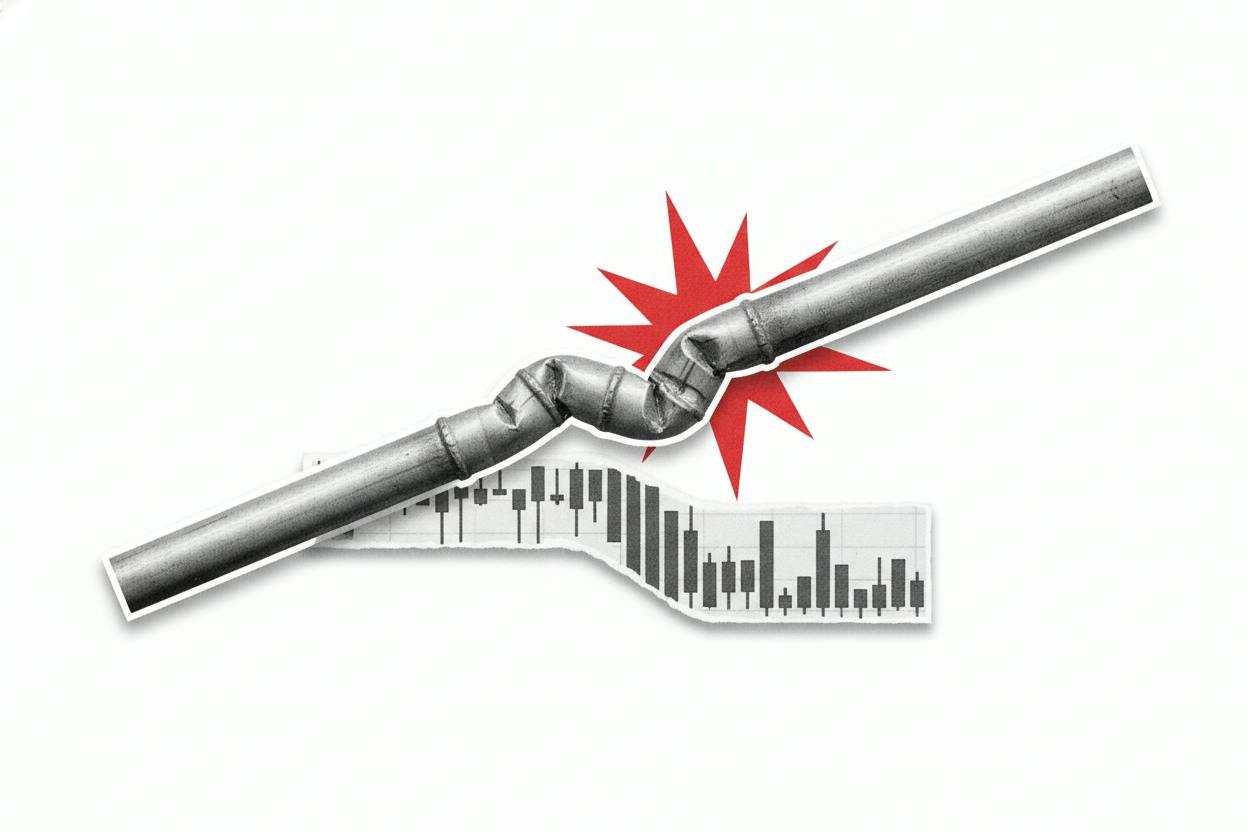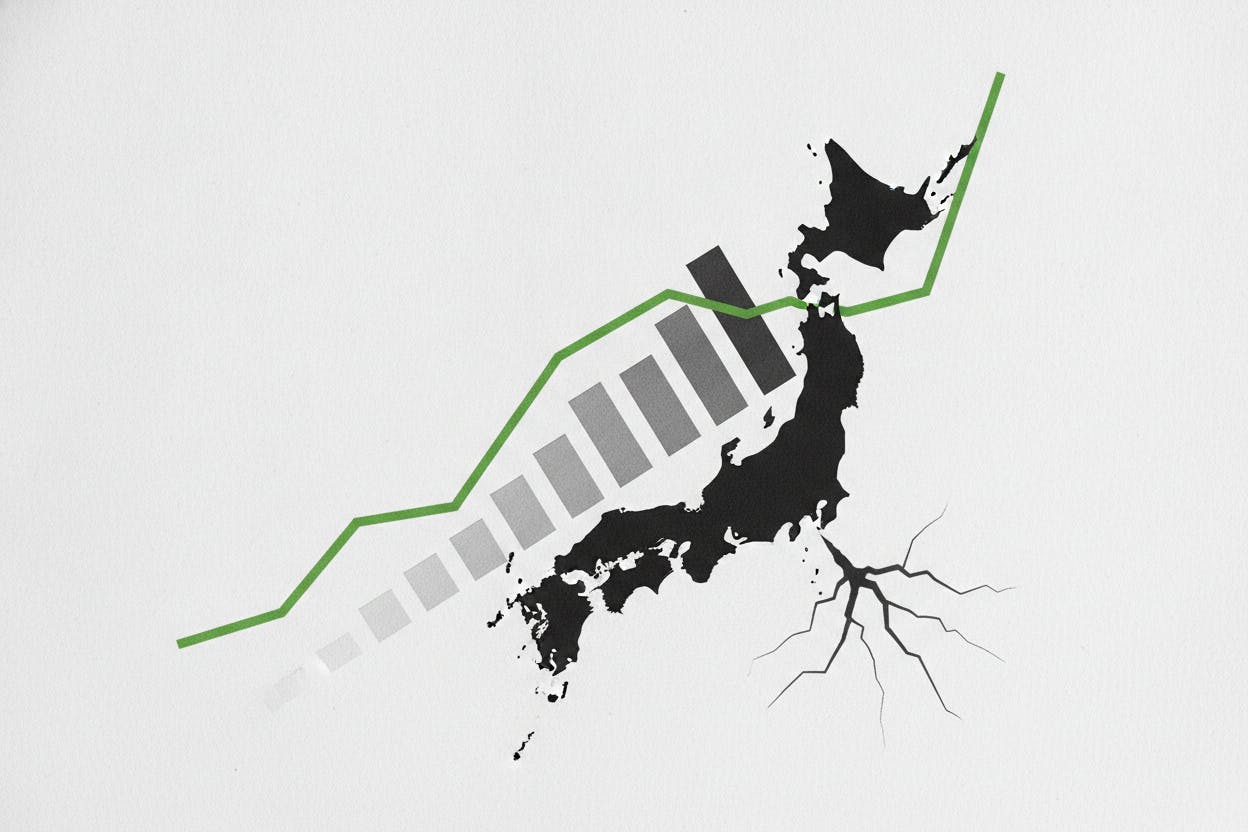
Japan's government bond yields climbed on Tuesday as a fresh surge in US long-term Treasury yields rippled through global bond markets. The yield on the 10-year Japanese government bond (JGB) touched 2.800%, its highest level in recent weeks, as investors reassessed the outlook for inflation and central bank policy.
The move followed a sharp rise in US 30-year Treasury yields, which hit 19-year highs during Asian trading hours. That development is covered in more detail in our article on the 30-year Treasury yield hitting a 19-year high. When yields rise, bond prices fall, so the selloff quickly spread to Japan's longer-dated maturities: the five-year JGB yield rose to 2.025% and the 30-year JGB yield climbed to 3.960%.
Why bond yields are rising globally
The core driver behind the move is persistent inflation that has proven stickier than many economists expected. In the US, consumer price data has repeatedly come in above forecasts, leading markets to question whether the Federal Reserve will be able to cut interest rates anytime soon. This has pushed up long-term Treasury yields as investors demand higher compensation for the risk that inflation stays elevated.
Japan is not immune to these global forces. While the Bank of Japan has maintained an ultra-loose monetary policy for years, the country's bond market is increasingly sensitive to moves in US rates. When US yields rise, Japanese investors often sell domestic bonds to buy higher-yielding US debt, putting upward pressure on JGB yields.
There are also Japan-specific factors at play. The recent earthquake in the Kumamoto region, which disrupted operations at TSMC's chip plant, has raised concerns about the economic impact and potential borrowing needs for reconstruction. This has added a layer of uncertainty that has weighed on Japanese government bonds. For more on the quake's market effects, see our coverage of chip stocks sliding after the Japan quake.
What this means for investors
For everyday investors, rising bond yields are a double-edged sword. On one hand, higher yields mean better returns on new bond purchases, which can be attractive for income-focused portfolios. On the other hand, rising yields typically push down the prices of existing bonds, which can hurt the value of bond funds or ETFs you already hold.
The move also has implications for stock markets. Higher bond yields make fixed-income investments more competitive with stocks, potentially drawing money away from equities. Sectors that are sensitive to interest rates, such as real estate and utilities, tend to be particularly vulnerable when yields rise.
In Japan, the yield curve has steepened, meaning long-term rates have risen more than short-term rates. This is a sign that investors are demanding a higher premium for holding longer-dated debt, which often reflects concerns about future inflation or fiscal sustainability.
Central bank credibility in focus
The bond market moves also highlight a broader debate about central bank credibility. Investors are questioning whether the Fed and other central banks have the resolve to keep tightening policy enough to bring inflation down to their 2% targets. This theme has been central to recent market volatility, as we discussed in our piece on the Fed's decision day and the split over rate hikes.
In Japan, the Bank of Japan faces a particularly delicate balancing act. It has signaled a gradual normalization of policy, but any sudden shift could roil global markets. For now, the BOJ is likely to maintain its yield curve control framework, which caps the 10-year JGB yield at around 1.0%, but the pressure is building.
The broader context is that global bond markets are in a period of repricing. After years of ultra-low interest rates, investors are adjusting to a world where inflation is more persistent and central banks are less willing to step in to calm markets. This adjustment process is likely to continue, meaning more volatility ahead for bond investors.
For those with exposure to Japanese bonds or global fixed income, the key takeaway is to stay diversified and be prepared for further yield increases. While no one can predict exactly where yields will go, the current environment suggests that the era of cheap money is firmly in the rearview mirror.