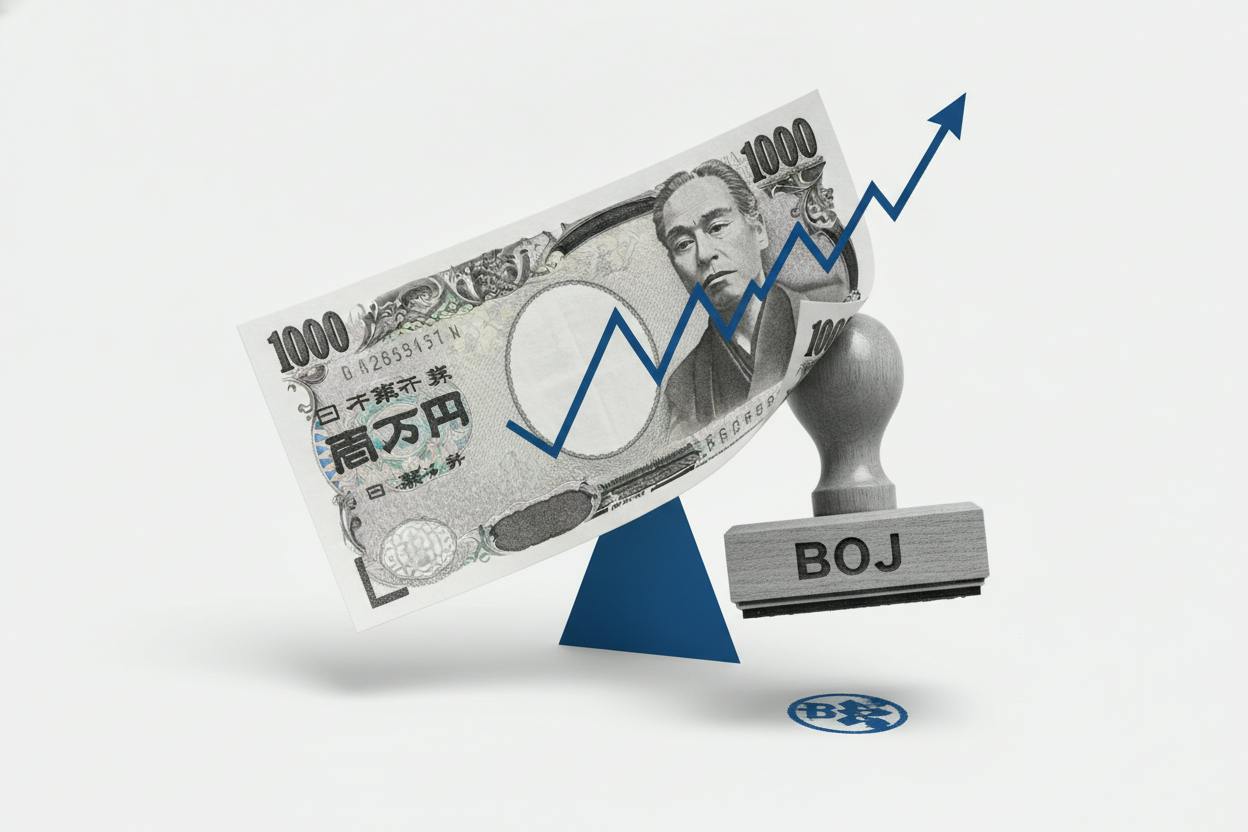
Japan's workers are finally seeing their paychecks outpace inflation, and that is putting the Bank of Japan (BOJ) under renewed pressure to keep raising interest rates. Government data released Friday showed that inflation-adjusted real wages rose 2.2% in September from a year earlier, the fastest gain since January 1997. Nominal pay climbed 4.6%, also the quickest pace in nearly three decades.
The figures, cited by Reuters, mark the ninth straight month of real wage growth and a clear acceleration from August's revised 1.6% gain. Even as the inflation rate used to calculate real wages ticked up to 2.4% from 2.2%, pay still managed to outrun rising prices.
What's driving the wage gains?
The details behind the headline numbers matter for policymakers. The key component, known as "regular pay" or base salaries, rose 3.7% from a year earlier. A labor ministry official pointed to that steady base-pay trend as the main driver of improving purchasing power, rather than one-off bonuses.
Overtime pay, which tends to be more volatile, actually cooled to 3.6% growth from August's revised 4.9%. And while headline nominal wages got a big lift from a 32.6% jump in special payments, the ministry cautioned that this was a statistical quirk rather than a genuine bonus boom.
For central bankers, the distinction is crucial. Base pay is what carries into next year's wage negotiations and into the prices of labor-intensive services. A steady rise in regular pay suggests that inflation is becoming more durable, not just a temporary blip from volatile components.
Why this matters for the BOJ
The BOJ has kept its key interest rate near zero for years, but it has been gradually normalizing policy as inflation has stayed above its 2% target. Tokyo's core inflation has remained well above that level, and the latest wage data strengthens the argument that price pressures are becoming embedded in the economy.
Many analysts now expect the BOJ to raise rates as soon as next month. The central bank has repeatedly said that sustained wage growth is a prerequisite for further tightening, and these numbers give it cover to act.
"The steady rise in base pay is exactly what the BOJ wants to see," said one Tokyo-based economist. "It suggests that the virtuous cycle of higher wages and higher prices is taking hold."
What it means for investors
For markets, the most important number in this release is the 3.7% rise in regular pay, not the eye-catching 32.6% jump in special payments. Central banks put far more weight on base pay because it is more persistent and more likely to feed into future inflation.
If traders see a rate hike coming sooner, the first place it shows up is usually the short end of the Japanese government bond curve, where yields are most sensitive to near-term policy expectations. A faster BOJ tightening path could also narrow the interest-rate gap between Japan and the United States, which often moves the yen. In Friday's trading, the dollar was around 157.84 yen, according to Reuters.
For everyday investors, the key takeaway is that Japan's long-running battle with deflation appears to be firmly in the rearview mirror. That has broad implications: Japanese stocks could benefit from a stronger economy, but a higher yen could weigh on exporters. Bond investors, meanwhile, need to brace for a gradual rise in Japanese yields.
The BOJ's next policy meeting will be closely watched. If it does hike, it would mark another step in the global shift away from ultra-loose monetary policy. For now, the wage data has given the central bank a strong reason to move.