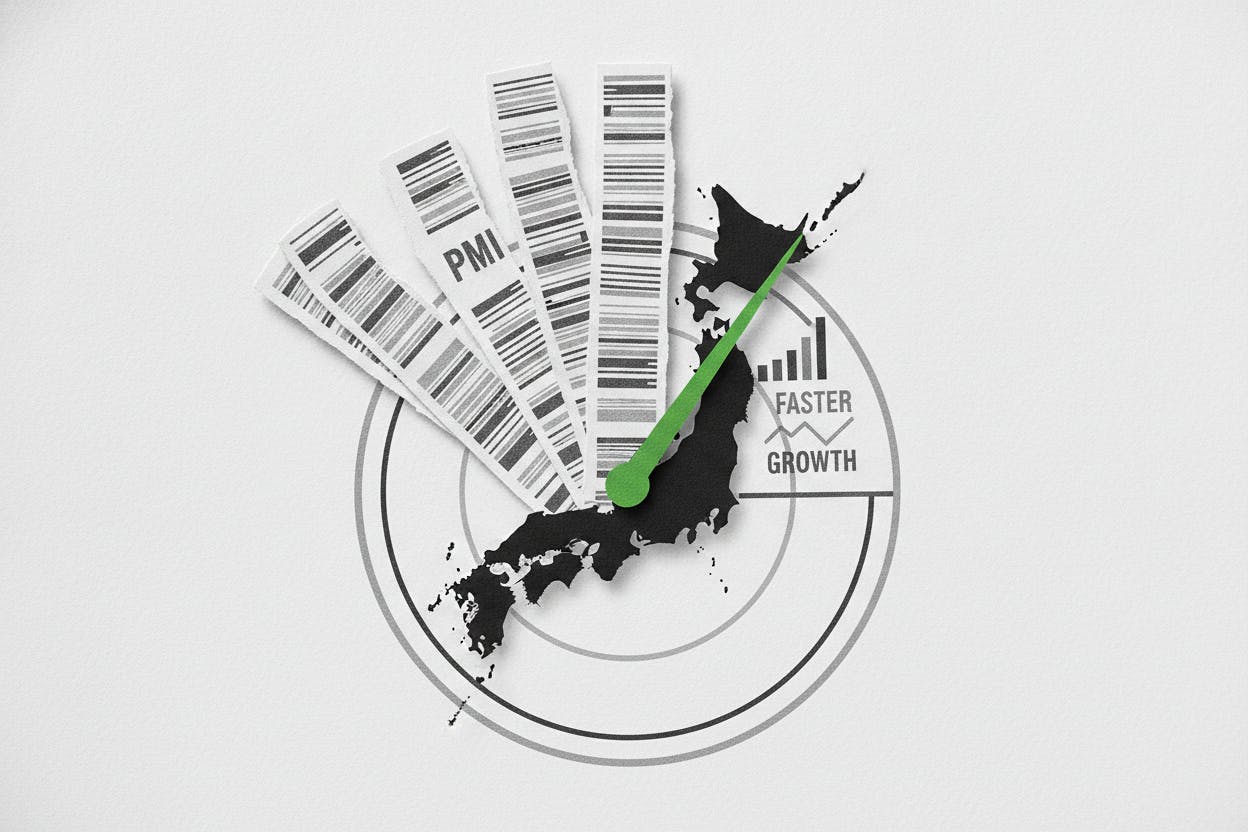
Japan's private sector showed stronger momentum in June, as the final au Jibun Bank Japan Composite Purchasing Managers' Index (PMI) rose to 52.8 from 51.1 in May, according to data released Friday by S&P Global. The reading marks the fastest expansion in activity since February and suggests the economy is gaining traction after a period of modest growth.
A PMI reading above 50 indicates expansion, while below 50 signals contraction. The composite index, which combines manufacturing and services, has now been in expansion territory for several months, but the June jump indicates a clear acceleration. Manufacturing held steady at a robust 54.8, while services—a key driver of Japan's economy—rebounded sharply to 52.2 from 50.0, where it had been barely expanding.
What's Driving the Pickup?
The improvement was broad-based. Firms reported the quickest rise in new orders since February, and backlogs of work grew faster, suggesting demand is outstripping capacity. That helped push employment higher as companies added staff to keep up with orders. The services sector, which accounts for around 70% of Japan's economic output, was the main engine of the acceleration. A return to stronger growth in services is particularly important because it reflects domestic consumer demand, which has been uneven in recent months.
Manufacturing remained solid, though its pace of expansion was unchanged from May. The sector has been supported by export demand, particularly from Asia and the US, but also faces headwinds from a weaker yen, which raises input costs. The yen has been under pressure, recently sliding past 161 against the dollar, prompting speculation about further intervention by Japanese authorities. For more on that, see Yen Jumps as Japan Shifts FX Intervention Tactics, Dollar Slides to 161.
Why PMI Data Matters for Investors
PMI surveys are closely watched because they are released monthly and are based on real-time responses from purchasing managers at hundreds of companies. That makes them a leading indicator—they tend to move before official data like industrial production or GDP. A rising composite PMI can quickly feed into economists' near-term growth forecasts and analysts' earnings estimates for Japanese companies.
For investors, the key channel is earnings revisions. When PMI data points to stronger activity, analysts often raise their revenue and profit forecasts for companies exposed to domestic demand. That can create a tailwind for Japanese equities, especially for firms that rely more on the local economy than on global trade. Japan's stock market has historically been sensitive to the direction of earnings estimate changes, because revisions can reshape expectations well before quarterly results confirm the trend.
The services rebound is particularly encouraging for sectors like retail, hospitality, and real estate, which have been slow to recover from the pandemic-era slump. A sustained pickup in services could also support wage growth, which the Bank of Japan has been watching closely as it considers normalizing monetary policy. For context on how bond markets are reacting to fiscal and monetary shifts, see Japan Bond Yields Hit Mid-May High as Weak Auction and Fiscal Shift Rattle Markets.
What to Watch Next
Investors will be watching the next round of PMI data in July to see if the acceleration is sustained. A composite reading above 53 would signal continued robust growth, while a slip back toward 51 could raise concerns about the durability of the recovery. Also on the radar: the Bank of Japan's next policy meeting, where any hints of a rate hike could strengthen the yen and impact export-oriented companies.
For now, the data paints a picture of an economy that is gaining momentum, with both manufacturing and services contributing. That's a positive sign for Japanese equities, particularly for domestically focused names. However, global risks—including slowing demand from China and uncertainty around US interest rates—remain headwinds. For a broader view of how Asian markets are reacting to global trends, see South Korean Stocks Tumble 8% as Defense Sector Deal Offers Rare Bright Spot.
In summary, the June PMI data suggests Japan's private sector is picking up speed, with services leading the charge. For everyday investors, that means keeping an eye on Japanese stocks that benefit from domestic demand, while staying aware of currency and global risks that could shift the outlook.