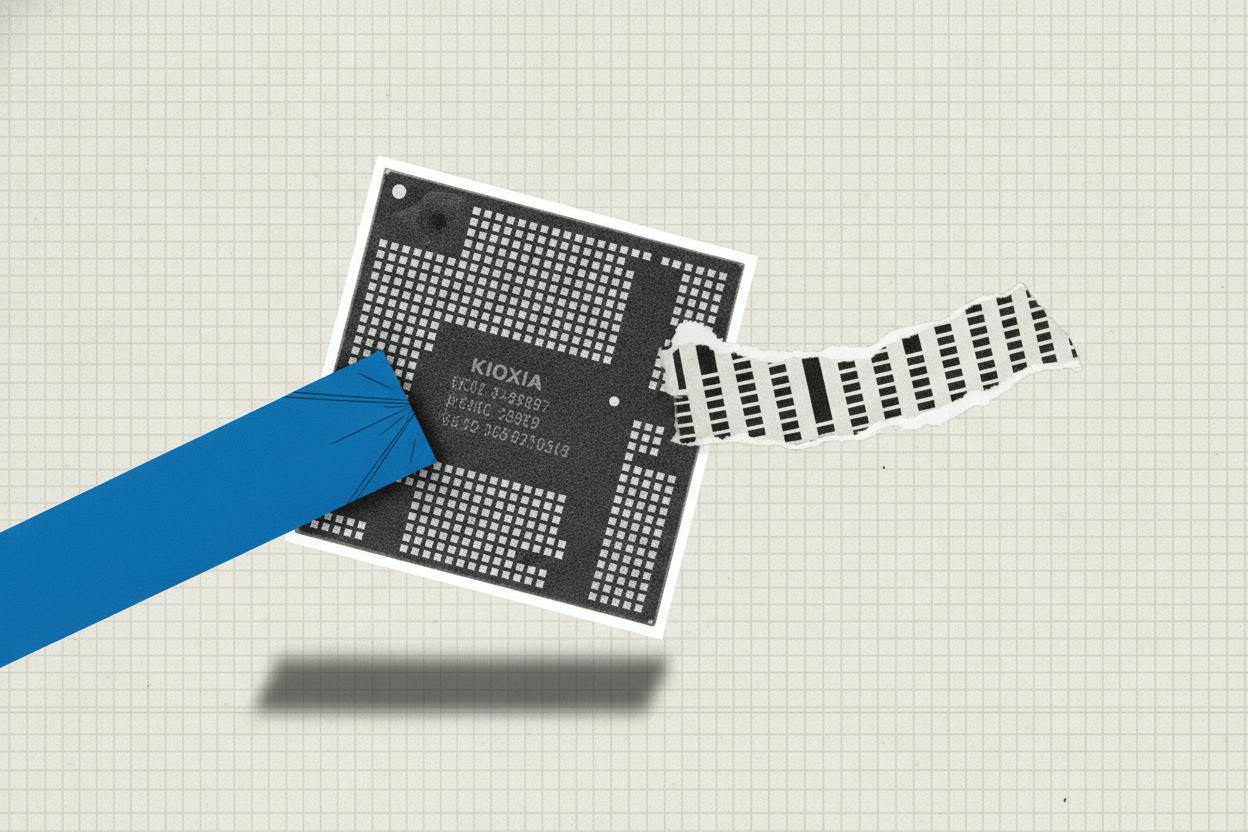
Kioxia Holdings, the Japanese memory chipmaker, is about to become a much bigger presence in one of the country's most-watched stock indexes. The change could funnel billions of dollars of automatic buying into the stock, but it may also set up a tug-of-war with traders looking to cash out.
What's happening
Japan Exchange Group (JPX), which runs the Tokyo Stock Exchange, said it will raise Kioxia's free-float weight to 50% from 15% by the end of November. The move follows decisions by major shareholders Bain Capital and Toshiba to reduce their stakes in the company.
Free float is the portion of a company's shares that are available for public trading, as opposed to shares held by insiders or long-term strategic investors. Index providers like JPX use free float to determine how much weight a stock gets in an index. A higher free float means a stock can have a larger influence on the index's performance.
According to analysts at Mizuho Securities, the change will lift Kioxia's weight in the TOPIX to roughly 2% by November, up from 0.57% as of October 8. Daiwa Securities also expects a significant increase.
Why it matters for investors
The TOPIX is one of Japan's most widely tracked benchmarks, and it is the basis for many index funds and exchange-traded funds (ETFs) that Japanese and international investors use. When a stock's weight in an index rises, funds that track the index must buy more of that stock to stay aligned with their benchmark. This is often called passive buying, and it can provide a steady source of demand for the stock.
In Kioxia's case, the weight increase could trigger trillions of yen in automatic purchases, according to market estimates. That is a meaningful tailwind for the stock, which has already been volatile as investors weigh the outlook for memory chips and AI demand.
However, the same move could also attract selling from margin investors—traders who borrow money to buy stocks. These investors often take positions ahead of expected index changes, hoping to profit from the price bump that typically accompanies them. Once the change is official, they may sell their shares to lock in gains, which could cap any rebound.
Context: Kioxia's journey
Kioxia is one of the world's largest makers of NAND flash memory, the chips used in smartphones, solid-state drives, and data centers. The company was spun off from Toshiba in 2018 and listed on the Tokyo Stock Exchange in December 2023. Its shares have been a focus for investors looking to play the global semiconductor cycle, especially as demand for AI-related memory has surged.
The reduction in stakes by Bain Capital and Toshiba is part of a broader trend of private equity and corporate shareholders trimming holdings after an IPO. For Kioxia, the move increases the number of shares available to the public, which is generally seen as a positive for liquidity and index inclusion.
What to watch next
Investors will be watching how Kioxia's stock reacts in the weeks leading up to the November deadline. Historically, stocks that get a boost from index weight changes can see a short-term pop, but the effect often fades once the buying is done.
For everyday investors, the key takeaway is that index changes can create temporary distortions in a stock's price. If you own a TOPIX-tracking fund, you will indirectly own more Kioxia after the change. If you are considering buying Kioxia directly, be aware that the passive buying may already be priced in, and margin selling could create volatility.
As always, it's wise to focus on the company's fundamentals—its earnings, competitive position, and the demand for memory chips—rather than trying to time index-related moves.
Broader market backdrop
The news comes as Japanese stocks have been mixed, with chip stocks often leading gains while banks weigh on the broader TOPIX. In recent sessions, the Nikkei has steadied as chipmakers rebounded, but inflation data and central bank policy remain in focus. For more on the latest market moves, see our coverage of chip stocks lifting the Nikkei.
Globally, investors are also watching how AI-related companies perform, as earnings and product launches continue to drive sentiment. The semiconductor sector remains a key battleground for investors, with both opportunities and risks.
Bottom line
Kioxia's increased weight in the TOPIX is a technical event that could have a real impact on the stock's price in the short term. Passive funds will likely buy, but margin traders may sell. For most investors, the best approach is to understand the mechanics and not overreact to index-related moves.



