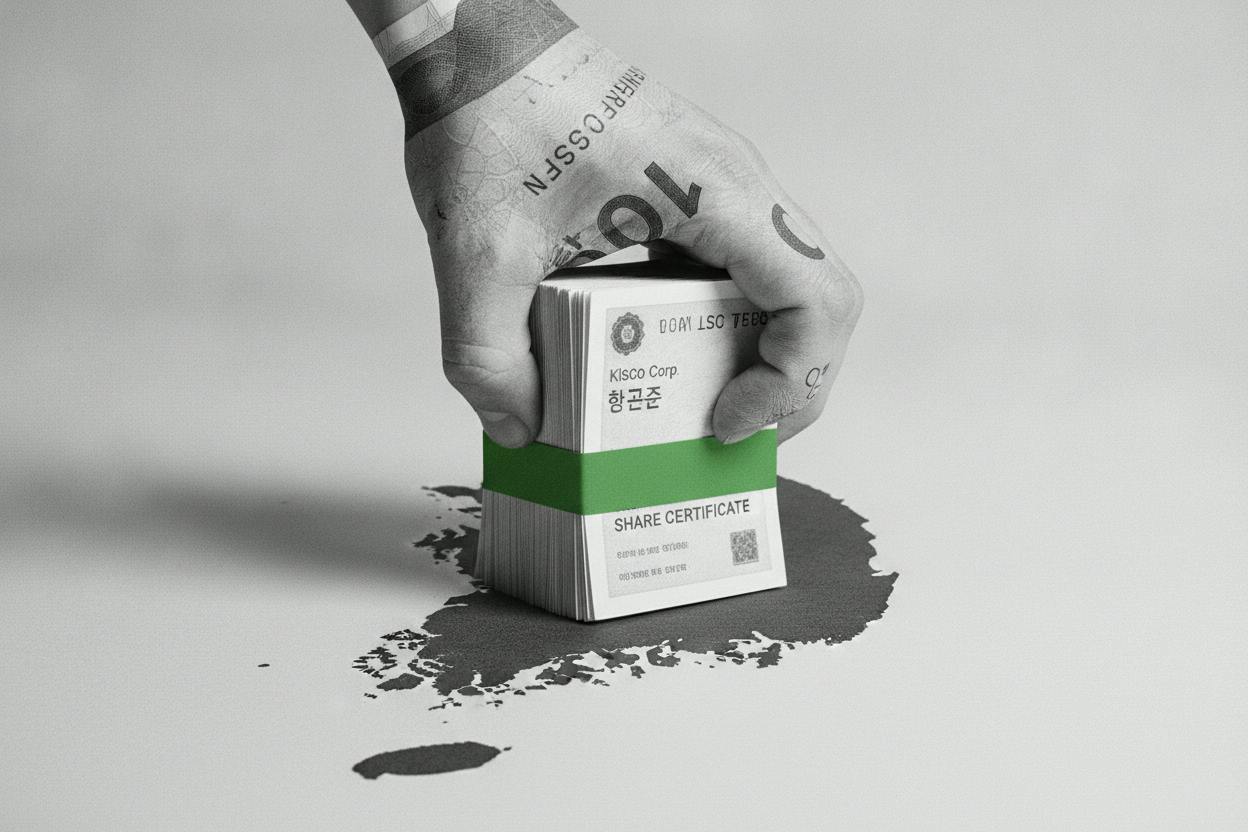
KISCO Holdings, the parent company of South Korean steel and industrial firm Kisco Corp., has launched a tender offer worth 111.7 billion won (about $80 million) to buy more shares from minority investors. The offer, priced at 13,000 won per share, targets 8.59 million shares—roughly 23.57% of the company—and could push the parent's ownership from 60.34% to as much as 83.91% if all shareholders tender.
The move is a classic step toward taking a subsidiary private. By increasing its stake, KISCO Holdings tightens control and reduces the number of shares available for public trading, a process that often ends with a delisting. The company has already signaled its endgame: it plans to seek approval to buy out the remaining shares in March 2027, after which Kisco Corp. is expected to leave the stock exchange.
How the deal is structured
The tender offer is being financed with 25 billion won of KISCO's own cash and 86.7 billion won in loans arranged by NH Investment & Securities, a South Korean brokerage that is also managing the tender. This mix of internal funds and debt is common in such buyouts, allowing the parent to avoid tying up too much of its own balance sheet while still completing the purchase.
The 13,000 won per share price is positioned as a premium to where Kisco's stock traded recently. For minority shareholders, that gives a clear reference point: they can sell now at a set price, or hold on and wait for the promised clean-up bid in 2027. The fixed price also acts as an anchor for the market during the offer period, because buying above that level only makes sense if investors expect a higher final payout later.
What it means for investors
For current Kisco shareholders, the tender offer presents a straightforward choice. Tender your shares now and lock in 13,000 won each, or keep them and bet that the 2027 buyout will be more generous. The company has not stated what that future price might be, so the decision hinges on how much confidence you have in the parent's intentions and the company's underlying value.
If KISCO Holdings reaches close to 83.91% ownership, the free float—the shares available for everyday trading—will shrink dramatically. That typically leads to thinner trading volumes and larger price swings on smaller trades. It can also widen what's known as the minority discount: shares may look fairly valued on paper, but they become harder to sell quickly without accepting a lower price, because there are fewer buyers and sellers in the market.
Moreover, with a delisting timeline already on the table, any stock left outside the tender starts to trade less like a normal listed share and more like a time-bound claim on a future take-private. That means the price could become more volatile as investors speculate on the eventual buyout terms.
Broader context
This type of parent-company buyout is not unusual in South Korea, where conglomerates often streamline their structures by absorbing listed subsidiaries. The process can be beneficial for the parent, giving it full control and simplifying governance, but it can also raise questions about whether minority shareholders are being treated fairly, especially if the tender price is seen as too low.
For everyday investors, the key takeaway is to read the offer documents carefully. Tender offers are voluntary, but they come with deadlines and conditions. If you own Kisco shares and are considering tendering, weigh the certainty of the current price against the potential upside—or downside—of waiting for the 2027 clean-up bid.
In the meantime, the market will watch how many shareholders accept the offer. A high take-up would signal confidence in the process and likely speed up the delisting timeline. A low take-up could force KISCO Holdings to sweeten its terms or extend the offer, adding uncertainty for everyone involved.
For those not directly invested, this story is a reminder that corporate actions like tender offers can create both opportunities and risks. They can also affect the broader market sentiment, especially in sectors where similar buyouts are expected. As always, understanding the structure and the incentives of the parties involved is key to making informed decisions.