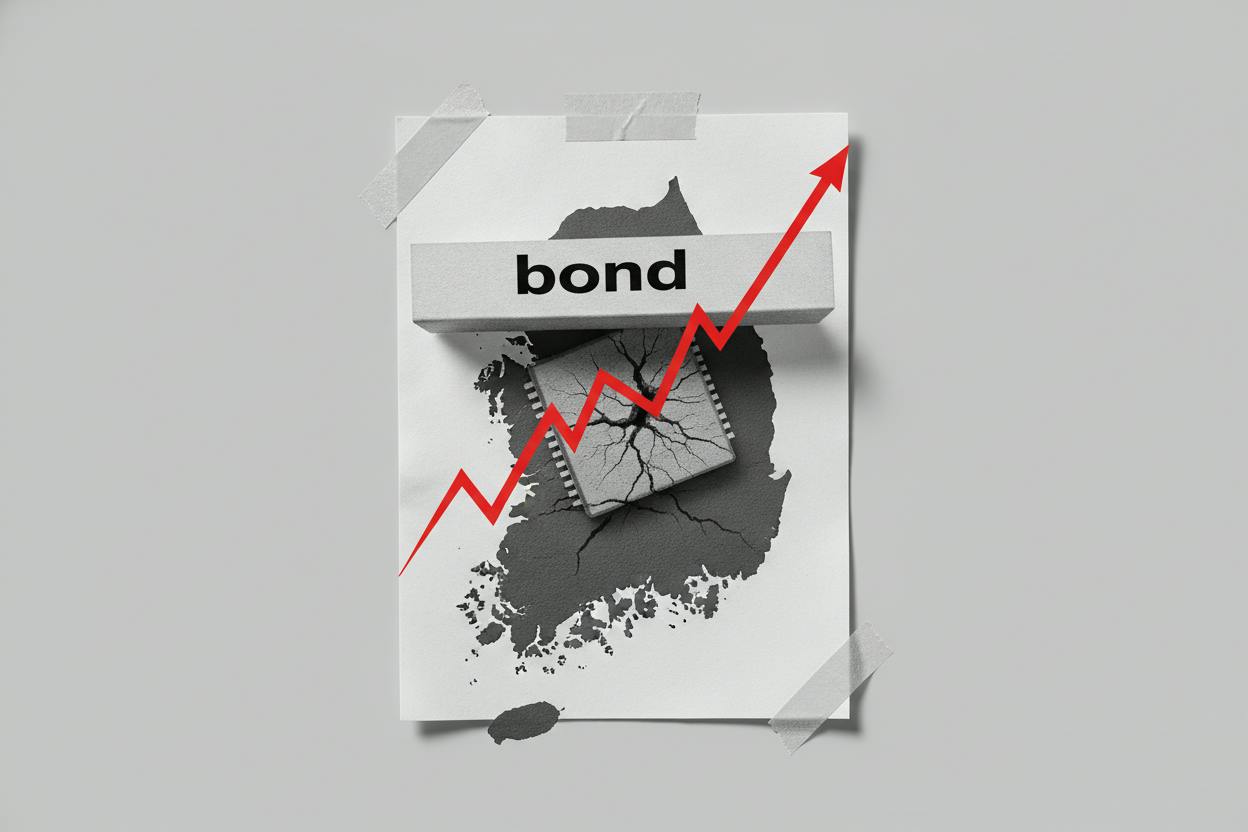
South Korea's benchmark KOSPI index tumbled nearly 3% in a sharp selloff, led by a 4.62% drop in SK Hynix, one of the world's largest memory chipmakers and a key supplier to the artificial intelligence (AI) boom. The decline came as investors began to question whether the massive spending on AI infrastructure is creating more debt risk than markets have so far priced in.
The move echoes a broader global reassessment of AI-related stocks, which have powered much of the market's gains over the past year. While the technology itself remains a major growth driver, the sheer scale of capital investment required—from data centers to advanced chips—has raised concerns about how companies will finance it and whether returns will justify the costs.
What's behind the slide?
The KOSPI's drop was not isolated. It came amid a mix of domestic and international pressures. Domestically, SK Hynix's slide weighed heavily on the index, given its outsized role in South Korea's export-driven economy. The company is a major producer of high-bandwidth memory (HBM) chips, which are essential for AI servers, and its fortunes are closely tied to the health of the AI trade.
Internationally, jitters from France added to the risk-off mood. Political and fiscal uncertainty in France has been a recurring theme in European markets, and those concerns have spilled over into global sentiment. For investors, the combination of AI debt worries and geopolitical noise creates a more cautious environment.
The AI investment credit risk is a key theme. Many tech giants and chipmakers have been borrowing heavily or committing large portions of cash flow to build out AI capacity. If demand slows or financing costs rise, those debts could become harder to service, potentially hitting earnings and stock prices.
What it means for investors
For everyday investors, this selloff is a reminder that high-growth sectors like AI can be volatile. The stocks that led the rally can also lead the decline when sentiment shifts. It's important to understand that AI is a long-term trend, but the companies involved face real financial risks, including debt and the possibility that returns on investment take longer than expected.
Investors should also watch how this plays out in other markets. The Nikkei's recent slide on rising bond yields shows that tech stocks are sensitive to interest rate moves. Higher yields make future profits less valuable and increase borrowing costs, which can hit high-valuation tech names hardest.
Meanwhile, the broader AI infrastructure buildout continues. For example, Amazon's data-center deals and nuclear power plans show that the demand for AI computing is driving investment across sectors. But these projects also require massive capital, and the debt associated with them is part of the risk investors are now weighing.
For those with diversified portfolios, a drop like this is a normal part of market cycles. It's not a signal to panic, but it does highlight the importance of not overconcentrating in any single sector, no matter how promising it seems.
What to watch next
Investors will be watching several things in the coming days. First, whether the KOSPI stabilises or continues to fall, as that will signal how deep the concern runs. Second, any comments from SK Hynix or other chipmakers about demand and financing. Third, global bond yields—if they keep rising, tech stocks could face more pressure.
Also on the radar are upcoming earnings from major tech companies, which could either reassure or unsettle markets. The recent bounce in tech stocks ahead of Meta and Tesla earnings shows how quickly sentiment can shift, but it also underscores the fragility of the current optimism.
In the end, the Korean selloff is a wake-up call that the AI boom, while transformative, is not without its risks. For investors, staying informed and maintaining a balanced approach is key.