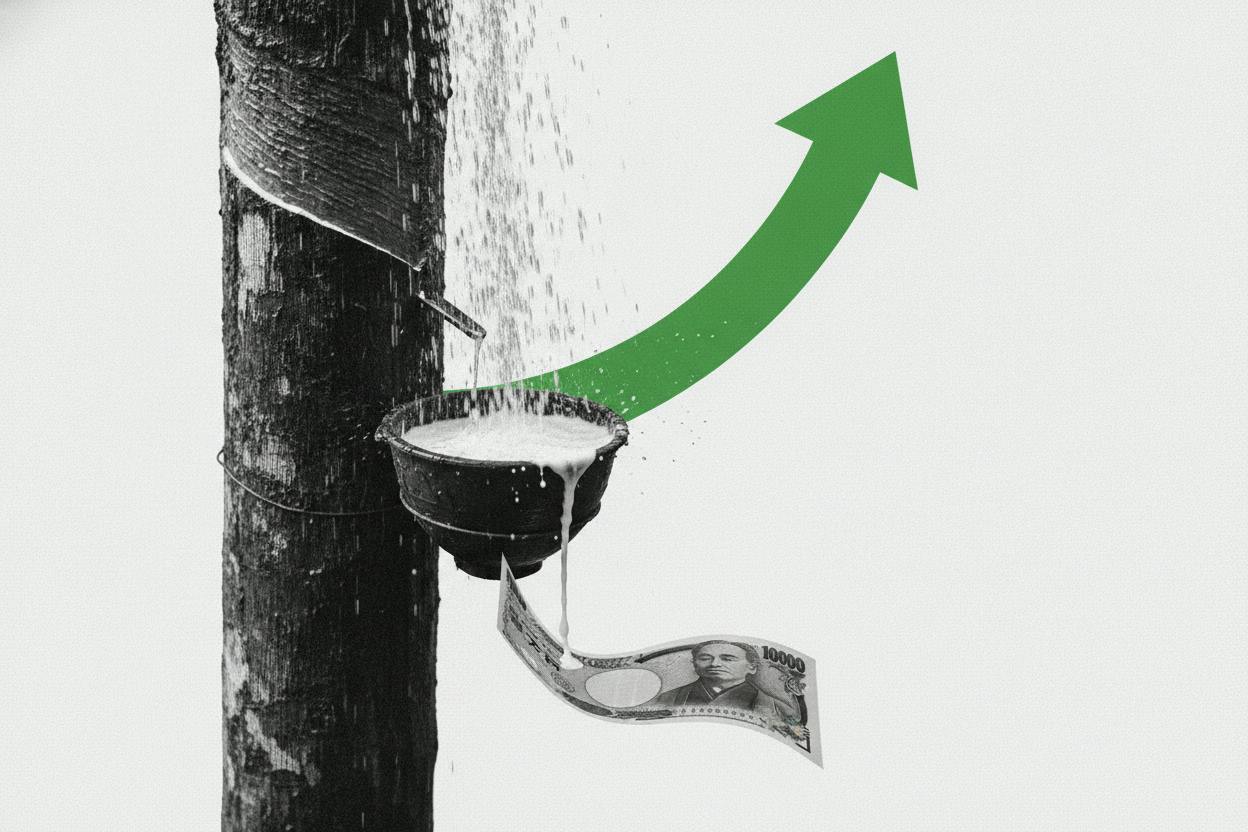
Rubber futures in Japan and Singapore extended their gains for a third consecutive session on Tuesday, as persistent heavy rain in southern Thailand disrupted tapping and kept supply tight. The moves come as a weaker yen also made yen-priced contracts more attractive to overseas buyers.
On Japan's Osaka Exchange, the benchmark March rubber contract climbed to about 454.5 yen per kilogram, while Singapore's SICOM January contract rose to roughly 253.1 US cents per kilogram, according to Reuters.
Weather and currency drive the move
The immediate catalyst is weather. Thailand's meteorological agency has warned of heavy rain and flash flooding through October 25, with southern regions—the heart of the country's rubber production—particularly affected. Minmetals Futures, a China-based brokerage, noted that the rainy season is still disrupting tapping in the region.
When tapping is interrupted, the flow of latex slows, and mills have to compete harder for the raw material they can get. That competition supports prices even though processors' profit margins remain thin.
Currency is also playing a supporting role. A weaker yen makes yen-denominated futures cheaper for buyers holding other currencies, which can nudge demand higher at the margin. That dynamic has been a familiar theme across commodity markets recently, as seen in other yen-priced contracts.
Demand steady, not booming
On the demand side, the picture is more measured. China, the world's largest rubber consumer, exported 7.48 million tons of rubber tires in the first three quarters of 2026, up 2.7% from a year earlier. That suggests factories still have orders to fill, but the growth is modest—not enough to fully offset a supply shock if the weather worsens.
Investors watching the broader commodity complex may also note that other markets are moving on their own supply-and-demand dynamics. For instance, soybean futures slid to a seven-week low as the US harvest accelerated, while coffee prices climbed to a one-month high on tight supplies. These moves highlight how weather and logistics continue to drive agricultural and soft commodity prices.
The synthetic rubber factor
One key dynamic for investors to watch is the price gap between natural rubber and its synthetic substitute. In China, the SHFE January natural rubber contract rose to 19,870 yuan per ton, while the most-active butadiene rubber contract—a common synthetic substitute—fell 1.89% to 15,875 yuan.
That widening gap matters because tire makers can adjust their mix. When synthetic rubber becomes relatively cheaper, manufacturers can lean on it more, which takes some pressure off demand for natural rubber. So while a weather-driven squeeze in Thailand can push prices higher, the follow-through often depends on whether the supply hit is severe enough to overwhelm substitution.
For investors tracking tire makers and China-linked industrial supply chains, the relative move between natural and butadiene rubber can be a better clue to near-term input-cost pressure than natural rubber alone.
What it means for investors
For everyday investors, the rubber market may seem distant, but it feeds into the costs of tires, hoses, and countless industrial products. When natural rubber prices spike, companies that use it heavily—especially tire manufacturers—may see their margins squeezed unless they can pass costs on to consumers.
The current rally is a reminder that weather events in one corner of the world can ripple through global supply chains. Thailand produces a significant share of the world's natural rubber, so any prolonged disruption there can have outsized effects.
Investors should also keep an eye on the currency angle. A weaker yen can make Japanese commodity futures more competitive internationally, but it also reflects broader economic conditions that can affect global trade flows. For those with exposure to Japanese or Chinese industrial companies, these shifts can matter.
As always, the key is to watch whether the supply disruption proves temporary or extends. If rains ease and tapping resumes, prices could quickly give back gains. But if the weather worsens, the squeeze could intensify, and the gap between natural and synthetic rubber will be a telling indicator.