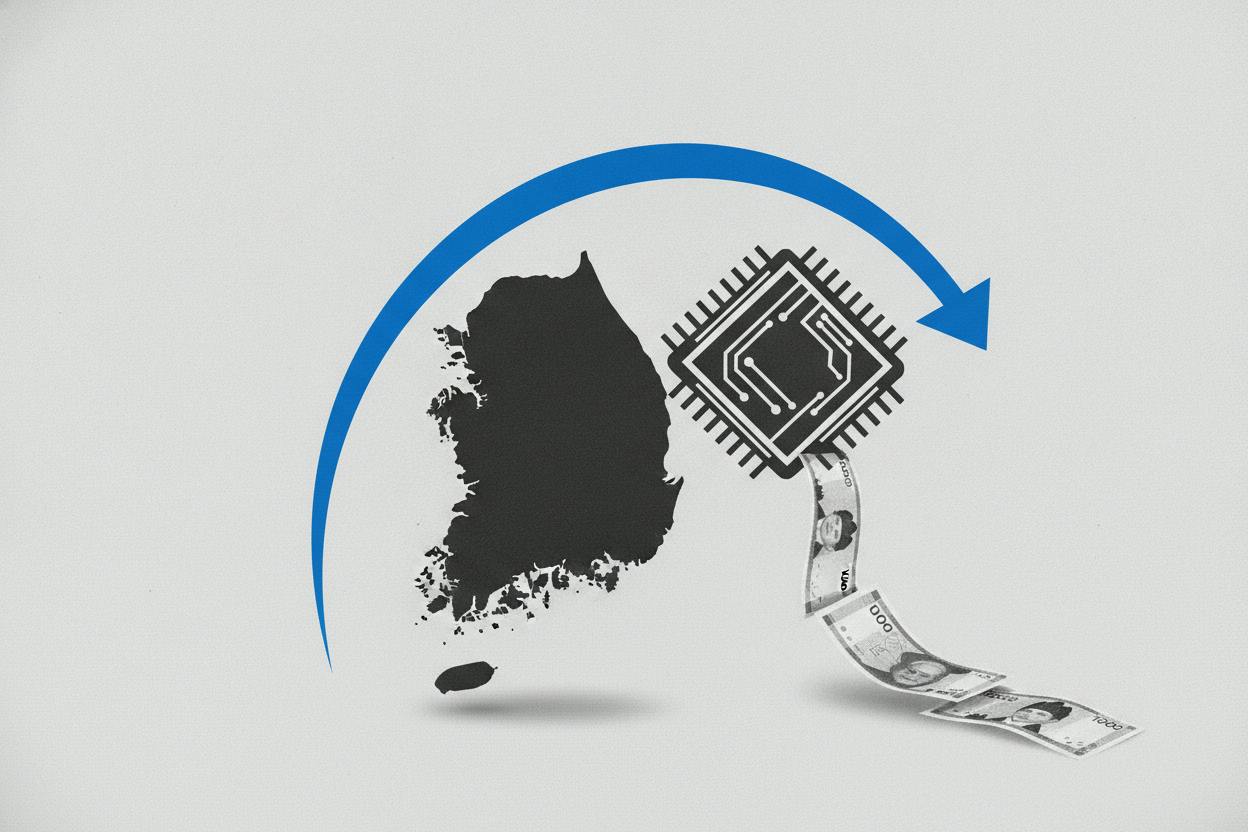
South Korean stocks rebounded sharply on [day], with the benchmark KOSPI climbing nearly 2% as chipmakers rallied on the back of Nvidia's upbeat revenue forecast. The move snapped a four-day losing streak and underscored how closely Korea's market tracks global semiconductor sentiment.
Samsung Electronics, the country's largest company, rose 2.31%, while SK Hynix, a key supplier of memory chips used in AI systems, jumped 4.19%. The gains were broad, but the spotlight was firmly on the tech sector, which has been the main driver of Korea's market performance in recent years.
Nvidia's forecast reignites AI optimism
Nvidia, the world's most valuable chipmaker, reported revenue that more than doubled to $115.8 billion, and its guidance for the coming quarters reassured investors that demand for AI infrastructure remains robust. That news rippled across Asian markets, with Asia-Pacific stocks rallying as the AI trade regained momentum.
For Korean chipmakers, Nvidia's outlook is more than just a sentiment boost. Samsung and SK Hynix are major producers of memory chips, particularly high-bandwidth memory (HBM) used in Nvidia's AI accelerators. Strong demand for AI servers translates directly into orders for these companies, making their fortunes closely tied to Nvidia's success.
However, the rally was not without its caveats. Foreign investors were net sellers of 333.8 billion won (approximately $240 million) on the day, a reminder that the bounce did not come with fresh cross-border risk appetite. When foreign money is leaving even as prices rise, the move is often seen as a short-term reset rather than a sustained shift in sentiment.
What this means for investors
For everyday investors, the KOSPI's rebound is a positive sign, but it's worth reading the details. The fact that foreign investors were net sellers suggests that the rally was driven more by domestic buying and short-covering than by a wave of new international capital. That can make the advance fragile, especially if global sentiment turns again.
The semiconductor sector remains the linchpin of Korea's stock market. When Nvidia does well, Korean chip stocks tend to follow, but they are also vulnerable to any disappointment in AI demand or to geopolitical tensions, such as export controls on advanced chips. Nvidia's own challenges, including leadership changes and restrictions on sales to China, add layers of uncertainty.
Investors should also note that the KOSPI's four-day losing streak before this rebound was partly a reaction to earlier AI-related worries. The market's ability to bounce back quickly shows that sentiment can shift fast, but it also highlights how sensitive Korean equities are to global tech news.
Looking ahead
The key question now is whether this rebound has legs. Analysts will be watching whether foreign investors return as buyers in the coming sessions, and whether Nvidia's momentum can hold. Other Asian markets have shown mixed reactions, with some indexes slipping despite Nvidia's strong results, suggesting that investors are still weighing the risks.
For Korea, the next major catalysts include monthly export data, which often moves the market, and any updates from Samsung and SK Hynix on their AI-related orders. The broader trend remains intact: AI is a long-term growth story, and Korean chipmakers are central to it. But as today's foreign selling shows, not everyone is convinced the rally is sustainable.
In the meantime, investors should keep an eye on global tech earnings and any policy shifts around chip exports. The KOSPI's fate is increasingly tied to the AI trade, and that trade can be volatile.