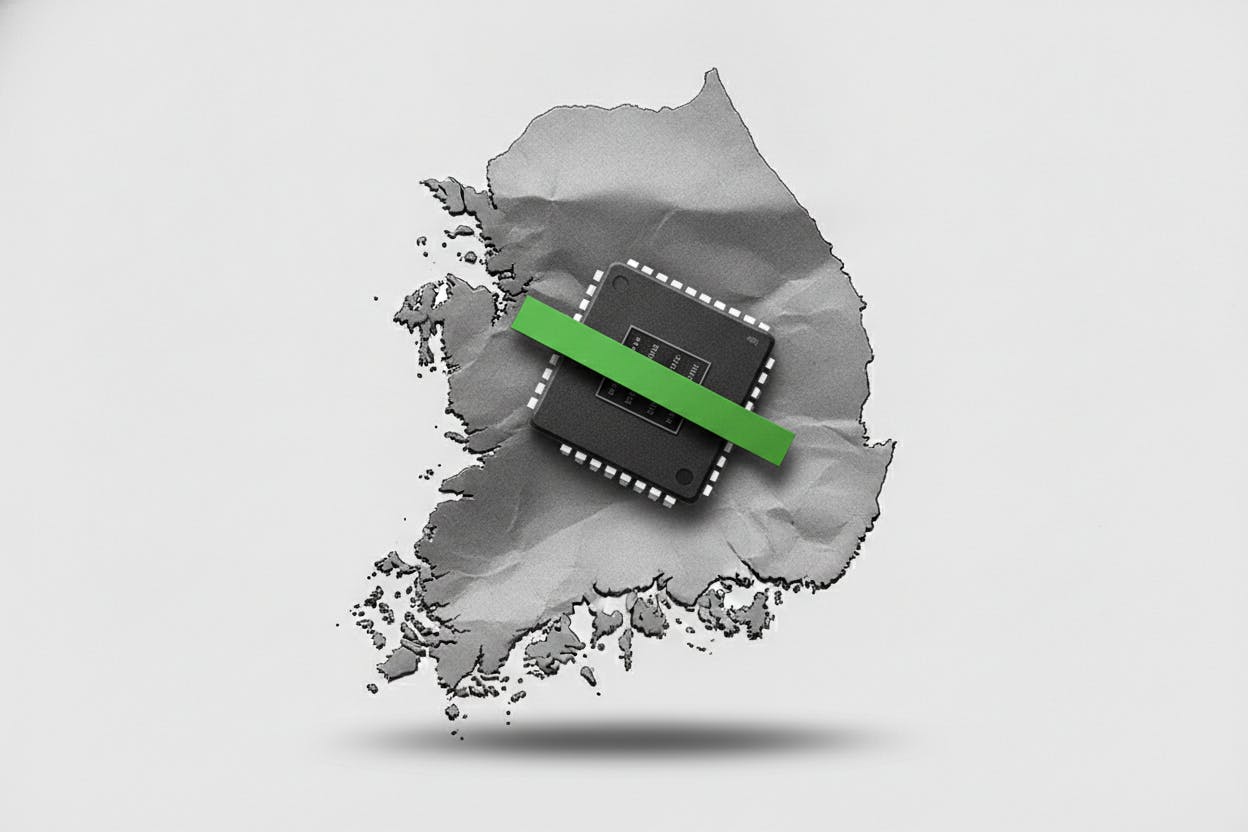
South Korean stocks suffered their worst day in months on Tuesday, with the benchmark KOSPI index plunging 6.25% — a drop of 519.03 points to 7,784.38 — after a report that Meta Platforms is exploring a cloud business to rent out excess artificial intelligence computing power. The news rattled investors who had bet heavily on AI-driven demand for semiconductors, sending shares of the country's two largest chipmakers sharply lower.
What Happened
The selloff was triggered by a report that Meta, the parent company of Facebook and Instagram, is considering selling spare AI computing capacity to other businesses. While such a move could generate new revenue for Meta, markets interpreted it as a signal that the company — and potentially other tech giants — may have overbuilt AI infrastructure relative to near-term demand. If companies like Meta have more computing power than they need, the thinking goes, they may buy fewer chips from suppliers like Samsung Electronics and SK Hynix.
Samsung Electronics fell 7.71%, while SK Hynix dropped 9.34%. Together, they account for a large chunk of the KOSPI's weighting, so their declines pulled the entire index down. The Korea Exchange briefly triggered a "sidecar" — an automatic circuit breaker that pauses certain program trades when stock-index futures move too far, too fast — in an attempt to slow the selling.
The rout extended well beyond chip stocks. Declining stocks outnumbered advancers by more than two to one, with 613 losers versus 277 gainers. Foreign investors were net sellers of 3,174.2 billion won of South Korean shares, and the won weakened to about 1,554.8 per dollar.
Why This Matters for Investors
For everyday investors, the KOSPI's slide is a reminder of how concentrated risk can amplify market moves. When a handful of stocks — in this case, Samsung and SK Hynix — dominate an index, any negative news about their industry can trigger a broad selloff that hits unrelated companies as well.
The sidecar mechanism is designed to prevent a cascade of automated selling from spiraling out of control. It temporarily halts program trading — trades executed by computers based on futures prices and index arbitrage — to give human traders a chance to reassess. But it doesn't stop the underlying worry: that the AI boom, which has driven much of the market's gains over the past year, may be running ahead of actual demand.
This isn't the first time AI chip stocks have come under pressure. Earlier this year, foreign investors pulled $137 billion from Asian AI chip stocks in a record outflow, signaling that some big money was already getting nervous about valuations. Tuesday's move suggests those concerns haven't gone away.
What's Next
Investors will be watching for more details on Meta's cloud plans and whether other tech companies follow suit. If the trend spreads, it could mean slower growth for chipmakers that have been ramping up production to meet AI demand. On the other hand, if Meta's move is just a one-off effort to monetize spare capacity, the panic may prove overdone.
For now, the KOSPI's drop is a stark reminder that markets can turn quickly when a popular narrative — like AI-driven chip demand — is called into question. The broader lesson: even when the story seems solid, it pays to understand what's priced in and what could go wrong.