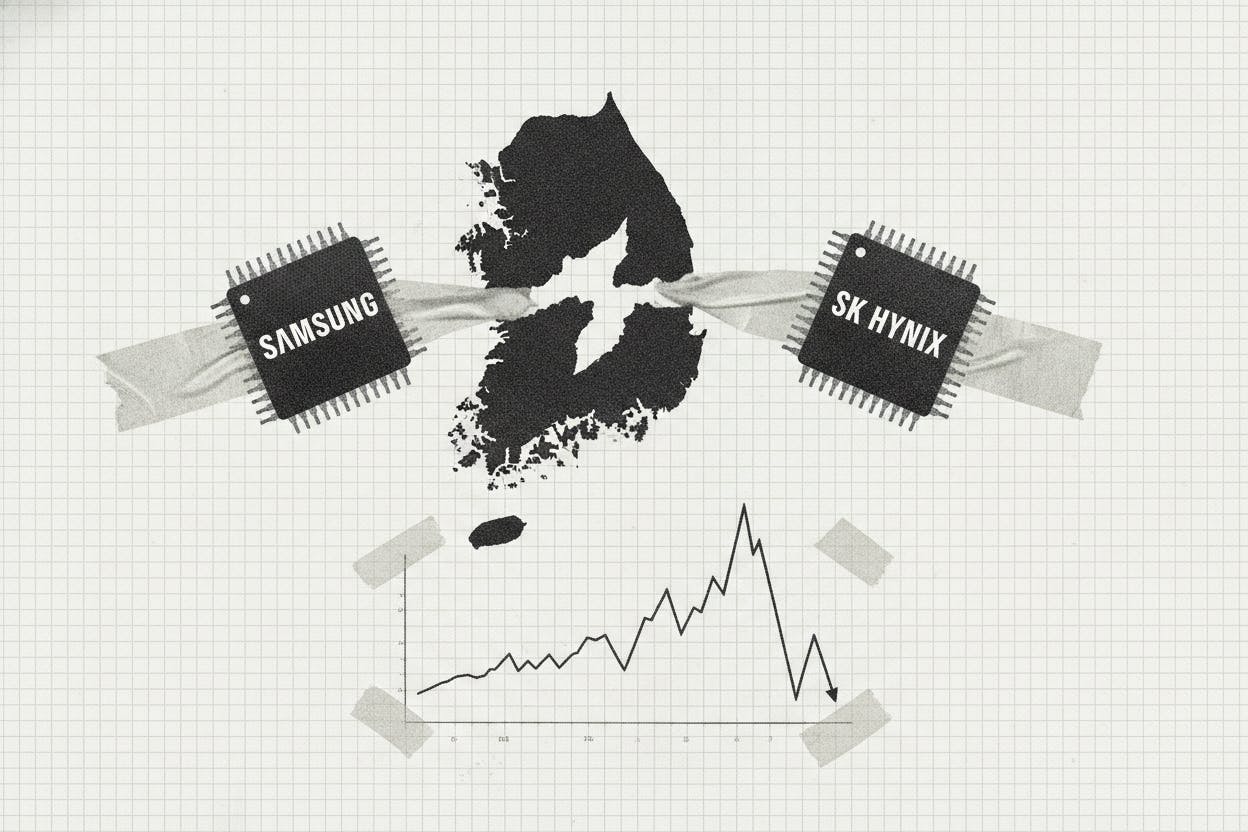
South Korean stocks delivered a whipsaw session on [date], flipping from a strong open to a brief selloff before closing slightly higher. The KOSPI index initially jumped as much as 1.9%, only to give back those gains and dip 0.5% before recovering to end the day in positive territory. Meanwhile, the Korean won stayed little changed against the US dollar, suggesting the moves were driven by local equity dynamics rather than broader currency pressure.
Why chip stocks matter so much
The KOSPI's volatility is almost always tied to semiconductor shares, and today was no exception. Samsung Electronics and SK Hynix, the country's two largest companies by market value, carry so much weight in the index that their moves can swing the entire market. When these chip giants diverge—one rising while the other falls—the index can quickly change direction.
According to Reuters, the early rally faded as investors unwound leveraged positions in chip shares. Leveraged positions involve borrowing money to amplify potential returns, but they also amplify losses. When a trade becomes crowded—meaning many investors have piled in—any hint of a reversal can trigger a rush to exit, accelerating the selloff.
Part of the caution stems from questions about whether big data center operators will maintain their current pace of spending on AI hardware. After a period of heavy investment in artificial intelligence infrastructure, some investors are starting to worry that demand could cool. That makes them quick to trim risk at the first sign of weakness, especially in high-flying chip stocks.
What it means for investors
For everyday investors, this kind of intraday swing is a reminder of how concentrated the South Korean market is. When a handful of mega-cap tech names dominate an index, their individual fortunes can create outsized moves. Diversification across sectors and geographies can help cushion the impact of such volatility.
The won's stability is notable. A sharply weaker currency would have added another layer of uncertainty, particularly for foreign investors who must convert their returns back into dollars. The fact that the won barely moved suggests the market's swings were not driven by macro fears but by sector-specific profit-taking.
Investors will likely keep a close eye on chip earnings and any commentary from major AI customers. If data center operators signal a slowdown in spending, chip stocks could face further pressure. Conversely, any reaffirmation of strong demand could reignite the rally.
For those with exposure to South Korean equities, the key takeaway is to expect more of this chop. The AI trade has been a powerful driver of gains, but it also brings heightened sensitivity to news flow. Staying informed and avoiding over-leverage are prudent strategies in such an environment.
Broader market context
The KOSPI's behavior today mirrors a broader global pattern where technology and chip stocks have been leading markets higher, but also experiencing sharp pullbacks. Similar dynamics have played out in other markets, such as Datadog's earnings miss and AppLovin's slide, where strong results still triggered selloffs due to forward guidance concerns.
Geopolitical risks, such as tensions in the Middle East, have also added to market jitters. Oil prices have climbed on fears of supply disruptions, as seen in oil's rise to $77.78, which can weigh on equity sentiment. However, today's KOSPI move appears more company-specific than macro-driven.
Looking ahead, investors will watch for any signals from the US Federal Reserve on interest rates, as well as upcoming earnings from major tech companies. The interplay between AI optimism and valuation concerns is likely to keep markets on edge.
For now, the KOSPI's ability to close slightly higher despite the intraday turmoil suggests underlying demand remains intact. But the ease with which the index flipped from a 1.9% gain to a 0.5% loss highlights how fragile sentiment can be when a few stocks carry the entire market.