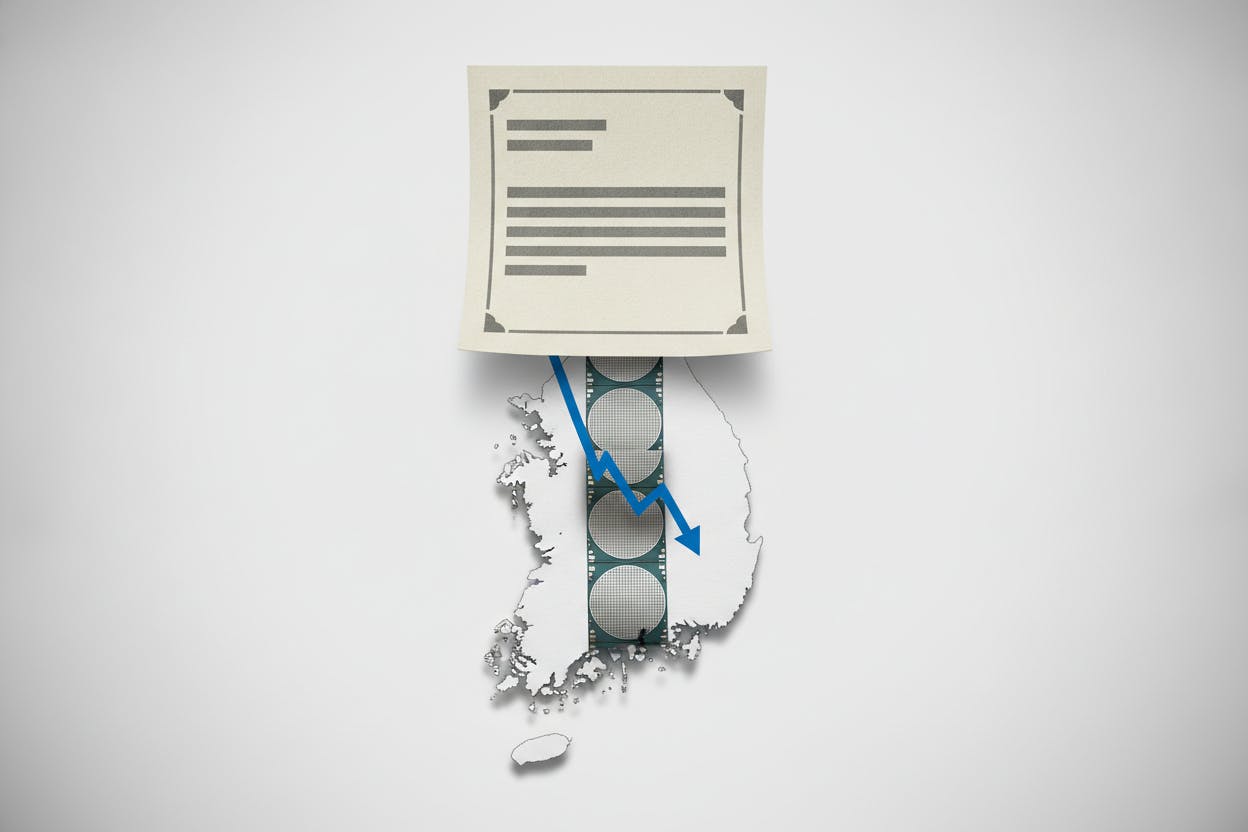
South Korean stocks ended Thursday with a modest gain, but the path there was anything but smooth. The KOSPI index closed up 0.26%, after swinging from an early jump of as much as 1.8% to a drop of 1.9% before stabilizing. The whipsaw came as chip giants Samsung Electronics and SK Hynix—two of the index's heaviest weights—turned lower after opening higher.
Samsung closed down 0.20%, while SK Hynix fell 1.05%. Their retreat dragged the broader market back from its early highs, underscoring how much South Korea's benchmark depends on the semiconductor sector. When the country's two largest chipmakers move, the KOSPI tends to follow.
Why chips are so important to the KOSPI
Semiconductors are the backbone of South Korea's export-driven economy, and they dominate the KOSPI's composition. Samsung Electronics and SK Hynix together account for a significant chunk of the index's market value. That means their daily performance often dictates the direction of the entire market.
On Thursday, both stocks initially rose, likely tracking an early rally in regional tech shares. But the gains faded quickly, reflecting broader concerns that are weighing on global markets. Investors are keeping a close eye on high bond yields, which can make future earnings from growth stocks like chipmakers look less attractive. When yields rise, the present value of those future profits falls, and investors often rotate out of riskier assets.
The chip sector has also been sensitive to news from the US, where a weak forecast from Broadcom recently hit semiconductor stocks across Asia. That episode, covered in our look at the Nikkei's reaction, shows how interconnected global tech supply chains are. A disappointing outlook from one major player can ripple through markets from Tokyo to Seoul.
Bond yields and geopolitics weigh on sentiment
Beyond chips, two forces are shaping investor mood: rising global bond yields and escalating tensions between the US and Iran. Higher yields, particularly on US Treasuries, tend to pull money out of riskier assets like stocks and into safer bonds. For emerging markets like South Korea, that can also pressure the local currency and make foreign investors more cautious.
Meanwhile, fresh US-Iran tensions have added a layer of uncertainty. Oil prices have already climbed as a result, with crude jumping to around $90 a barrel after US strikes on Iranian targets, as we noted in our coverage of that move. Higher energy costs can feed into inflation, which in turn keeps central banks cautious about cutting interest rates. That dynamic is playing out across global markets, as seen in the tug-of-war between geopolitics and yields.
For South Korea, a major energy importer, rising oil prices are a double-edged sword. They can boost the country's oil refiners and shipbuilders, but they also raise costs for manufacturers and consumers. The net effect on the KOSPI is often mixed, but the uncertainty itself tends to increase volatility.
What it means for investors
For everyday investors, Thursday's session is a reminder that markets can move quickly and in both directions. The KOSPI's early surge and subsequent reversal show how sentiment can shift on a dime, especially when a few large stocks dominate the index.
If you hold Korean stocks or funds that track the KOSPI, it's worth understanding that your returns are heavily tied to the fortunes of Samsung and SK Hynix. When those companies report earnings or face headwinds, the whole index feels it. The same is true for the broader tech sector, which has been volatile recently amid concerns about demand and supply.
Bond yields are another factor to watch. If yields keep climbing, growth stocks—including chipmakers—could face continued pressure. On the other hand, if yields stabilize or fall, that could provide some relief.
Geopolitical risks, like the US-Iran situation, are harder to predict. They can cause sudden spikes in oil prices and market jitters, but they often fade if the situation doesn't escalate further. Investors should be prepared for more volatility in the near term, but that doesn't mean they should make hasty decisions.
As always, it's important to focus on your long-term goals and diversify your portfolio. No single market move should dictate your strategy. The KOSPI's ups and downs are part of the normal rhythm of investing, and staying informed is the best way to navigate them.



