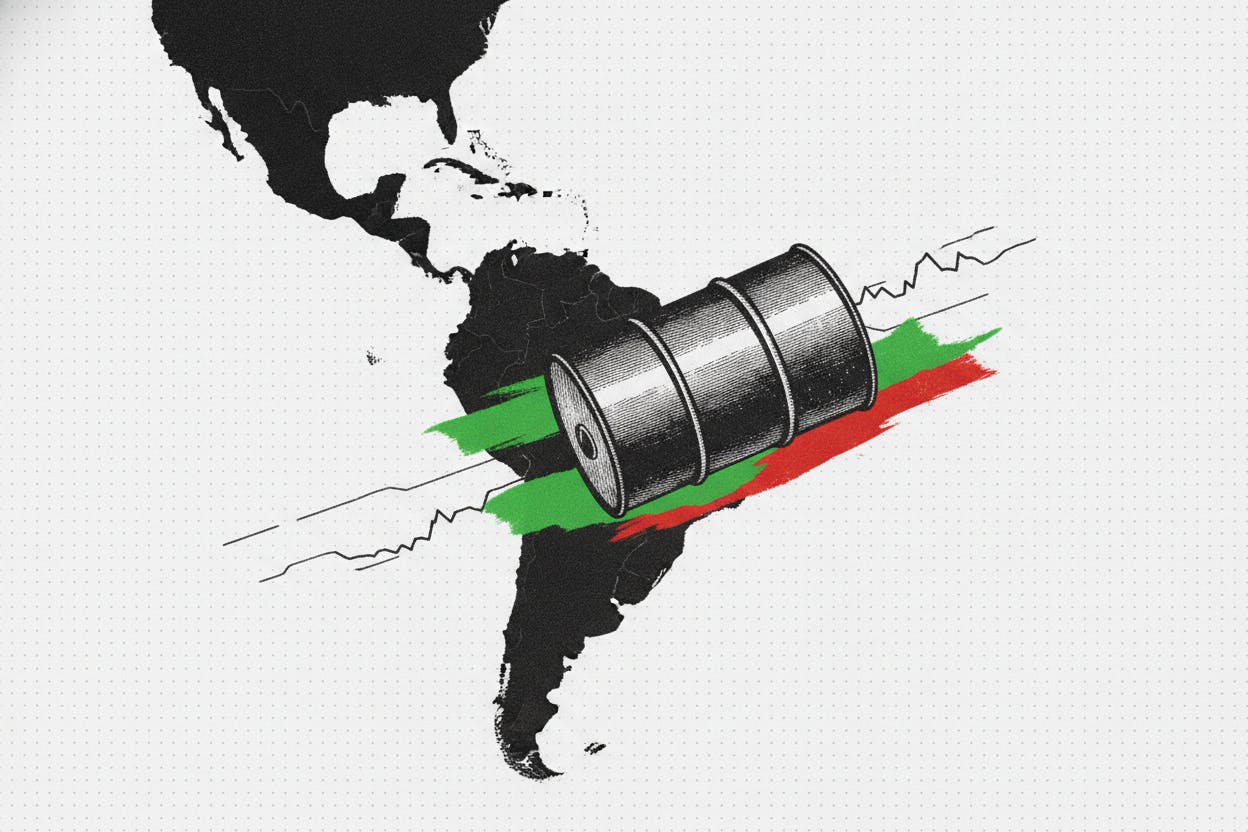
Latin American currencies strengthened on Tuesday as a spike in oil prices, triggered by renewed US-Iran military strikes in the Gulf, gave a tailwind to regional exporters. The MSCI Latin American equity index edged up 0.4%, reflecting cautious optimism among traders weighing the implications of higher crude costs and geopolitical tension.
Oil Jumps on Gulf Strikes
Crude oil prices surged after the US launched fresh strikes against Iranian targets in the Gulf region, escalating a conflict that has already disrupted shipping lanes and raised fears of supply disruptions. The move sent benchmark Brent crude above $90 a barrel, a level that often rattles global markets but can be a boon for oil-producing nations.
For Latin America, the impact is mixed. Countries like Colombia, Mexico, and Brazil—major oil exporters—typically see their currencies benefit when crude prices rise, as higher export earnings and government revenues flow in. In contrast, net importers such as Chile and Peru face pressure from a larger import bill and potential inflationary effects.
This dynamic played out as the US dollar held relatively steady, allowing currency moves to reflect local factors. The Mexican peso, Colombian peso, and Brazilian real all posted gains, while traders watched for signs of whether the conflict would broaden.
What It Means for Investors
For everyday investors, the key takeaway is that geopolitical events like these can create divergent outcomes within the same region. A spike in oil prices isn't uniformly bad or good—it depends on whether a country produces or consumes the commodity.
Investors with exposure to Latin American assets should monitor how each country's trade balance and inflation outlook shift with oil. Exporters may see a short-term boost, but prolonged tension could weigh on global growth and risk appetite, eventually dragging down equities across the board.
The broader context includes recent volatility in global markets. European stocks rebounded as chipmakers led gains, but oil's jump on the strikes added a layer of uncertainty. Meanwhile, oil above $90 has pressured Indian bonds, showing how the same crude spike affects different regions.
Geopolitical Risk Premium
The US-Iran strikes are the latest in a series of escalations that have kept a risk premium in oil prices. Traders are pricing in the possibility of further disruptions to Gulf shipping, which handles about a fifth of the world's oil supply. So far, the conflict has remained contained, but any expansion could send crude even higher.
For Latin America, this creates a delicate balancing act. Higher oil revenues can boost fiscal positions and attract foreign capital, but they also risk stoking inflation if central banks are forced to raise interest rates. The region's currencies have already been under pressure from a strong dollar and high global rates, so any relief is welcome.
Earlier this month, Latin American markets slid as Iran tensions pushed oil to a one-month high, highlighting the volatility. Tuesday's modest gain suggests traders are cautiously optimistic that the situation won't spiral.
What to Watch Next
Investors should keep an eye on oil inventory data and any diplomatic moves that could de-escalate the conflict. Central bank decisions in the region, particularly in Brazil and Mexico, will also be crucial as they balance inflation risks from higher energy costs.
For now, the message is clear: oil is the driver, and Latin America's fortunes are tied to its direction. Exporters have the upper hand, but the broader market remains on edge.



