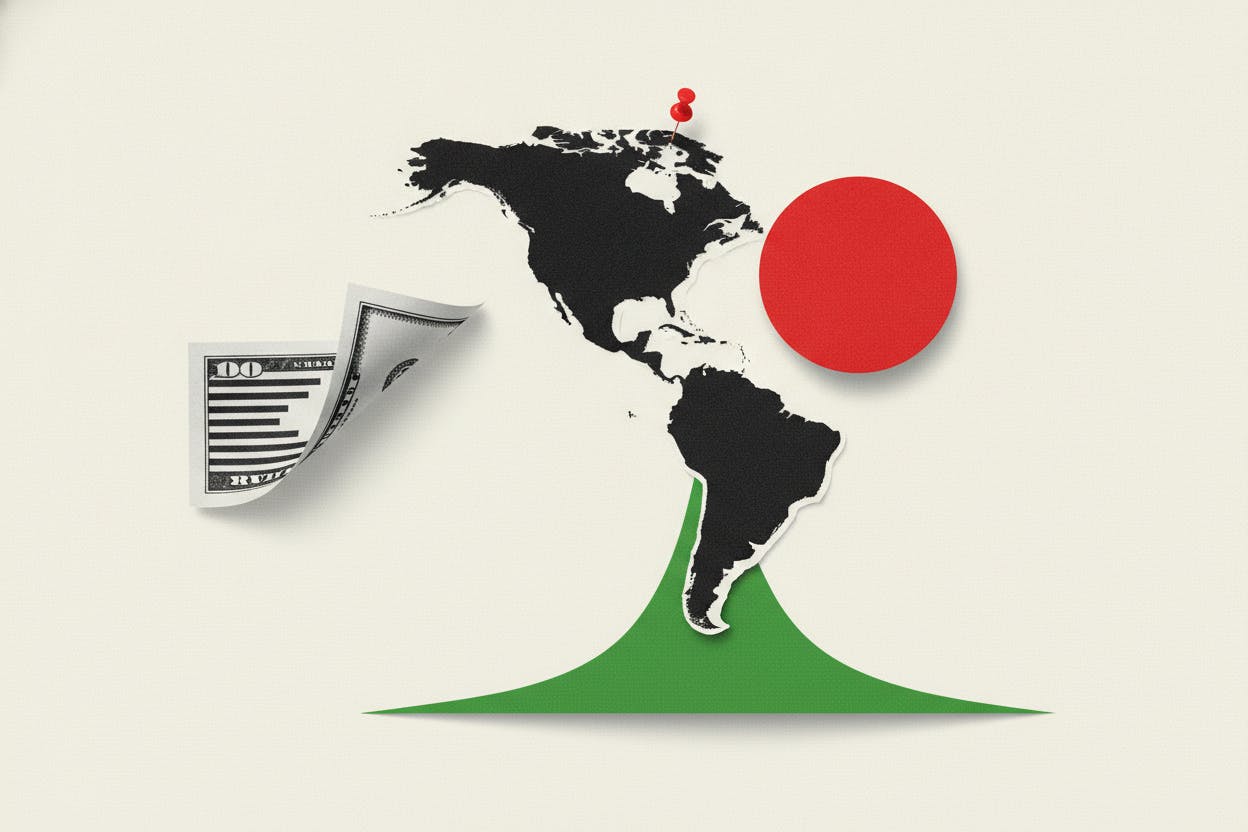
Latin American stocks and currencies rallied on Wednesday after a softer-than-expected US inflation reading for June eased pressure on the dollar, giving emerging-market assets a broad lift. The MSCI Latin America stocks index rose 1.3%, while the region's currency index gained 0.7%, nearing a one-month high. Oil prices also jumped 2% to a four-week high, adding to the positive momentum for commodity-linked economies in the region.
What drove the move
The catalyst was the US Consumer Price Index (CPI) for June, which came in cooler than economists had forecast. That data, released Wednesday morning, reinforced expectations that the Federal Reserve may be able to ease its aggressive stance on interest rates. When US inflation cools, investors typically assume the Fed can hold off on further rate hikes or even begin cutting rates sooner. That tends to weaken the US dollar, which is a key driver for emerging markets because so much global borrowing, trade, and investment is denominated in dollars.
As the dollar eased, Latin American currencies strengthened. Brazil's real rose about 1.3% to 5.0728 per US dollar, while other regional currencies also posted gains. The weaker dollar makes it cheaper for international investors to hold local-currency assets and reduces the cost of hedging currency risk.
The rally was broad-based, with stocks across the region participating. The move also echoed a broader trend seen in other markets: US stocks rallied on the same inflation data, as US stocks rally as June CPI drop fuels rate-cut hopes, and Treasury yields fell as Treasury yields fall as June inflation data eases rate hike fears.
Why Latin America benefits from a weaker dollar
Latin American markets are particularly sensitive to dollar movements for several reasons. Many countries in the region are major commodity exporters—oil, metals, agricultural goods—which are priced in dollars. A weaker dollar makes those commodities cheaper for buyers using other currencies, potentially boosting demand and prices. That dynamic was visible on Wednesday, with oil climbing 2% to a four-week high, providing an extra tailwind for energy-exporting nations like Brazil, Colombia, and Mexico.
Another key channel is the so-called "carry trade." Investors borrow in a low-interest-rate currency—often the US dollar or Japanese yen—and invest the proceeds in higher-yielding emerging-market bonds or currencies to collect the interest rate differential. Latin American central banks, including those in Brazil and Mexico, have started cutting interest rates from very high levels, but their yields still look attractive compared to those in developed markets. If the dollar weakens, the cost of hedging currency risk falls, making carry trades more profitable.
However, the setup is fragile. If the dollar firms up again—due to a surprise uptick in US inflation or a shift in Fed rhetoric—those carry trades can unwind quickly. Higher-volatility currencies, like the Brazilian real, tend to feel the pain first. TD Securities has warned of "residual USD strength in Q3," meaning any rebound in the greenback could reverse Wednesday's gains.
What it means for investors
For everyday investors, the rally in Latin American assets highlights how closely emerging markets are tied to US monetary policy. When US inflation cools and the dollar weakens, it becomes easier for global investors to hold emerging-market stocks and bonds without fully hedging exchange-rate risk. That can drive foreign money into local markets, supporting both equities and currencies.
But the flip side is speed. As the brief notes, "if the dollar firms up again, those trades can unwind quickly, and higher-volatility currencies tend to feel it first." Investors should be aware that Latin American assets can be volatile, and gains driven by dollar weakness can reverse just as fast. The region's high interest rates offer a yield premium, but that comes with currency risk.
The broader context is also worth noting. While the US inflation data was encouraging, the Fed has not yet declared victory. The central bank is still watching for signs that inflation is sustainably moving toward its 2% target. Any surprise in upcoming data—such as a strong jobs report or a pickup in consumer spending—could reignite rate-hike fears and strengthen the dollar.
For now, the rally offers a reminder that Latin America remains a high-beta play on global risk appetite. When the macro environment turns favorable, the region can outperform. But investors should be prepared for the ride to get bumpy if the dollar turns around.



