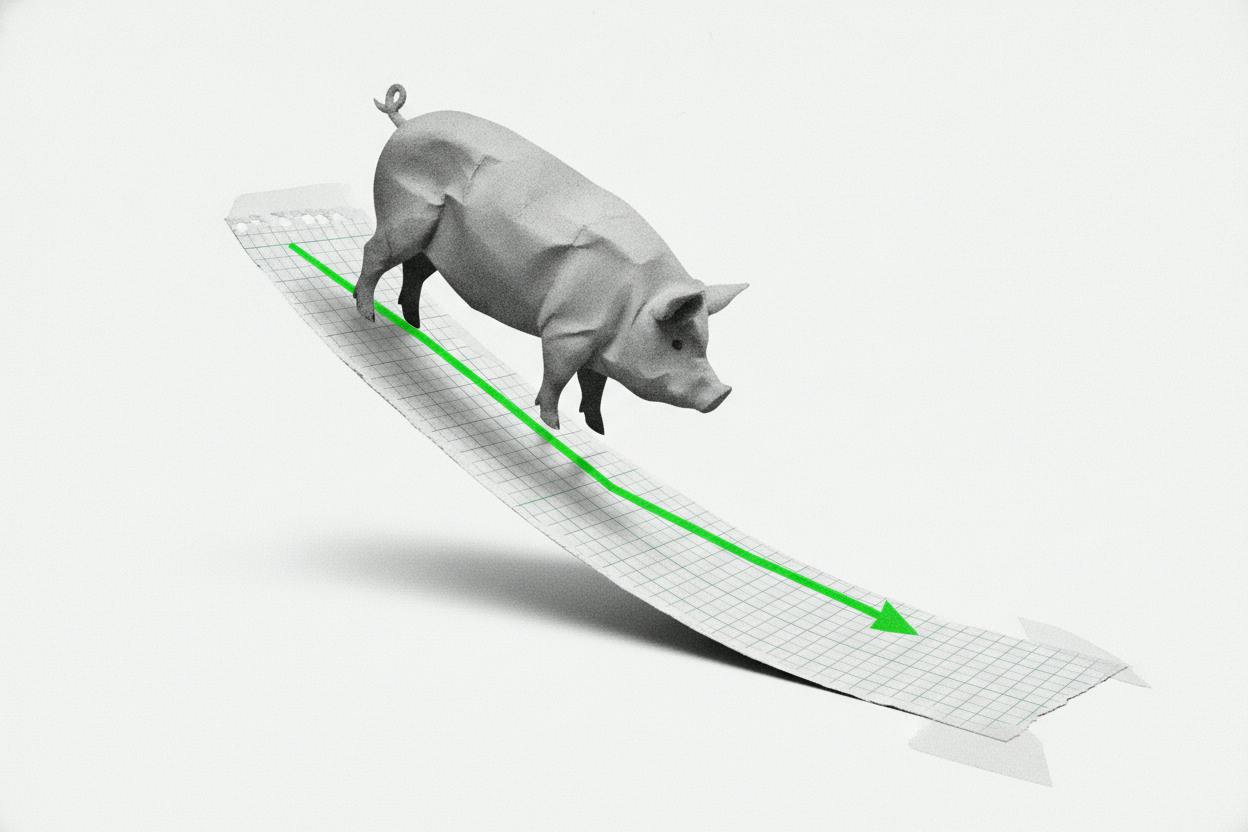
Lean hog futures fell to fresh contract lows on Wednesday, with the December contract on the Chicago Mercantile Exchange dropping to 66.000 cents per pound. The move came as wholesale pork prices sank to their lowest level since April 2023, according to the U.S. Department of Agriculture.
The USDA's pork cutout — a benchmark index that tracks the value of a basket of major pork cuts like loins, hams and bellies — fell to $79.45 per hundredweight. That's down 23% from a year earlier, a decline that has rippled through the futures market as traders adjust to a softer demand picture.
Why the cash market matters for futures
For investors unfamiliar with agricultural commodities, the relationship between cash prices and futures is central to understanding moves like this. The cutout value is essentially the wholesale price that packers receive for pork. When that price falls, the entire supply chain feels it — from the packer back to the farmer.
Futures contracts, which are agreements to buy or sell hogs at a set price on a future date, tend to track the cash market closely. If wholesale pork is fetching less money today, traders rationally expect that weakness to persist, so they sell futures. That's what's happening now: the cash market is dragging futures lower, not the other way around.
It's worth noting that this is not a story about a sudden glut of hogs. The brief points out that the move is less about supply and more about what shoppers are willing to pay. In other words, there are plenty of animals coming to market, but the demand side of the equation has weakened.
What's behind the demand slowdown
Several broad factors can cool demand for pork. Consumers facing higher prices for everyday goods often trade down to cheaper proteins like chicken, or simply buy less meat overall. Export demand also plays a role — major buyers like China and Mexico can swing the market significantly, though the brief does not specify export trends.
Seasonality is another consideration. Pork demand typically peaks in the summer grilling season and around holidays, then softens in the fall. A late-year slump in the cutout is not unusual, but the depth of the decline — a 23% year-over-year drop — suggests something more than routine seasonal weakness.
For context, the last time wholesale pork prices were this low was April 2023. That period also saw pressure on hog futures, and producers responded by slowing herd growth. Whether a similar adjustment happens this time will depend on how long the demand weakness persists.
What it means for investors
Most everyday investors don't trade lean hog futures directly. But the pork complex matters for a few reasons.
- Food company earnings: Packaged meat producers and protein processors can see margins squeezed when wholesale prices fall, though lower input costs can sometimes help companies that buy pork to make bacon, sausage and other products. The net effect depends on whether a company is a seller of raw pork or a buyer.
- Grocery and restaurant chains: Lower wholesale pork prices could eventually translate into lower prices at the meat counter, which may support consumer spending in other areas — or simply reflect that shoppers are already pulling back.
- Inflation watch: Food prices are a component of the Consumer Price Index. Continued weakness in pork, if it persists, could modestly weigh on headline inflation readings, though food is a relatively small part of the overall index.
- Agricultural commodities as a group: Weakness in hogs can sometimes signal broader softness in agricultural demand, which may affect grain prices as feed demand adjusts.
Investors with exposure to agriculture-focused exchange-traded funds or meat-processing stocks should watch the next few USDA cutout reports. A stabilization in wholesale prices would be an early sign that the futures market has found a floor.
What to watch next
The key question is whether this is a temporary dip or the start of a longer downturn. Traders will be looking at weekly export sales data, slaughter rates and any signs that retailers are restocking ahead of winter holidays. If the cutout continues to slide, expect further pressure on futures and potentially on producer sentiment.
For now, the market is sending a clear message: pork demand has cooled, and prices are adjusting accordingly. That's a reminder that commodity markets are driven as much by what consumers will pay as by how much farmers produce.