LG Display, one of the world's largest makers of display panels, reported a slide in quarterly profit on Wednesday, as foreign-exchange fluctuations and weaker shipments of mid-sized LCD screens took a toll. The results underscore how quickly a panel maker's fortunes can change, even when demand for its products remains broadly intact.
For the three months ended Sept. 30, the South Korean company said operating profit fell to 250.6 billion won (about $180 million) from 431 billion won a year earlier. Revenue dropped 10% to 6.277 trillion won, coming in below the 6.793 trillion won that analysts had expected, according to FactSet. The company also reported earnings before interest, taxes, depreciation, and amortization (EBITDA) of 1.214 trillion won, down from the prior year.
Why the numbers slipped
Management pointed to two main culprits: foreign-exchange moves and lower shipments of mid-sized liquid-crystal display (LCD) products. Currency swings can make results look better or worse when translated into won, without changing the underlying demand picture. Meanwhile, softer LCD shipments mean factories run at lower utilization, which can hurt both reported sales and how efficiently operations run.
Display manufacturing is a capital-intensive business. Once plants and equipment are in place, the cost base is largely fixed. That means profits depend heavily on how full the production lines are. When shipments fall, the same fixed costs get spread over fewer panels, squeezing margins through what investors call “operating leverage.” Even if prices don't collapse, lower volumes can quickly eat into profitability.
That dynamic is why analysts often watch factory utilization rates as closely as revenue. A company can post decent sales numbers but still see profits shrink if its plants aren't running near capacity.
Shifting toward OLED and gaming
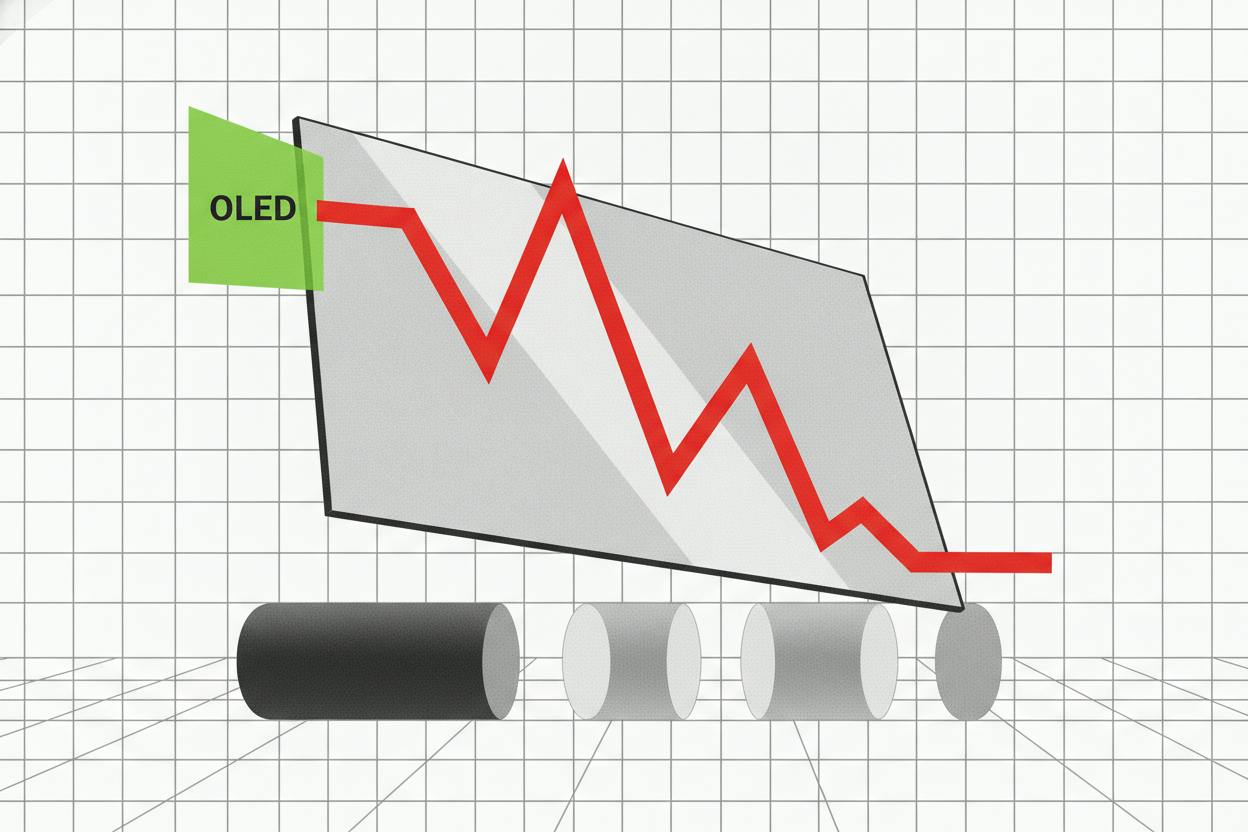
In response to the current headwinds, LG Display is leaning harder on its in-house organic light-emitting diode (OLED) technology, which is used in premium TVs and high-end monitors. OLED panels offer better contrast and thinner designs than traditional LCDs, and they command higher prices. The company is also expanding its push into large-screen gaming monitors, a segment that has grown as gamers seek faster refresh rates and immersive displays.
Beyond that, LG Display says it aims to win more share in IT and mobile panels by combining aggressive pricing with reliable supply. That strategy is meant to keep volumes up even as the broader LCD market matures and faces competition from Chinese rivals.
The shift toward OLED and gaming is part of a longer-term effort to move away from commoditized LCD panels, where price competition is fierce, and toward products that can sustain better margins. But the transition takes time, and the latest quarter shows the company is still exposed to the cyclical swings of the display industry.
What it means for investors
For everyday investors, LG Display's results are a reminder that in capital-intensive industries, revenue isn't always the best measure of health. What matters more is how efficiently a company can use its fixed assets to generate profit. When demand softens, as it did for mid-sized LCDs this quarter, the impact on the bottom line can be outsized.
The foreign-exchange effect adds another layer of complexity. Because LG Display reports in won, a stronger won can make overseas sales look smaller when converted back, and vice versa. That can obscure the true trend in demand, making it harder to judge progress from sales figures alone.
That's why investors may focus on whether OLED and gaming-monitor volumes can lift average selling prices and profit per panel enough to keep operating profit and EBITDA steadier through the next part of the LCD cycle. EBITDA of 1.214 trillion won this quarter, while down from a year ago, still shows the company is generating meaningful cash flow from its operations.
Looking ahead, the key questions are whether the push into premium displays can offset the weakness in mid-sized LCDs, and whether currency moves will continue to distort the headline numbers. For now, LG Display is betting that its higher-value products will carry it through the current downturn.
For context, other companies in the broader tech and manufacturing space have faced similar pressures. For instance, Nokia's recent profit beat showed how a focus on high-growth areas can help offset weakness elsewhere. And Kuehne+Nagel's improved outlook highlights how companies that adapt to shifting demand can protect their bottom lines.
Ultimately, LG Display's quarter is a case study in how external factors—currency, shipment volumes, and factory utilization—can move the needle for a manufacturer. Investors who understand these levers are better equipped to interpret the company's results and its prospects for the rest of the year.