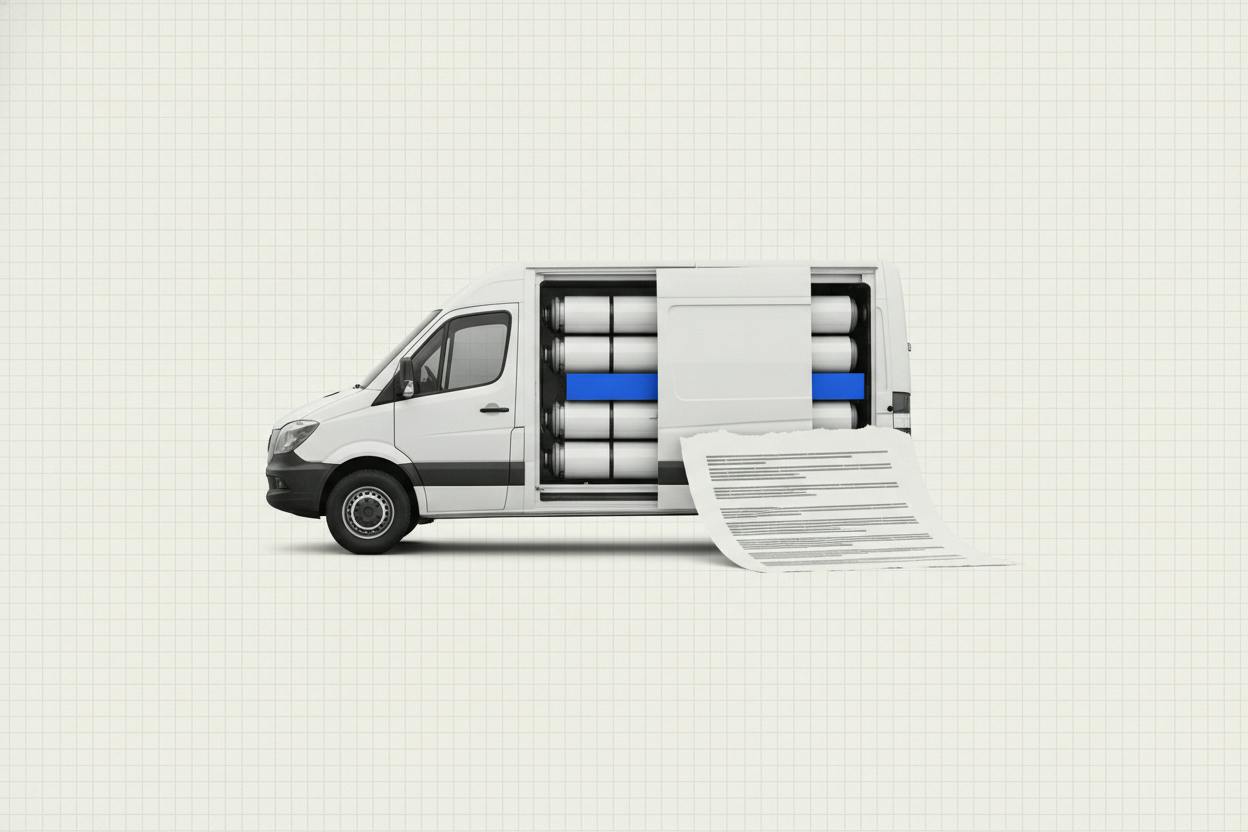
South Korean battery giant LG Energy Solution has taken a step toward expanding its presence in the commercial electric vehicle (EV) market. The company announced a non-binding memorandum of understanding (MoU) with indiGOtech, a US-based commercial EV startup, to supply its 46-series NCM cylindrical cells for indiGOtech's Flow vans. Deliveries are expected to run from 2027 through 2030.
The deal is still in its early stages—the MoU is not a firm contract—but it signals LG Energy Solution's ambition to move beyond passenger cars and into the growing market for electric delivery and work vans. For indiGOtech, the agreement provides a potential supply line for a key component as it works to bring its Flow van to market.
What are 46-series NCM cylindrical cells?
Battery cells come in many shapes and sizes. Cylindrical cells look like oversized AA batteries, and the "46-series" refers to a newer, larger format—46 millimeters in diameter—that is gaining traction in the EV industry. These cells are designed to offer higher energy density and better thermal management compared to older, smaller cylindrical cells.
NCM stands for nickel, cobalt, and manganese, the three metals used in the cathode. This chemistry is common in EVs because it balances energy density (how far a vehicle can go on a charge) with cost and longevity. The use of NCM cells in commercial vans suggests a focus on range and performance, which are critical for delivery fleets that need to cover long distances daily.
LG Energy Solution is one of the world's largest battery makers, supplying cells to major automakers. The company has been investing heavily in next-generation formats like the 46-series, which are expected to become more common in the second half of this decade.
Why commercial EVs matter
Commercial vehicles—vans, trucks, and delivery fleets—are a significant source of emissions, and many companies are under pressure to electrify their fleets. Governments around the world are tightening emissions rules, and logistics firms are looking for ways to cut fuel costs. This has created a fast-growing market for electric vans and trucks.
However, commercial EVs face unique challenges. They need large batteries to support heavy loads and long routes, and they must be durable enough to withstand years of daily use. Battery suppliers that can meet these demands stand to benefit from a wave of fleet electrification.
indiGOtech is a relatively new player in this space, and the Flow van is its flagship product. The company is targeting the last-mile delivery segment, which has boomed with the rise of e-commerce. By securing a battery supply agreement with a major manufacturer like LG Energy Solution, indiGOtech is signaling that it intends to scale up production.
What it means for investors
For investors, this MoU is a reminder that the EV story is not just about passenger cars. The commercial vehicle segment is becoming a battleground for battery makers, and deals like this one can provide a glimpse into future revenue streams.
LG Energy Solution is already a major player, but the competition is intense. Rivals like CATL and BYD are also vying for market share, and the shift to new cell formats could reshape the industry. The 46-series cells are seen as a key part of LG's strategy to stay ahead.
It's important to note that the MoU is non-binding, meaning either side could walk away before a final contract is signed. Investors should watch for a definitive agreement, which would provide more concrete details on volumes and pricing.
For everyday investors, the takeaway is that the EV supply chain is still evolving. Battery technology is advancing rapidly, and companies that secure early partnerships could gain a competitive edge. However, the timeline is long—deliveries aren't expected until 2027—so the financial impact of this deal, if it materializes, won't be felt for years.
In the meantime, investors can keep an eye on broader trends in the EV market, such as production snags at major automakers and the ongoing push for clean energy adoption. These factors will shape the demand for batteries in the coming years.
As with any early-stage deal, there's uncertainty. But for LG Energy Solution, this MoU is a clear sign that it sees commercial EVs as a growth opportunity. For indiGOtech, it's a vote of confidence from one of the industry's biggest suppliers.