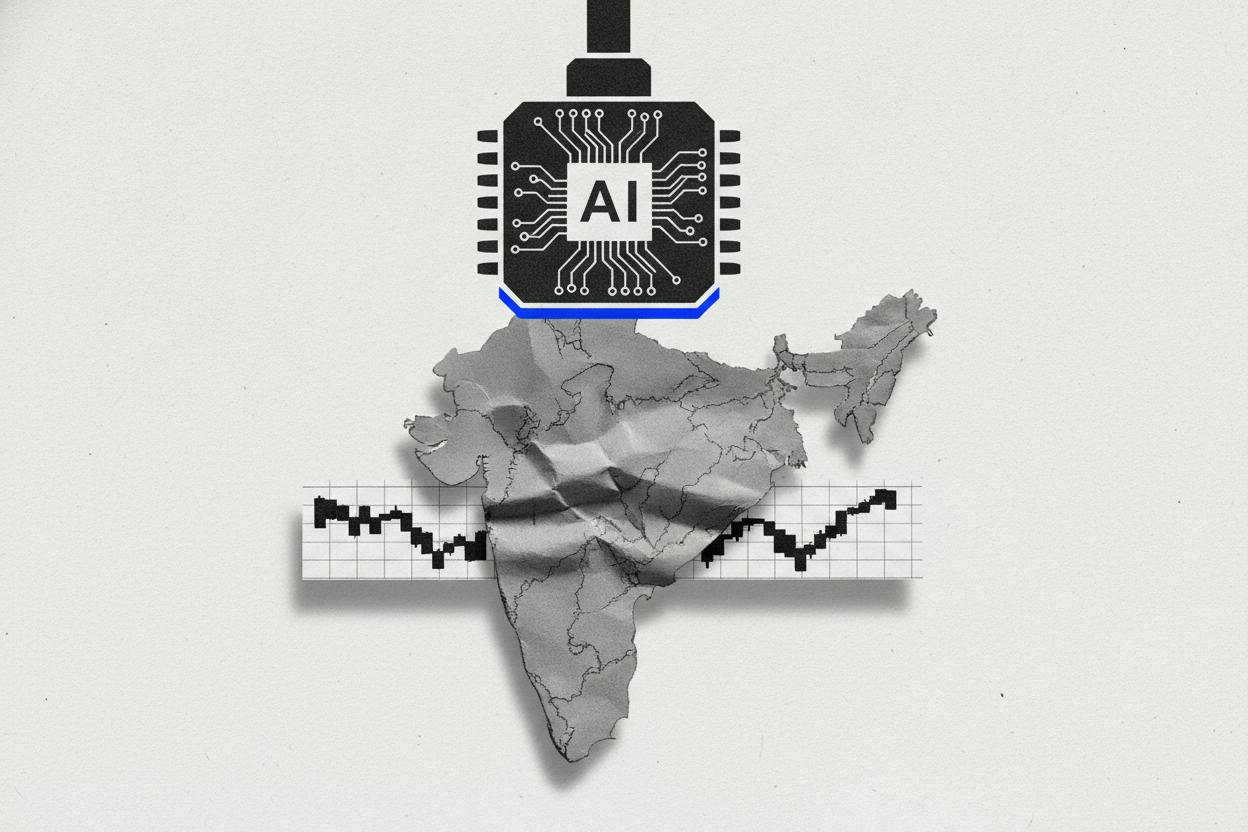
India's largest IT services companies are preparing to report quarterly earnings, and the mood is cautious. Analysts expect another soft quarter, with the possibility of reduced full-year forecasts. The sector's benchmark, the Nifty IT index, has already dropped about 27% in 2026, reflecting growing worries about the industry's outlook.
The core issue: clients are increasingly using artificial intelligence tools to demand lower prices for IT services. At the same time, overall tech spending remains cautious, as businesses worldwide tighten budgets. This double squeeze is putting pressure on the revenue growth and profit margins of India's IT giants, which include names like Tata Consultancy Services, Infosys, and Wipro.
Why AI is changing the pricing game
For decades, Indian IT firms built their business on providing software development, maintenance, and support at a lower cost than Western rivals. But AI tools are now automating many routine coding and testing tasks, giving clients more leverage in negotiations. A client can say, 'Why should I pay the same rate when AI can do part of this work?' That dynamic is forcing IT firms to rethink how they price their services.
This is not just a short-term blip. Industry analysts point out that AI is fundamentally altering the cost structure of IT services. Companies that can adapt by offering higher-value services—like AI consulting or data analytics—may fare better. But the transition is painful, and the current earnings season is likely to show the strain.
What the numbers say
The Nifty IT index's 27% decline in 2026 so far is a stark contrast to the broader Indian market, which has been relatively resilient. The drop reflects investor fears that growth will slow and margins will shrink. Foreign investors have also been pulling money out of Indian stocks, adding to the pressure. In September alone, foreign investors withdrew $3.75 billion from Indian equities, a trend that has continued into the new year.
Analysts are bracing for another quarter of weak revenue growth, and some expect companies to cut their guidance for the rest of the fiscal year. Forecast cuts would be a clear signal that the AI pricing pressure is more than a temporary hiccup.
What it means for investors
For everyday investors, this is a reminder that technology stocks, even those of established giants, are not immune to disruption. The AI wave that has boosted some tech companies is now acting as a headwind for traditional IT services firms. If you hold Indian IT stocks directly or through a mutual fund, expect continued volatility.
It's also worth watching how these companies respond. Some are investing heavily in AI capabilities, hoping to turn the threat into an opportunity. Others may focus on cost-cutting to protect margins. The earnings calls in the coming weeks will be closely watched for any hints about pricing trends and client behavior.
For those considering new investments, the key question is whether the current pessimism is already priced in. A 27% drop is significant, but if the earnings outlook continues to deteriorate, there could be more downside. Conversely, if companies show they can navigate the AI transition, the sector could be due for a rebound.
Broader context
The challenges facing India's IT sector come amid a broader global tech slowdown. Companies worldwide are scrutinizing their IT budgets, and the rise of AI is forcing them to reassess what they pay for. This is not unique to India—IT services firms in other countries face similar pressures—but India's outsized role in the industry makes it a bellwether.
Meanwhile, other parts of the Indian economy are showing resilience. For example, new IPOs are still coming to market, and global companies are expanding into India. But the IT sector, which has been a major driver of India's economic growth and stock market performance, is now in a tough spot.
Investors should also keep an eye on macroeconomic factors. Cooler inflation in the US could influence interest rates, which in turn affect tech spending. And foreign investment flows will continue to play a role in Indian market sentiment.
The road ahead
As earnings season unfolds, the focus will be on three things: revenue growth, margin trends, and guidance. Any of these could trigger sharp moves in individual stocks. For now, the consensus is cautious, and the risk of forecast cuts is real.
For the average investor, the takeaway is to understand that the IT sector is undergoing a structural shift. AI is not just a buzzword; it's changing the economics of the industry. Companies that adapt will thrive, but those that don't may struggle. As always, diversification and a long-term perspective are your best defenses against sector-specific turbulence.