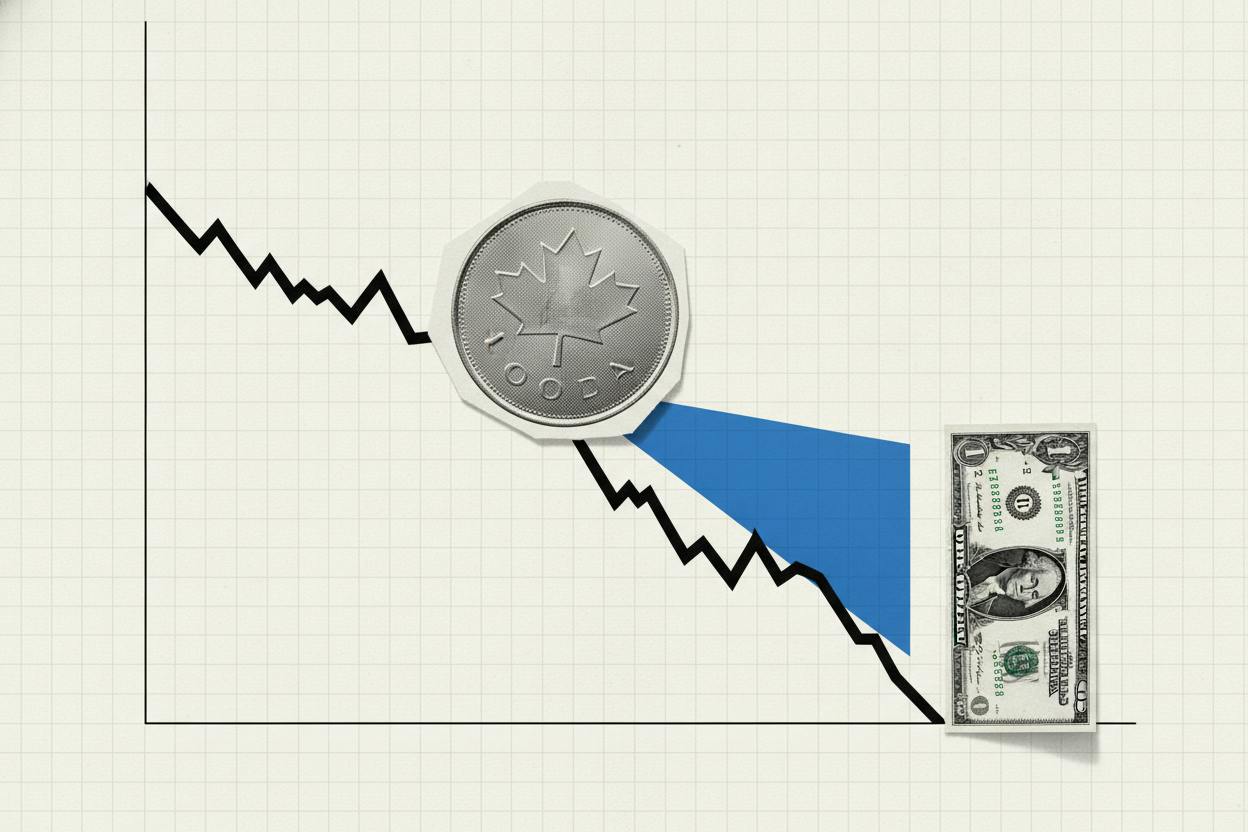
The Canadian dollar slid to a 19-month low against its US counterpart on Tuesday, as a run of stronger-than-expected US economic data and a more hawkish tone from the Federal Reserve pushed investors toward the greenback. The loonie traded around 1.4325 per US dollar (about 69.81 US cents) after briefly touching 1.4340, its weakest intraday level since April 2025.
The move reflects a familiar dynamic in currency markets: when the world's largest economy looks stronger and its central bank sounds more inclined to keep interest rates higher, global capital tends to flow toward US-dollar assets. That shift has been especially visible at the short end of the bond market, where policy expectations show up quickly.
What's driving the dollar higher?
The catalyst was a one-two punch of stronger US jobs and inflation readings, plus a firmer tone from the Fed. Fed Governor Christopher Waller said inflation may be starting to shape how the public thinks about prices, which could mean the central bank has to lean harder. That comment reinforced the view that the Fed may keep rates elevated for longer than previously expected.
The result: the US 2-year government bond yield now sits about 148.5 basis points above Canada's, after widening by roughly 21 basis points since the start of the month. A basis point is one-hundredth of a percentage point. When the gap between short-term yields widens, investors can earn more on US-dollar cash and short-term bonds, which often supports the US dollar.
Canada isn't out of the picture – investors still see a meaningful chance the Bank of Canada raises rates in December – but the relative payout for holding US dollars has increased, and that tends to pull demand toward the greenback.
Oil's slide adds to the pressure
Oil sliding didn't help, either. US crude futures were down 4.1% to $82.50 a barrel. Energy exports are a big source of US-dollar income for Canada, so when oil prices fall, the loonie often weakens along with them. Cheaper oil can help at the gas pump over time, but it doesn't automatically cancel out the higher Canadian-dollar bill that comes with a weaker currency.
The broader picture is one of a strengthening US dollar across the board. The greenback has been on a tear, pressuring stocks and commodities alike. As the dollar's 19-month high pressures stocks and commodities, investors are watching how far the rally can go.
What it means for your money
For everyday Canadians, a weaker loonie has a direct impact on spending that's priced in US dollars. A US$100 hotel room costs more when the loonie is near 1.4325. The same goes for app subscriptions billed in USD, online purchases from US retailers, and any travel south of the border.
The effect can also seep into Canadian inflation when businesses import US parts or services and pass some of that higher cost on. That's a key reason central banks and investors watch currency moves closely – they can feed into the broader price pressures that influence interest rates.
For investors, the widening yield gap is a signal. When US short-term yields rise relative to Canada's, it can make US-dollar assets more attractive, which tends to support the dollar and weigh on the loonie. That dynamic has been a theme in recent weeks, as the US dollar hit a post-2025 high against the loonie after Waller's comments.
The stronger dollar has also been a headwind for other markets. Gold and bitcoin have sunk, and copper hit a seven-month low as the dollar strengthened and algorithmic selling bit. The dollar's 18-month high sent gold and bitcoin lower, and copper's slide reflects the broader pressure on commodities.
What to watch next
Investors will be watching for the next round of US economic data and any further signals from the Fed. If the data continues to come in hot, the dollar could extend its gains. On the Canadian side, the Bank of Canada's December meeting will be a key event – a rate hike would help support the loonie, but it would also signal that inflation remains a concern.
For now, the loonie's slide is a reminder that currency moves can have a real impact on portfolios and household budgets. Whether you're planning a US vacation or investing in international assets, the exchange rate matters.



