Canada's dollar, known as the loonie, slipped 0.2% to 1.4242 per US dollar on Monday, as traders held their breath ahead of two key data releases that could determine the Bank of Canada's next move on interest rates.
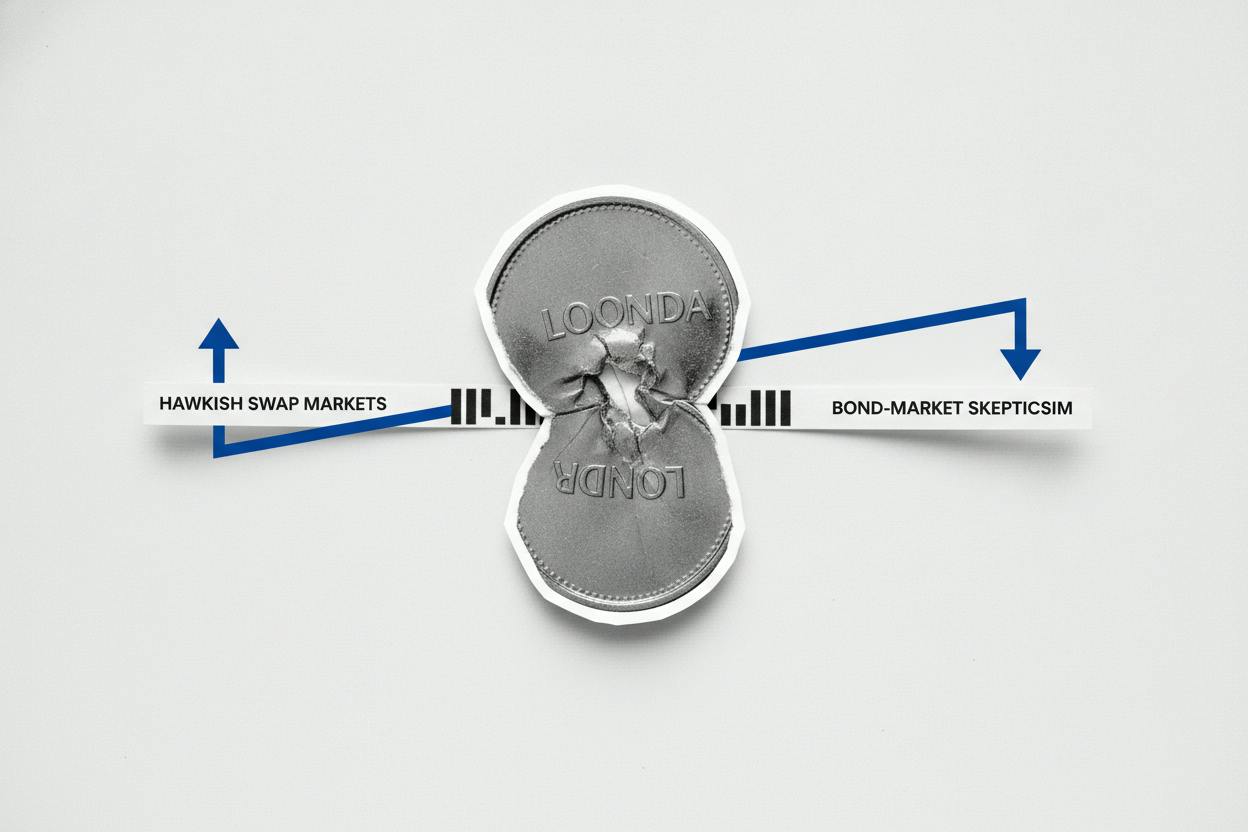
The currency's modest decline masks a deeper tension in Canadian markets. Interest-rate swaps—contracts investors use to bet on where policy rates are headed—now imply roughly an 80% chance that the Bank of Canada will raise rates at its next meeting. That hawkish expectation follows the central bank's warning that it may need to respond “forcefully” to supply shocks, a clear signal it remains willing to tighten policy if inflation proves stubborn.
But that confidence faces two big tests. Monday brings Canada's third-quarter GDP report, and next Friday the November jobs data. These releases will show whether the economy is cooling enough to keep inflation in check—or whether price pressures remain too hot for the central bank to stand pat.
Why the market is split
One notable feature of the current setup is a disconnect inside Canada's own rate markets. While swap pricing leans hawkish—pointing to a hike—Canadian government bond yields have been falling. The 10-year yield dropped 3.3 basis points to 3.636%, suggesting bond investors are less convinced that tighter policy is coming.
This kind of divergence doesn't usually last long. When fresh data lands, the two markets often “reconcile” quickly, and the currency tends to move with the winner. If GDP or jobs numbers come in strong, bond yields could rise and the loonie could strengthen. If the data disappoints, swap pricing could retreat toward the bond market's skepticism, and the loonie could weaken further.
Some strategists, including those at Monex Europe, argue that a rate hike looks like a stretch if underlying inflation stays contained and the labor market keeps cooling. That view aligns with the bond market's caution, but it's not yet the consensus.
What it means for investors
For everyday investors, the immediate takeaway is that the Canadian dollar could be in for a volatile stretch. The 80% hike probability embedded in swaps leaves USD/CAD—the exchange rate between the US dollar and the loonie—highly sensitive to the upcoming data. A clear upside or downside surprise could trigger a sharp catch-up move, either pushing the loonie toward the swaps market's hawkish view or pulling swap pricing back toward the bond market's skepticism.
These moves matter for more than just currency traders. Canadians with US-dollar investments, cross-border shopping, or travel plans will feel the impact. A stronger loonie means US goods and services become cheaper for Canadians; a weaker one does the opposite. For investors holding Canadian assets, the currency's direction can also affect returns when measured in US dollars.
The broader backdrop is also worth noting. The Bank of Canada has been wrestling with inflation that, while cooling from its peaks, remains above the central bank's 2% target. Supply shocks—such as disruptions in global supply chains or energy markets—have been a recurring theme, and the bank has signaled it won't hesitate to act if those shocks feed into sustained price increases.
At the same time, the Canadian labor market has shown signs of softening. Recent payroll data, for instance, showed modest gains led by healthcare and construction, but the overall trend has been one of gradual cooling. If that cooling continues, it could give the Bank of Canada cover to hold rates steady, even if inflation lingers.
What to watch next
Investors should keep an eye on Monday's GDP report and next Friday's jobs numbers. These releases will likely set the tone for the loonie and for Canadian interest rates in the weeks ahead. If the data comes in hot, expect the loonie to firm and bond yields to rise. If it comes in weak, the opposite is likely.
For those with exposure to Canadian dollars—whether through investments, business, or personal finances—the next few days could bring meaningful moves. The 0.2% daily slip is just a preview of what might happen when the data lands.
In the meantime, the broader currency market remains influenced by the US dollar's strength, which has been supported by resilient US economic data and the Federal Reserve's own policy stance. As the dollar eases on occasion, the loonie's path will also depend on how the Fed's outlook evolves relative to the Bank of Canada's.
For now, the loonie sits at a crossroads. The market is pricing a high chance of a hike, but the bond market is skeptical. The next two data points will help resolve that tension—and the currency will likely move accordingly.