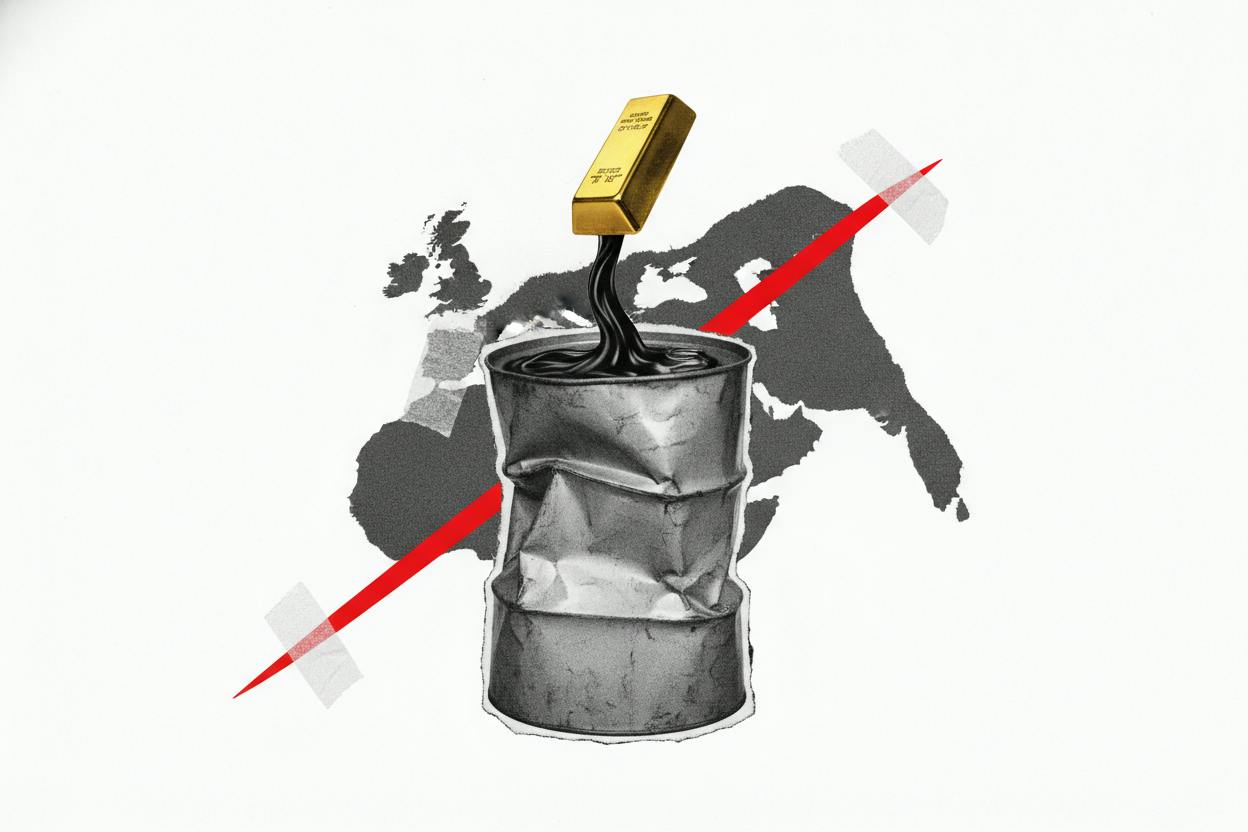
Oil and gold both climbed on Thursday as escalating conflict in the Middle East pushed investors toward safe-haven assets, while stronger-than-expected US economic growth raised the possibility of another Federal Reserve rate hike.
West Texas Intermediate (WTI) crude, the US benchmark, rose to $84.72 a barrel, while international benchmark Brent reached $96.17. Gold, often seen as a store of value in uncertain times, touched $3,570.60 an ounce on COMEX, gaining about 1% on the day.
Why are oil and gold rising together?
Two separate forces are pushing prices in the same direction. The first is geopolitical risk. Al Jazeera reported that Kuwait said two Italians were killed after being hit by debris from Iranian drone attacks. That reminder that conflict can spill across an energy-rich region makes traders pay more for crude in case supply or shipping routes get disrupted.
The second force is the interest-rate outlook. The US Commerce Department said the economy grew at a 4.3% annualized pace in the third quarter, up from the prior estimate. That stronger growth helped markets price in a higher chance that the Federal Reserve will raise rates next month.
Normally, higher rates are a headwind for gold because the metal pays no interest, making other assets more attractive. But bullion still rose, signaling that demand for a perceived safe haven is outweighing that pressure.
What does this mean for investors?
For everyday investors, the immediate takeaway is that geopolitical tensions can move markets quickly. Oil and gold are often the first to react because they are globally traded commodities with deep, liquid markets. When conflict flares, investors often buy them as a hedge against uncertainty.
But the bigger story may be what happens next. The next major event is OPEC+’s meeting on November 29th, where the producer group is set to discuss output policy for 2027. That decision could shape not just today’s price but how the market values oil years out.
Why the OPEC+ meeting matters more than headlines
Headlines about conflict usually move the nearest oil contracts first because they change the risk of immediate disruption. But when OPEC+ talks about production plans for 2027, it’s really speaking to longer-term supply. That shows up in “deferred” futures contracts—oil delivery years from now—and in calendar spreads, the price gaps between near-dated and later-dated barrels.
If traders decide the future supply cushion looks thinner or thicker, they reprice those far-out contracts even if the spot market is reacting to daily news. Those shifts matter for real-world budgets: airlines, shippers, and other big fuel users often hedge by locking in future prices, while producers use the same curve to set the levels at which they can protect future revenue.
Broader market context
The moves in oil and gold come amid a broader market environment where investors are juggling multiple risks. Tariff threats and Fed bets have rattled global markets ahead of key inflation data, as recent market volatility shows. Meanwhile, oil prices have been volatile as traders weigh Middle East risks against a surplus outlook.
For Canadian and Australian investors, the energy rally has been a bright spot. The TSX rebounded as oil and metals rallied on supply fears, and Australian shares are set to rise as oil jumps on similar concerns.
What to watch next
Investors will be watching two things closely. First, any further escalation in the Middle East could push oil and gold even higher. Second, the Fed’s rate decision next month will be influenced by the strong growth data, and that could affect gold’s trajectory.
For now, the message is clear: in times of uncertainty, investors often turn to assets that have historically held their value. Oil and gold are doing exactly that. But as always, it’s important to remember that markets can be unpredictable, and what goes up can come down just as quickly.