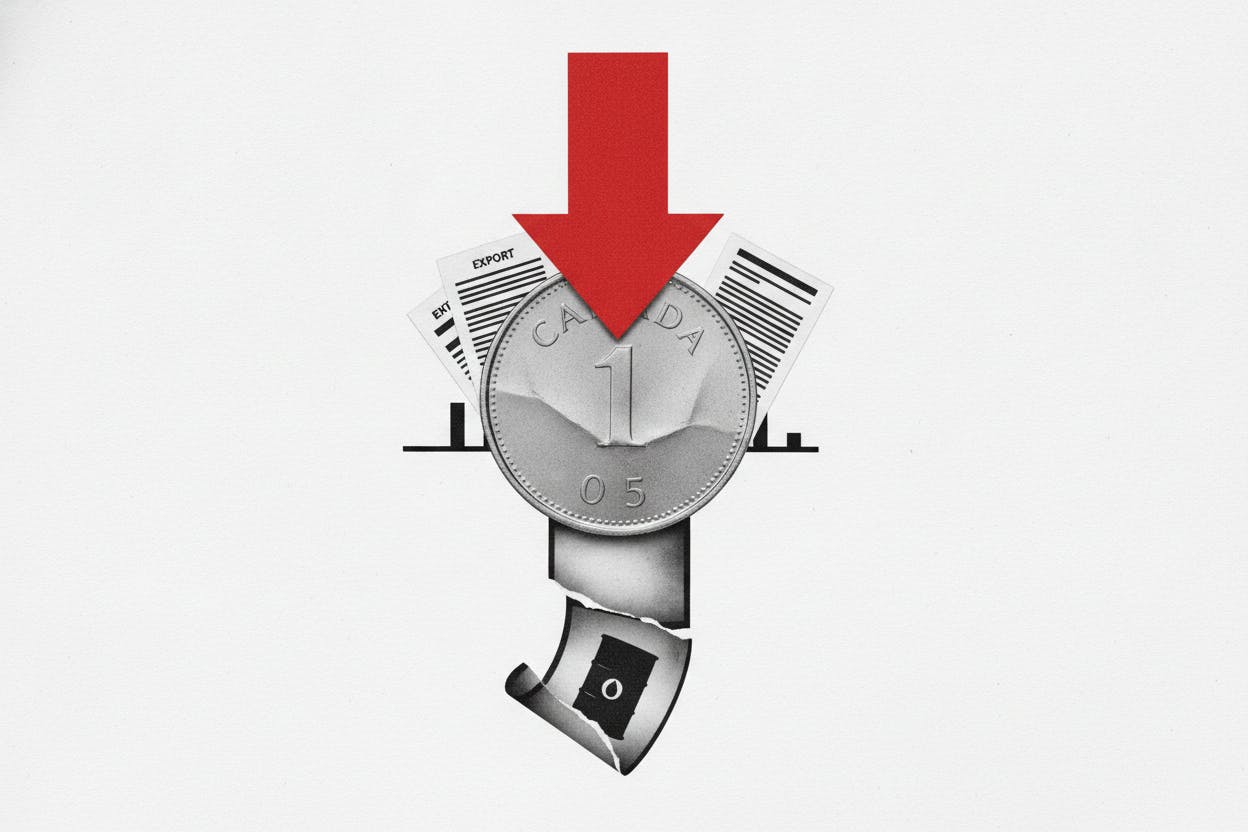
Canada's dollar slipped to a six-day low on Tuesday, even as the country reported its largest monthly trade surplus in four years. The currency's weakness came as oil prices fell sharply and investors braced for new US tariffs, according to Reuters.
The loonie traded at roughly 1.4070 per US dollar, down from recent levels. The move underscored how a single commodity—oil—can outweigh otherwise positive economic data when it comes to the currency's direction.
Oil's slide hits Canada's terms of trade
Oil, one of Canada's biggest exports, dropped 5.7% to about $75.80 a barrel. The decline followed comments that raised hopes of smoother shipping through the Strait of Hormuz, a key chokepoint for global crude supplies. When geopolitical tensions ease, oil prices often retreat as traders factor in less risk of supply disruptions.
For Canada, oil prices feed directly into the country's terms of trade—the ratio of what it earns from exports versus what it pays for imports. When oil prices fall, Canada earns less for its crude, which can reduce demand for Canadian dollars. That's because foreign buyers need loonies to pay for Canadian goods, and if those goods are cheaper, they need fewer loonies.
Weaker terms of trade can also weigh on the broader economy, as energy exports are a significant part of Canada's export base. A lower loonie can help offset some of that by making other Canadian exports cheaper for foreign buyers, but the immediate effect on the currency is often negative.
Trade surplus hits four-year high
Despite the currency's slide, June's trade surplus reached its highest level in four years. A trade surplus means the value of exports exceeded imports, which is generally a positive sign for an economy. Stronger exports can support jobs and growth, and in theory, should support the currency.
However, the surplus was likely driven by factors other than oil, such as increased exports of non-energy goods or a dip in imports. The market's reaction suggests investors focused more on the oil price drop and the looming tariff threat than on the trade data.
US tariffs cast a shadow
Markets remained cautious as new US tariffs appeared on the horizon. The threat of tariffs can disrupt trade flows and create uncertainty for businesses, which often holds back investment and currency demand. For Canada, the US is its largest trading partner, so any new tariffs could have a significant impact on exports and the economy.
Investors are likely watching for details on the scope and timing of these tariffs. A broader tariff package could hurt Canadian exporters, while a more limited one might have a smaller effect. The uncertainty alone is enough to keep currency traders on edge.
What it means for investors
For everyday investors, the loonie's move is a reminder that currency markets can be volatile and are influenced by a mix of factors. If you hold investments in US dollars or have expenses in US dollars, a weaker loonie means those costs rise. Conversely, if you own Canadian stocks that export to the US, a weaker loonie can boost their competitiveness and earnings when converted back to Canadian dollars.
The oil price drop is also worth watching, as it affects energy stocks and the broader Canadian market. Lower oil prices can squeeze profit margins for oil producers, but they can also reduce costs for consumers and businesses that rely on fuel.
Investors should keep an eye on upcoming economic data and any developments on the tariff front. The US data calendar could provide clues about the Federal Reserve's next moves, which in turn can influence the US dollar and, by extension, the loonie.
For those tracking the Canadian economy, the CIBC's outlook on the loonie suggests that while the currency may face headwinds, there are also factors that could support it, such as a resilient job market. The recent strength in Canadian manufacturing is another positive sign, though it may not be enough to offset the drag from oil and tariffs.
Ultimately, the loonie's path will depend on how these forces balance out. For now, the market is cautious, and that caution is reflected in the currency's slide.