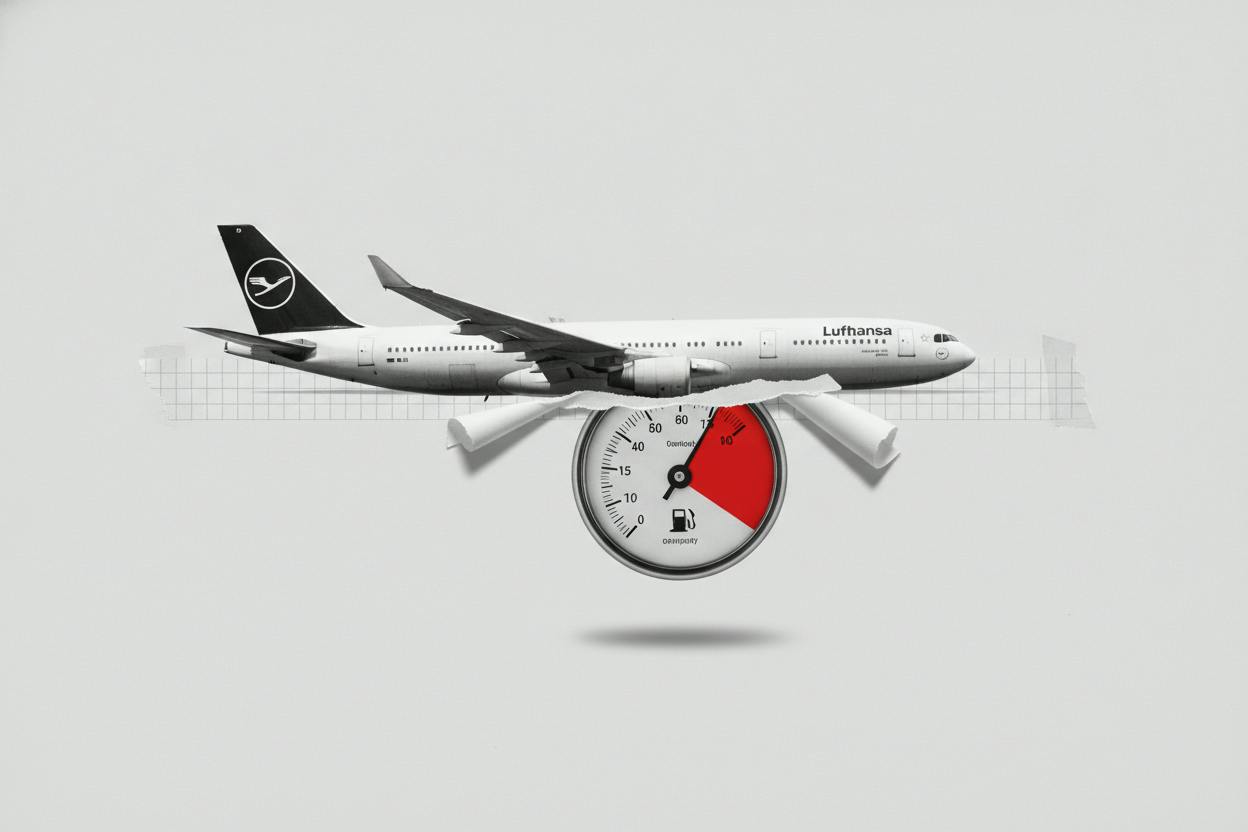
Lufthansa, Germany's largest airline group, has narrowed its profit forecast for 2026, citing a sharp rise in jet-fuel costs. The company now expects operating profit of between €1.7 billion and €2.0 billion for the full year, down from its earlier range of €1.7 billion to €2.2 billion.
The revision comes even as the airline reported a solid third quarter. Operating profit for the three months ended September reached €1.4 billion, slightly above the average analyst estimate compiled by the company. That performance was helped by strong demand and tight cost control, but the fuel bill ate into the gains.
Fuel costs bite despite strong quarter
In its quarterly update, Lufthansa said it managed to offset roughly €0.5 billion of additional fuel expenses through higher revenue and disciplined spending. CEO Carsten Spohr highlighted that the business absorbed the extra costs while still delivering a better-than-expected quarter. However, the outlook cut underscores how quickly fuel prices can change the financial picture for airlines.
Jet fuel is one of the biggest operating costs for carriers, and its price is closely tied to global crude oil. When oil prices climb, airlines face a choice: pass the cost on to passengers through higher fares, or absorb it and accept thinner margins. Lufthansa's decision to trim its forecast suggests that, despite strong demand, the fuel hit is proving hard to fully offset for the rest of the year.
The company's hedging strategy is a key factor. Airlines often lock in fuel prices months in advance to protect against sudden spikes. But hedges only cover a portion of fuel needs, and when prices rise sharply, the unhedged portion can still hurt. Lufthansa's revised outlook likely reflects the reality that its hedges won't shield it from the full impact of current fuel prices.
What this means for investors
For everyday investors, Lufthansa's update is a reminder that airline profits are highly sensitive to external costs. Even a company with strong demand and operational discipline can see its earnings outlook shrink when fuel prices move against it. The stock market often reacts quickly to such guidance changes, as they signal that future profits may be lower than previously expected.
Investors should also note that Lufthansa's situation is not unique. Other airlines face similar pressures, and the broader industry could see more profit warnings if fuel costs stay elevated. This is a sector where margins can swing widely from quarter to quarter, making it riskier than more stable industries.
That said, Lufthansa's third-quarter performance shows the company is still generating solid profits. The €1.4 billion operating profit is a strong result, and the fact that it beat expectations suggests the underlying business is healthy. The issue is more about the trajectory for the rest of the year and into 2026.
Broader market context
Lufthansa's announcement comes amid a mixed earnings season, where several companies have cited rising input costs as a drag on profits. For instance, Apple's sales shine but memory chip costs squeeze profit margins, highlighting that cost pressures are not confined to the airline industry. Similarly, Hugo Boss cut its 2026 outlook due to weak demand and IT costs, showing that guidance revisions are becoming more common.
On the other hand, some companies are benefiting from favorable conditions. Diamondback Energy topped Q3 profit forecasts thanks to higher output and crude prices, illustrating how energy producers gain when oil prices rise. This divergence between energy and transportation sectors is a classic pattern in markets.
For investors, the key takeaway is to watch how companies manage cost pressures. Lufthansa's ability to beat Q3 estimates despite fuel headwinds shows resilience, but the lowered guidance signals caution. As the year progresses, all eyes will be on whether fuel prices stabilize or continue to climb, and how airlines adjust their pricing and hedging strategies accordingly.
In the meantime, Lufthansa's shares may face pressure as investors digest the revised outlook. But for long-term investors, the company's strong brand, network, and operational performance could still make it a viable holding, provided fuel costs don't spiral further.