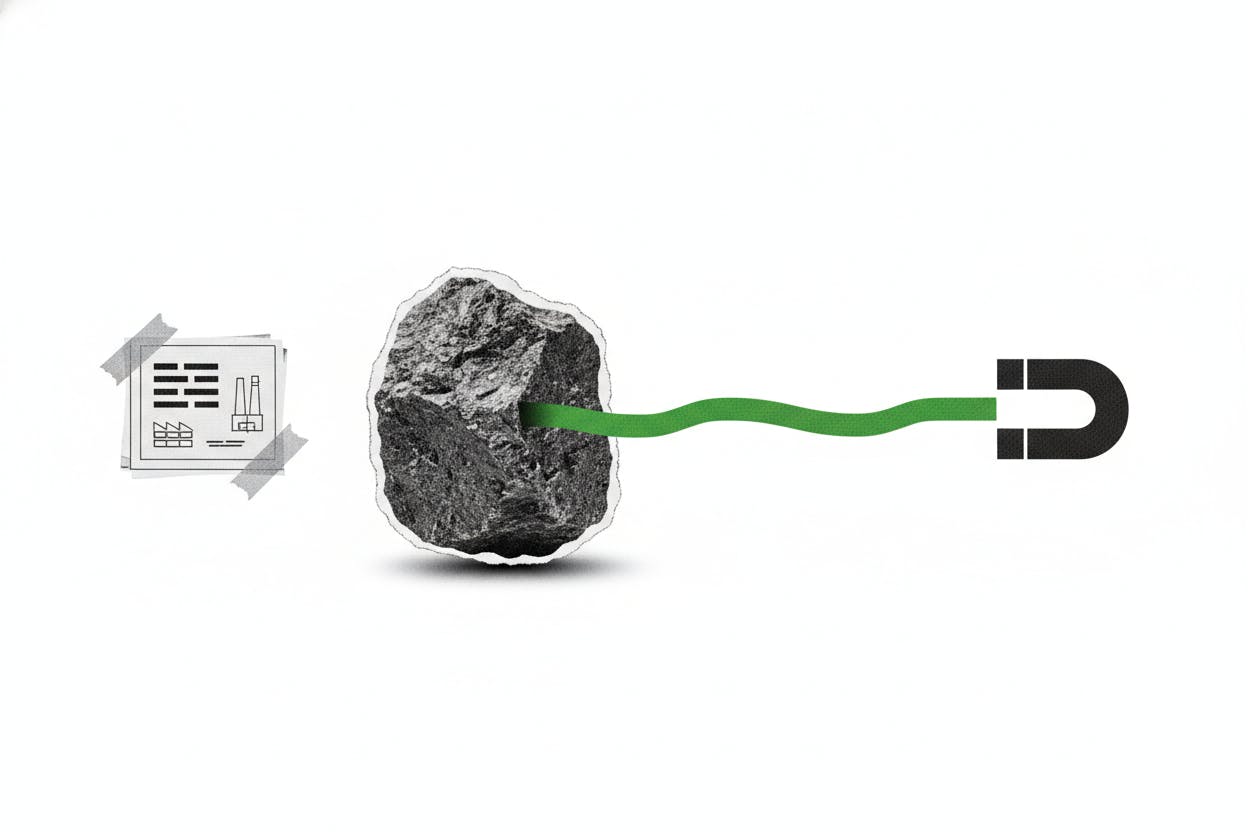
Lynas Rare Earths is taking a strategic step into the permanent magnet market without the heavy capital outlay of building its own manufacturing plants. The company has struck a long-term partnership with JS Link that runs through January 2038, a move that analysts at Jefferies say could channel roughly 1,330 tonnes of neodymium-praseodymium (NdPr) each year into magnet production facilities in Malaysia and South Korea.
What Is NdPr and Why Does It Matter?
NdPr is a rare earth compound that is a key ingredient in high-strength permanent magnets. These magnets are essential components in electric vehicle motors, wind turbines, robotics, and many consumer electronics. As the world shifts toward electrification and clean energy, demand for NdPr has been rising sharply, making it a critical material for supply chains.
Lynas is one of the few non-Chinese producers of rare earths, operating mines and processing facilities in Australia and Malaysia. The company has been working to expand its downstream capabilities, and this partnership represents a way to capture more value from its NdPr output without the expense of building its own magnet factories.
A Capital-Light Strategy
By teaming up with JS Link, Lynas avoids the significant capital investment required to construct and operate magnet manufacturing plants. Instead, it secures a long-term offtake agreement that locks in demand for its NdPr. This approach is often favored by mining and materials companies when they want to participate in downstream markets without taking on the full financial risk of building new facilities.
The deal also provides Lynas with a predictable revenue stream from its NdPr production, which can help stabilize earnings and support future investment in mining and processing capacity. For investors, this capital-light model can mean lower risk and potentially higher returns on existing assets.
What It Means for Investors
For everyday investors, this partnership signals that Lynas is confident in the long-term demand for rare earth magnets. By securing a customer for its NdPr through 2038, the company reduces uncertainty about future sales volumes. That can be a positive signal for the stock, as it suggests a steady revenue base.
However, investors should also note that the deal does not guarantee profitability. The price of NdPr can be volatile, influenced by global supply-demand dynamics, geopolitical tensions, and competition from Chinese producers. Lynas's success will still depend on its ability to produce NdPr cost-effectively and on market prices remaining favorable.
This partnership also highlights the growing importance of rare earth supply chains outside China. Governments and companies in the US, Europe, and Australia have been pushing to diversify sources of critical minerals, and Lynas is well-positioned to benefit from that trend. For context, similar dynamics are playing out in other sectors, such as bond markets reacting to commodity price moves and auto demand holding up despite fuel costs.
What to Watch Next
Investors will be watching for further details on the financial terms of the JS Link partnership, as well as updates on Lynas's production ramp-up. The company has been expanding its processing capacity in Australia and is also building a new rare earths processing facility in the United States, backed by funding from the US Department of Defense.
Another key factor is the pace of electric vehicle adoption and renewable energy deployment, which will drive demand for NdPr magnets. Any slowdown in those sectors could weigh on Lynas's outlook, while acceleration could boost it. Additionally, moves by central banks, such as the Bank of England's proposed capital rule changes, can influence broader market conditions that affect commodity stocks.
Overall, the Lynas-JS Link deal is a measured bet on the future of magnets, one that balances opportunity with financial prudence. For investors, it offers a clearer picture of how Lynas plans to grow without overextending itself.