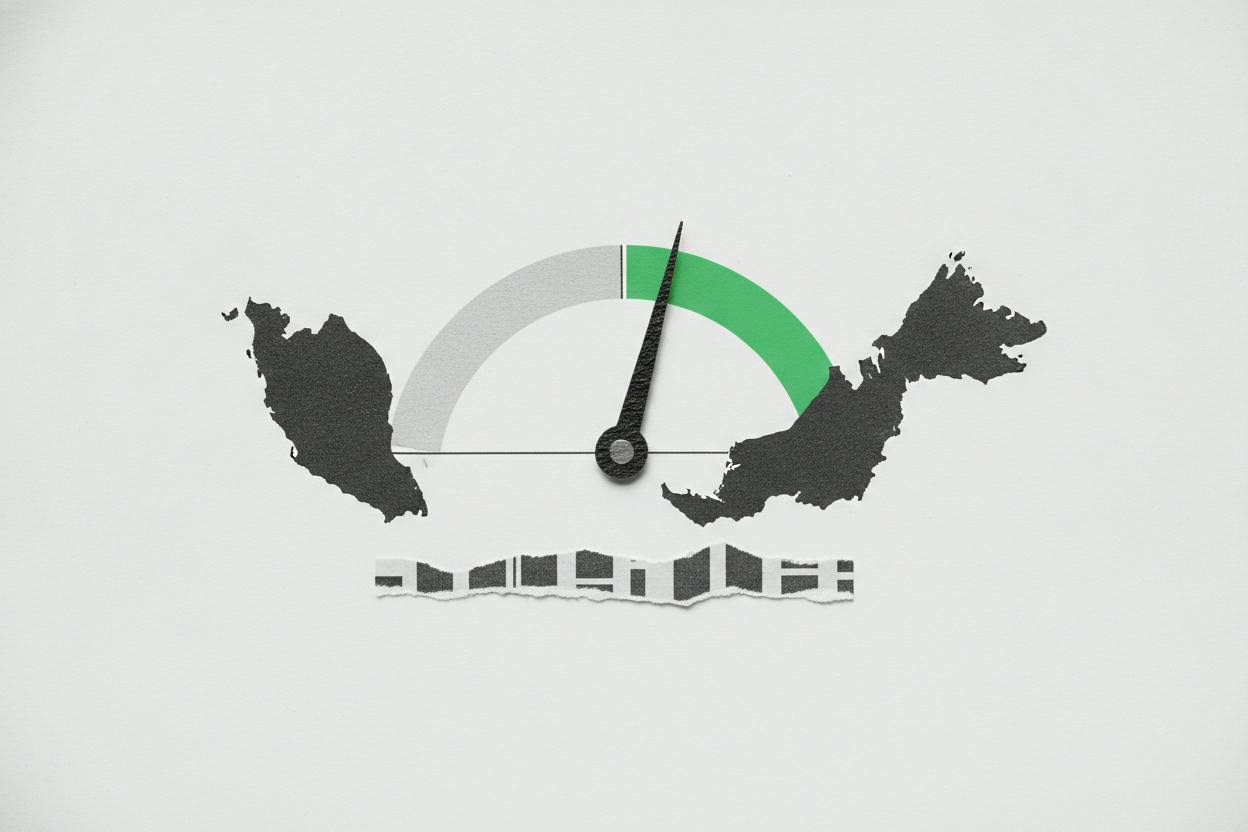
Malaysia's stock market edged higher on Tuesday after a closely watched survey showed the country's manufacturing sector returned to growth in October. The FBM KLCI, the benchmark index of Bursa Malaysia, closed 0.2% higher, buoyed by the positive data.
Manufacturing PMI climbs to 51.0
The S&P Global Manufacturing Purchasing Managers' Index (PMI) rose to 51.0 in October, up from the previous month's reading. A PMI reading above 50 indicates expansion in the sector, while a reading below 50 signals contraction. The move back above the neutral 50 mark suggests that Malaysian factories are seeing increased orders and output, a positive sign for the broader economy.
The PMI is a widely followed indicator because it provides a timely snapshot of business conditions. For investors, it offers clues about the health of the manufacturing sector, which is a key driver of Malaysia's export-oriented economy.
The improvement in Malaysia's factory activity is part of a broader regional picture. Across Asia, PMI data has been mixed, with some countries showing resilience while others face headwinds. As noted in our recent overview of Asia's PMI week, China's manufacturing sector slipped, while Malaysia held its benchmark interest rate steady. The divergence highlights the uneven recovery across the region.
CTOS Digital recovers after service restoration
In corporate news, CTOS Digital, a credit reporting agency, saw its shares tick up after the company restored its services. The restoration comes after a period of disruption that had affected its operations. While the brief does not specify the nature of the outage, investors appeared relieved that the company has resumed normal functioning, as reflected in the modest share price gain.
CTOS Digital is a key player in Malaysia's financial infrastructure, providing credit reports and scoring services to banks and other lenders. Any prolonged disruption could have had broader implications for the financial sector, so the restoration is a positive development.
What it means for investors
For everyday investors, the PMI uptick is a reassuring signal. A return to expansion in manufacturing suggests that the economy is gaining momentum, which could translate into better corporate earnings and, potentially, higher stock prices over time. However, it's important to keep perspective: a single month's reading does not make a trend, and the global economic environment remains uncertain.
The FBM KLCI's modest gain reflects cautious optimism rather than exuberance. Investors are likely to watch upcoming data releases, including inflation figures and central bank policy decisions, to gauge whether the recovery is sustainable. As we noted in our analysis of German factory growth, even when output expands, profit margins can come under pressure from rising costs. Malaysian manufacturers may face similar challenges if input prices continue to climb.
For those with exposure to Malaysian equities, the PMI data is a positive, but not a reason to overhaul a portfolio. Diversification and a long-term view remain prudent strategies. The market's reaction also underscores the importance of monitoring economic indicators, as they can influence investor sentiment and asset prices.
In the coming weeks, investors will be watching for further PMI releases, as well as any updates from the central bank on interest rates. The outlook for rates remains a key theme across the region, with potential implications for borrowing costs and property markets.
Overall, the latest data offers a glimmer of hope for Malaysia's economy, but the path ahead is likely to be bumpy. As always, staying informed and focusing on fundamentals will serve investors well.