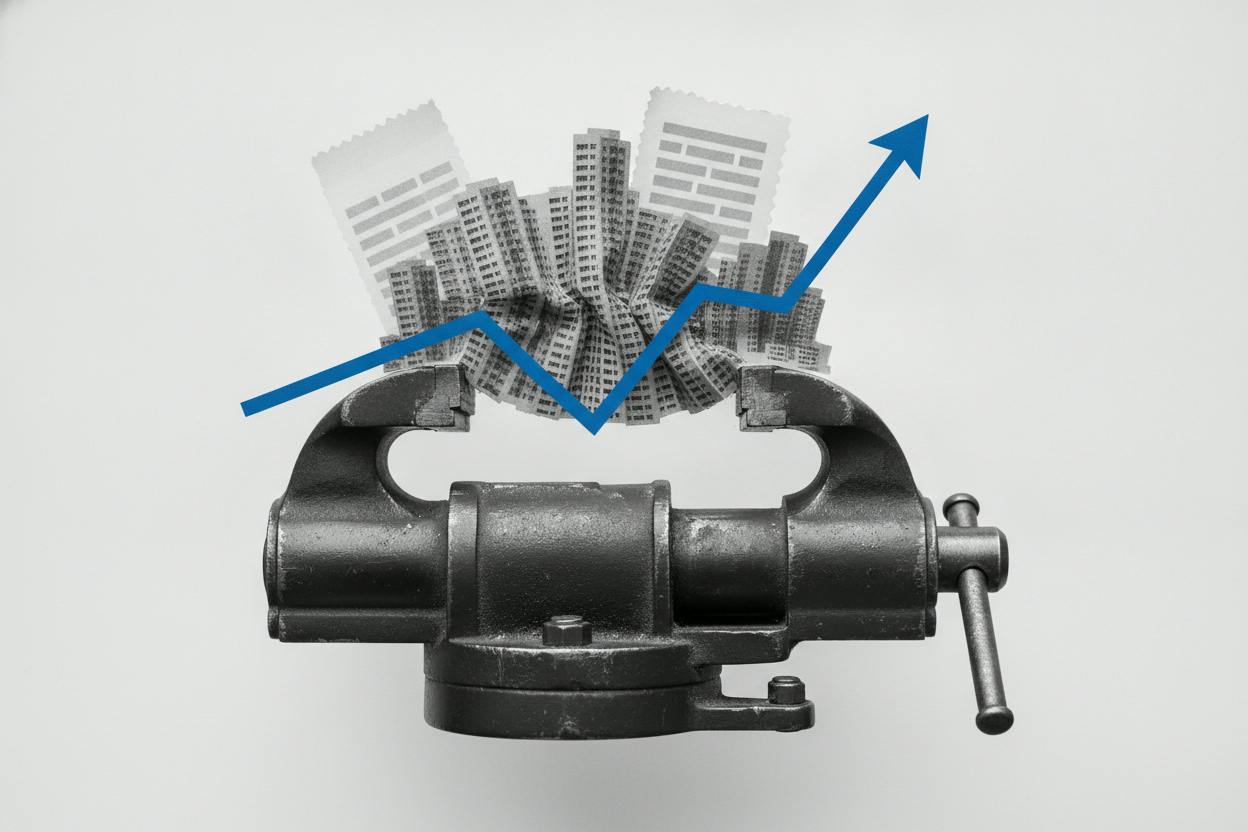
Hong Kong's finance chief, Paul Chan, has offered a cautiously optimistic view of the city's economic trajectory, suggesting that 2026 could be its strongest year for growth in half a decade. Speaking on the back of unpublished third-quarter data, Chan indicated that the underlying momentum is improving, even as he flagged a persistent worry: high interest rates that could continue to weigh on the real estate sector.
The comments come at a time when Hong Kong's economy is navigating a delicate balance. On one hand, there are signs of a pickup in activity, supported by a gradual recovery in tourism and trade. On the other, the property market—a cornerstone of the city's wealth and economic activity—remains sensitive to borrowing costs, which have stayed elevated as global central banks, including the US Federal Reserve, have kept rates high to combat inflation.
What's behind the optimism?
Chan's reference to unpublished third-quarter data suggests that the government's internal numbers are pointing to a firmer expansion than previously expected. While he did not provide specific figures, his tone implies that the recovery is broadening beyond the initial post-pandemic rebound. This aligns with a broader regional trend, where several Asian economies are showing resilience despite global headwinds. For instance, China's factory growth has held steady, though falling export prices signal a margin squeeze for manufacturers—a dynamic that could affect Hong Kong's trade-linked sectors.
Hong Kong's economy is highly open and closely tied to mainland China's performance, as well as to global trade and financial flows. A stronger 2026 outlook would likely be driven by improvements in these areas, along with domestic consumption and investment. However, the finance chief's caution about interest rates underscores a key vulnerability: the city's property market, which accounts for a significant share of household wealth and banking activity, is highly leveraged.
The property puzzle
High interest rates directly affect mortgage costs, making property purchases more expensive and cooling demand. This has been a recurring theme in Hong Kong, where property prices have shown sensitivity to rate movements. The government has already taken steps to ease some cooling measures, but the overhang of high rates remains a drag.
Chan's warning is a reminder that even as growth prospects improve, the property sector could act as a brake. This is particularly relevant for investors who hold real estate investment trusts (REITs) or property developer stocks, as their earnings and asset values are closely tied to the health of the housing market. The situation is not unique to Hong Kong; other markets have faced similar pressures. For example, the Bank of England's rate hikes have had a cooling effect on UK property, illustrating how central bank policy can ripple through real estate globally.
What it means for investors
For everyday investors, Chan's comments offer a mixed picture. On the positive side, a stronger growth outlook could support corporate earnings and stock market sentiment. Hong Kong-listed companies, particularly those in consumer, tourism, and financial services, could benefit from an improving economy. The city's role as a regional hub also means that a pickup in activity could have spillover effects.
On the cautionary side, the property market's sensitivity to rates means that investors should keep an eye on interest rate expectations. If rates stay high for longer, property-related investments could underperform. This is a factor to consider when evaluating exposure to Hong Kong's real estate sector, whether through direct property ownership, REITs, or developer stocks.
Chan's reference to unpublished data also highlights the importance of watching official releases. When the third-quarter GDP figures are published, they will provide a clearer picture of the economy's trajectory. Investors should also monitor the Federal Reserve's policy path, as Hong Kong's currency peg to the US dollar means that local rates tend to follow US moves.
In the broader context, Hong Kong's outlook is part of a regional story. South Korea's factory growth has cooled sharply, and India's auto stocks have rallied on strong sales, but analysts warn of a post-Diwali test. These mixed signals suggest that while some economies are gaining traction, others are facing headwinds. For Hong Kong, the key will be whether the growth momentum can overcome the drag from high rates.
The road ahead
Paul Chan's remarks are a signal that the government is cautiously optimistic about 2026, but the path is not without risks. The interplay between growth and interest rates will be crucial. If the global rate environment eases, Hong Kong's property market could see a revival, providing a further boost to the economy. Conversely, if rates remain high, the sector could continue to struggle, capping the overall growth potential.
For now, investors should take a balanced view. The improving growth outlook is encouraging, but the property market's vulnerability to rates is a reminder that not all parts of the economy are moving in the same direction. Staying informed about both macroeconomic data and sector-specific developments will be key to navigating the months ahead.