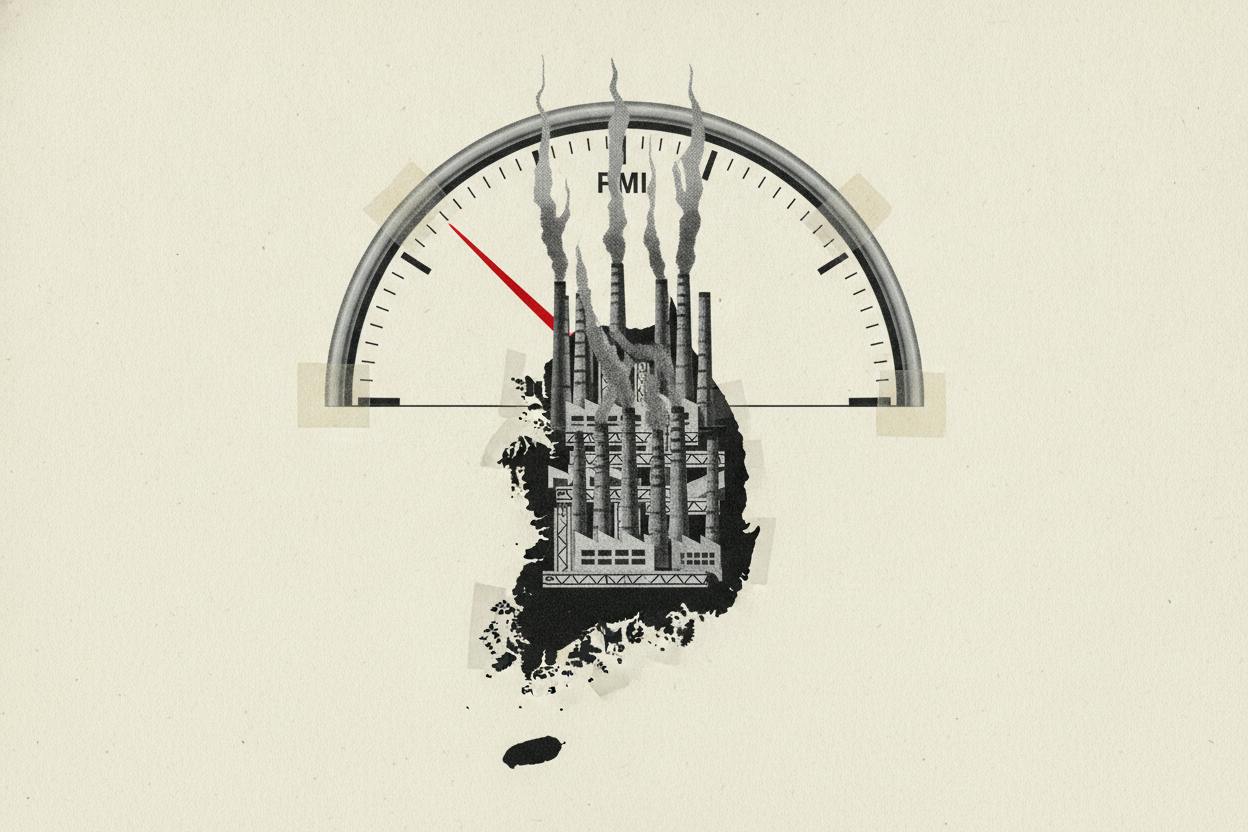
South Korea's manufacturing sector continued to expand in October, but the momentum behind that growth faded noticeably, according to a closely watched survey released this week. The S&P Global Purchasing Managers' Index (PMI) fell to 51.3 from 53.9 in September, marking the weakest reading since February. While any reading above 50 signals expansion, the drop suggests that the pace of growth is slowing faster than many analysts had expected.
The PMI is a monthly survey of purchasing managers at factories across the country. It asks them whether business conditions are improving or deteriorating compared with the previous month. A reading above 50 means more managers reported improvement than deterioration; below 50 means the opposite. It's a 'diffusion' index, so it doesn't measure actual output in tons or dollars, but it's a reliable early signal of where the economy is headed.
What's behind the slowdown?
According to S&P Global Market Intelligence economist Usamah Bhatti, the details of the October survey were less upbeat than the headline number. Output and new orders both slowed more sharply than in September, with firms citing softer demand, raw-material shortages, and high costs. Some manufacturers specifically flagged weaker demand from the auto sector, while export orders appeared to be supported more by Asia-Pacific markets than by the United States.
That's a notable shift for an export-heavy economy like South Korea's. The country has been benefiting from a strong AI chip-driven boost in trade and investment, but the survey suggests that some of that tailwind may be fading. Because PMIs often turn down before official production and export data do, the October reading could be an early warning sign for the broader economy.
The slowdown in South Korea is not happening in isolation. Australia's factory slump continued in October, and China's factory activity slipped back into contraction, according to separate surveys. Together, these readings suggest that global manufacturing is losing steam, which could weigh on demand for South Korean exports in the months ahead.
What it means for investors
For investors, the PMI drop matters because it can move expectations before official data does. New orders are essentially a pipeline for future factory work. When that pipeline shrinks, analysts often trim their near-term growth forecasts and company revenue estimates, even if the headline index is still in expansion territory.
In South Korea, that shift in expectations tends to hit the Korean won and exporter-heavy Korean stocks first. Currency flows and earnings outlooks are tightly linked to changes in global demand, so a quick cool-off in the PMI can trigger a sell-off in shares of companies that rely heavily on overseas sales.
That said, the PMI is just one indicator, and it's still pointing to growth, not contraction. The 11th consecutive month of expansion is a positive sign, and the AI chip boom could continue to support the tech sector. But the sharp drop in October is a reminder that momentum can fade quickly, and investors should watch upcoming official data for confirmation of the trend.
For everyday investors, the key takeaway is that South Korea's economy is still growing, but at a slower pace. That could mean more volatility in Korean stocks and the won in the near term. It's also a signal that global demand may be softening, which could have ripple effects for companies and markets around the world.
As always, it's important to keep perspective. One month of PMI data doesn't make a trend, and the survey is just one piece of the economic puzzle. But when a leading indicator like this turns down sharply, it's worth paying attention to what it might be telling us about the road ahead.