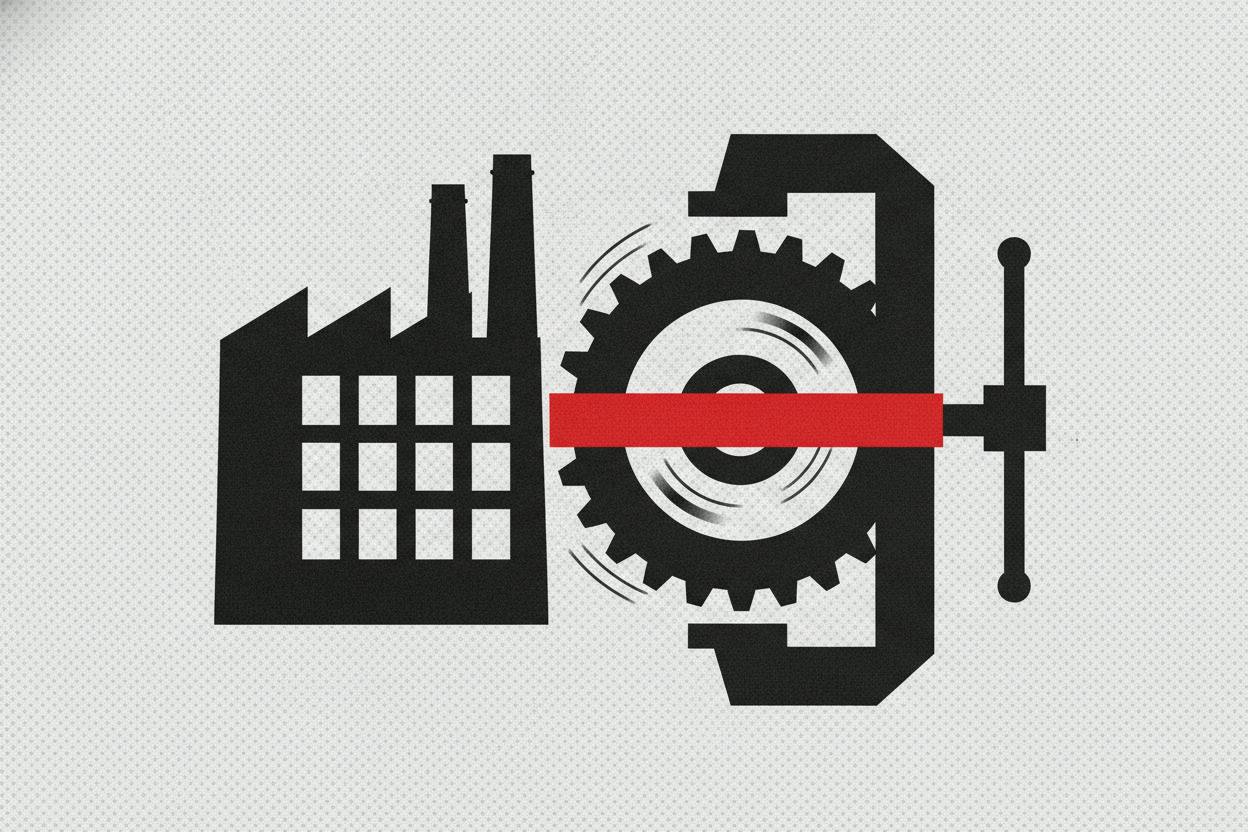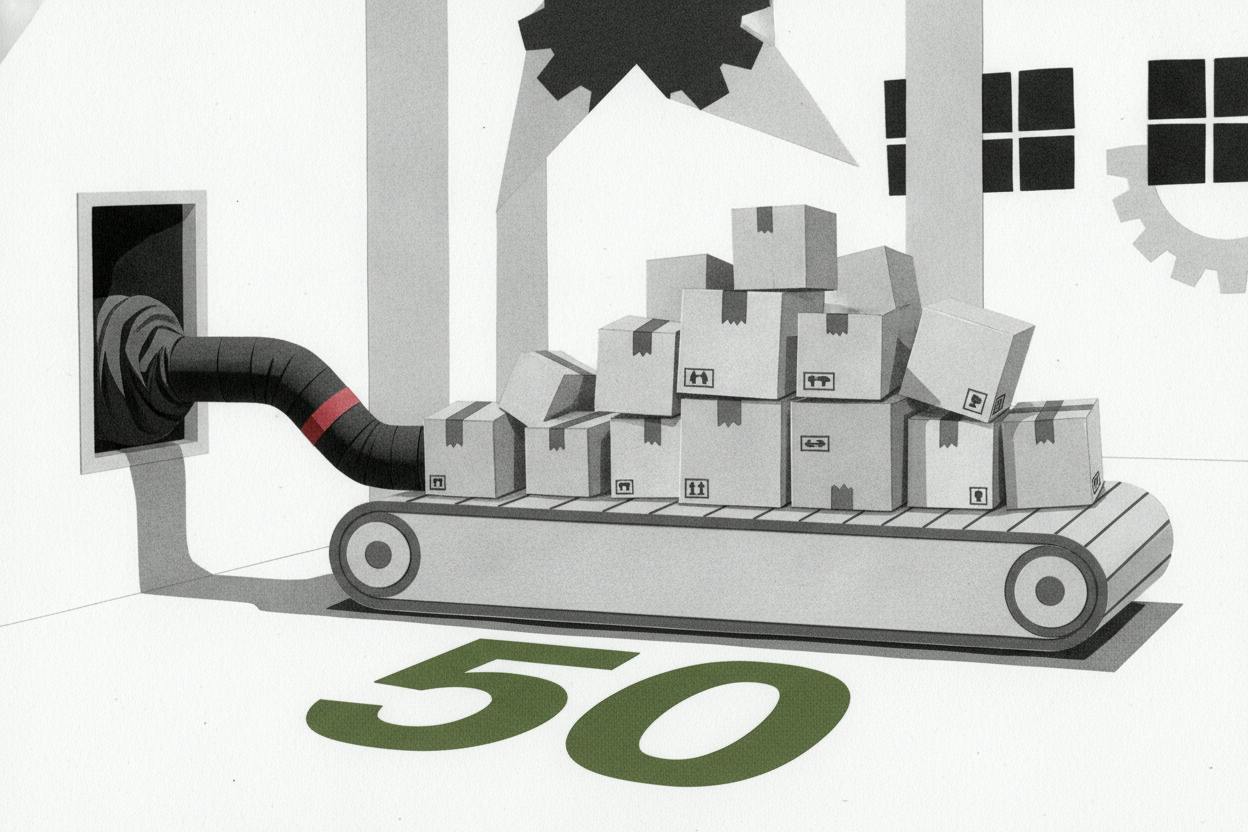
Poland's manufacturing sector finally put the brakes on its long downturn in October, with a key survey reading landing exactly on the line that separates contraction from growth. The S&P Global Manufacturing PMI rose to 50.0 from 49.0 the previous month, signaling that the country's factories are no longer shrinking, even if they aren't exactly booming either.
The improvement was driven by a slower fall in new orders, output that was close to flat, and a slight uptick in employment. Perhaps most notably, export orders rose for the first time since last November, a sign that demand from abroad is starting to firm up.
What the PMI number really means
For anyone new to economic data, a purchasing managers index (PMI) is a monthly survey of factory purchasing managers that asks about new orders, production, employment, and prices. A reading above 50 means the sector is expanding; below 50 means it's contracting. So a 50.0 is the exact tipping point—a sector that's stabilizing rather than sliding further.
That's a meaningful shift for Poland, whose manufacturers have been grappling with weak demand for much of the past year. The fact that the index stopped falling suggests the worst of the downturn may be over, at least for now.
But the report also carried a warning for anyone hoping for quick relief on inflation. Input prices—the costs factories pay for raw materials, transport, and energy—rose for a 12th straight month, and at the fastest pace since June. Companies also reported that the prices they charge customers are still increasing at a high rate.
Why costs matter for your money
For investors, the headline PMI number is less important than what it allows companies to do with their costs. When demand stops weakening, manufacturers typically have more room to pass higher bills through to customers, protecting their profit margins. That's good for company earnings, but it also means "pipeline" inflation—price pressure moving from producers into the wider economy—can fade more slowly than the PMI rebound might suggest.
That has direct implications for Polish government bonds and other rate-sensitive assets. If inflation stays sticky, the central bank may be in no hurry to cut interest rates, which would keep bond yields elevated. Investors who have been betting on a series of rate cuts might need to temper their expectations.
The report also noted that order backlogs fell again, meaning factories still aren't seeing enough new work to build up a cushion. The next question is whether demand firms up enough to keep production from slipping back below that 50 line in the months ahead.
What to watch next
Poland's experience is part of a broader European picture. Across the continent, manufacturers have been struggling with weak demand and high costs, though the picture is mixed. In Spain, factory activity accelerated in October as new orders returned, while Turkey's factory slump deepened as costs kept climbing. Ireland's factories kept growing but saw cost pressures return.
For Poland, the key will be whether the improvement in export orders is sustainable. If global demand holds up, the sector could build on this stabilization. If not, the PMI could easily slip back into contraction territory.
For everyday investors, the takeaway is that Poland's economy may be finding its footing, but inflation is still a live issue. That means the central bank's policy path remains uncertain, and bond investors should be prepared for volatility. As always, it's worth keeping an eye on the next few PMI readings to see if this pause turns into a genuine recovery.