Malaysia's stock market found its footing on Friday after fresh economic data showed shoppers spent more in May while the jobless rate remained low, easing some concerns about household finances.
The FTSE Bursa Malaysia KLCI snapped the prior session's losses, helped by a stronger-than-expected retail sales report and steady unemployment figures that reinforced the domestic demand narrative.
Retail sales beat expectations
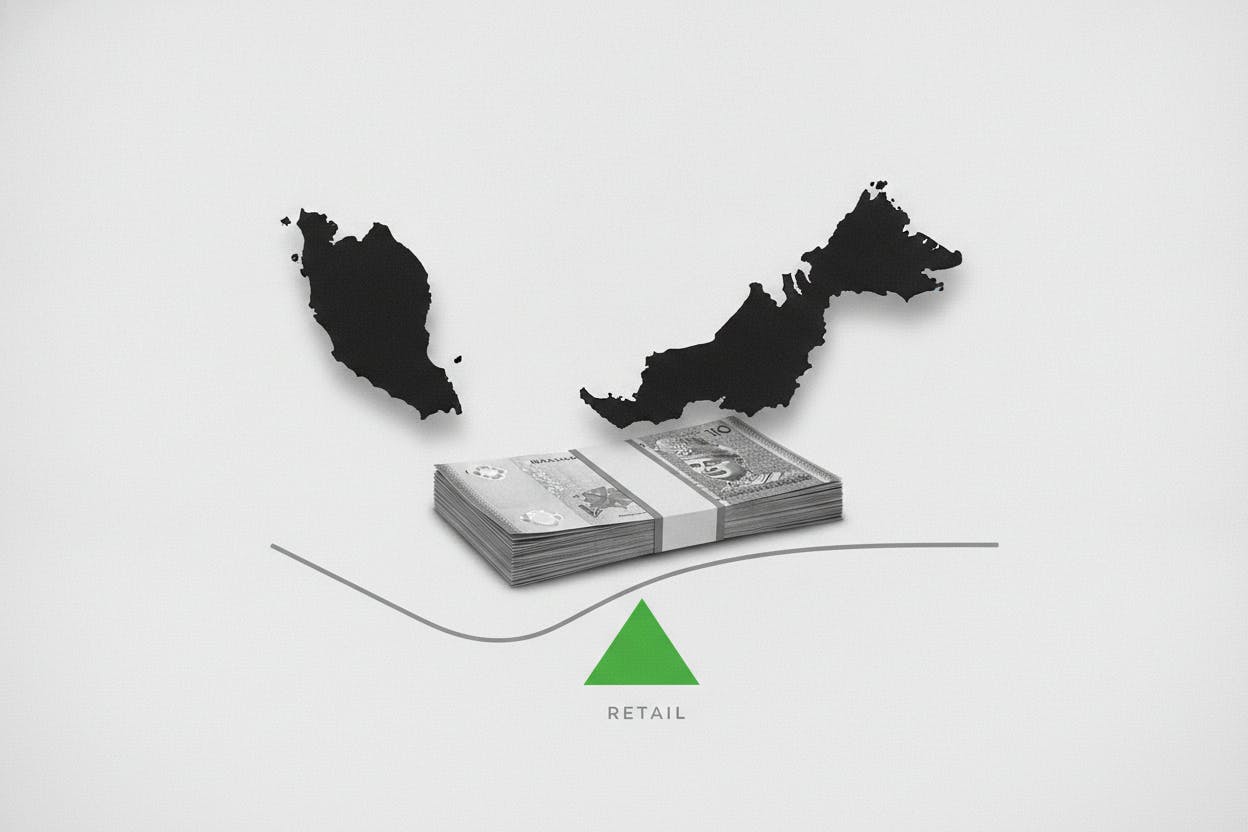
Malaysia's Department of Statistics reported that retail trade sales rose 7.2% in May from a year earlier to 71.9 billion ringgit. That was faster than April's 6.3% growth and above the 6% forecast from Trading Economics, a financial data platform.
The pickup suggests that Malaysian consumers are still spending despite lingering concerns about elevated prices and borrowing costs. The jobless rate held steady at 3% in May, unchanged from April, indicating that household incomes remain relatively stable.
For investors, the combination of rising retail sales and low unemployment is a positive signal for companies that depend on local spending. Retailers, consumer staples firms, and some banks tend to perform better when consumption is steady and layoffs are not increasing.
Corporate activity continues
Beyond the macro data, corporate dealmaking also provided some market color. Shipping firm Lianson Fleet agreed to buy two Ultramax-class bulk carriers for $52.3 million, a move that could expand its capacity in the dry bulk shipping segment.
Separately, property developer LBS Bina Group raised 150 million ringgit through a Sustainability Sukuk Wakalah program. This is an Islamic finance structure that channels proceeds to eligible projects, often related to environmental or social goals. The sukuk market has been growing in Malaysia as companies seek Shariah-compliant funding options.
These deals, while not market-moving on their own, add to the backdrop of ongoing corporate activity that can support investor sentiment.
What it means for investors
One strong data point rarely changes a market's outlook on its own. But faster retail growth alongside stable unemployment can make near-term revenue for locally focused businesses feel more predictable, which is exactly what equity analysts look for when updating their forecasts.
That's where the real follow-through often happens: not in a one-day reaction to a 'beat', but in the days and weeks after, as analysts revise forward earnings and investors decide whether the newer estimates deserve higher valuations.
The KLCI's ability to hold around the 1,691.49 level may depend less on May's headline and more on whether upcoming releases keep confirming that consumer momentum is intact. If retail sales continue to surprise to the upside, it could provide a tailwind for domestic-focused stocks.
Investors should also keep an eye on broader regional trends. For context, Singapore stocks ended the week higher on AI optimism, while Hong Kong stocks edged higher as a chip rally offset geopolitical tensions. These regional moves can influence sentiment across Southeast Asian markets.
Meanwhile, Malaysia's palm oil stockpiles hit a record June high, which could weigh on commodity-linked stocks even as consumer-facing sectors show strength.
The bigger picture
Malaysia's economy has been navigating a mix of headwinds and tailwinds. While domestic demand appears resilient, global factors such as trade tensions and commodity price swings remain risks. The central bank has kept interest rates steady in recent meetings, balancing the need to support growth while keeping inflation in check.
For everyday investors, the key takeaway is that steady consumption and low unemployment create a favorable environment for companies that sell to Malaysian households. But as always, diversification matters. No single data point tells the whole story, and markets can shift quickly on new information.
The coming weeks will bring more economic releases, including trade data and industrial production figures, which will help paint a fuller picture of Malaysia's economic health. Until then, the KLCI's resilience around current levels suggests that investors are cautiously optimistic about the domestic demand story.