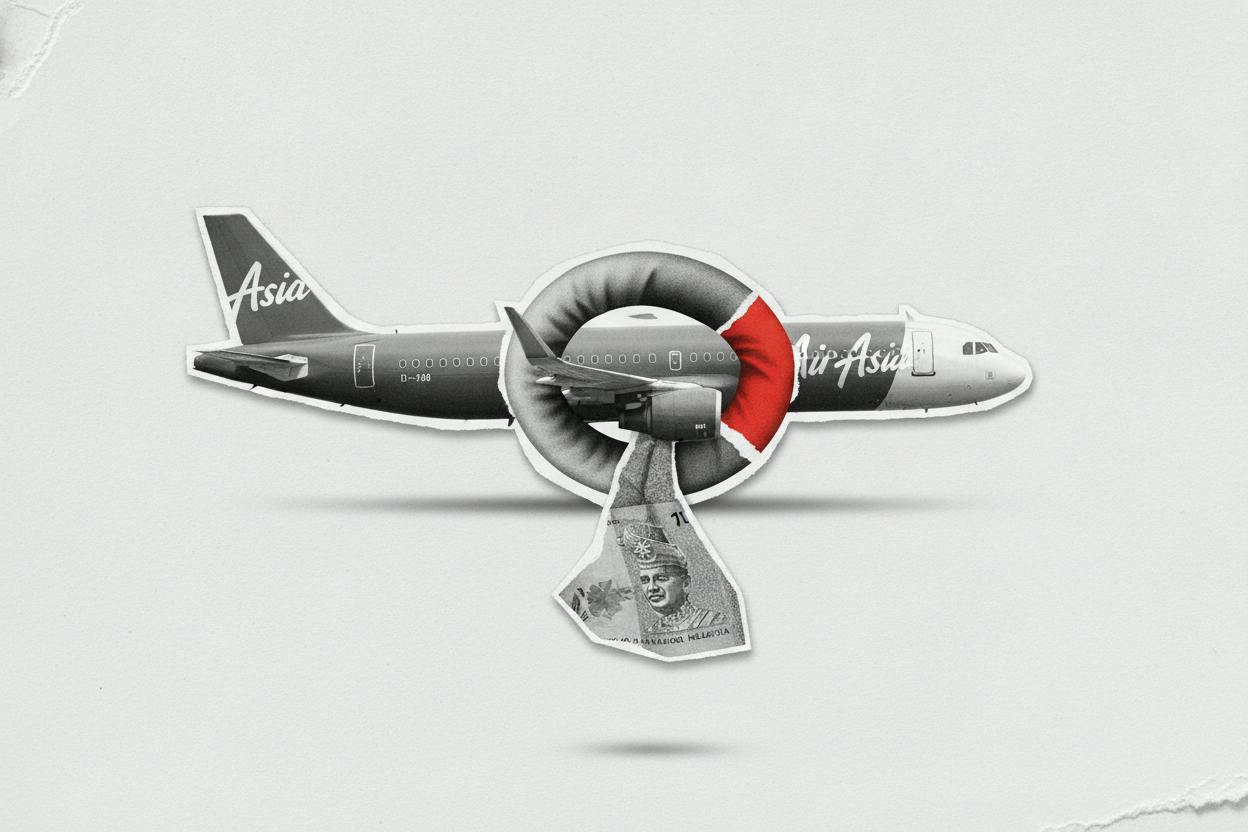
Malaysia's government is weighing options to help steady AirAsia as the budget carrier battles surging jet fuel costs, even as co-founder Tony Fernandes insists his recent meetings with officials were not about a bailout.
Reuters reported that Fernandes met with Malaysia's finance ministry recently, and that talks included the possibility of the government backing AirAsia's fundraising efforts, with conditions still being shaped. The discussions also touched on airport charges and fuel costs, according to Fernandes.
The stakes are high: AirAsia says it controls roughly 60% of Malaysia's domestic aviation market and employs about 26,000 people. That means financial stress at the airline can ripple through tourism, business travel, and airport operators like Malaysia Airports Holdings Berhad.
Why funding access is the focus
The numbers explain why the government is paying attention. AirAsia posted a net loss of 831 million ringgit for the second quarter ended June 30, and had just 954 million ringgit in cash against 18.4 billion ringgit in current liabilities. That gap highlights how dependent the carrier is on continued access to credit and capital markets.
Fuel is the near-term squeeze. Reuters said jet fuel costs jumped 66% in the quarter to an average of $183 a barrel. Fernandes said the airline is budgeting for 12 months of high oil prices while trying to raise up to $1 billion from international debt markets plus 700 million ringgit in local credit facilities, aiming to wrap that up between December and February.
For context, jet fuel is typically one of an airline's largest operating costs, so a spike of this magnitude can quickly erase profits and strain cash reserves. Airlines often hedge fuel prices or pass costs to passengers through surcharges, but those measures take time and may not fully offset a sharp rise.
What government backing could mean
Any signal from Malaysia that it may support AirAsia's fundraising could change the price of the carrier's planned $1 billion debt raise. When a government indicates it might back a company's financing, lenders often treat that as a form of credit enhancement—the borrower looks less likely to face a sudden cash crunch. Even without a formal guarantee, implied oversight can make banks and bond investors more willing to refinance, and at a smaller risk premium.
For AirAsia, that could shift the question from “can it raise money?” to “what interest rate and strings come attached?” That's key when it's seeking up to $1 billion offshore and 700 million ringgit locally while carrying 18.4 billion ringgit of near-term liabilities against 954 million ringgit of cash.
If financing looks less uncertain, the risk of abrupt capacity cuts falls. That matters in a market where AirAsia claims roughly 60% share—and where passenger volumes drive revenue for traffic-sensitive businesses such as Malaysia Airports Holdings Berhad.
What it means for investors
For everyday investors, this story is less about whether to buy airline shares and more about understanding how government involvement can affect a company's financial health. When a government steps in to support a major employer, it can reduce the risk of a sudden collapse, which protects jobs and related industries. But it can also mean the company takes on more debt or faces conditions that limit its flexibility.
Investors in AirAsia's bonds or lenders to the airline would watch closely for any formal announcement of government backing, as it could lower the perceived risk of default. Shareholders, meanwhile, might see support as a positive sign that the company can survive the current fuel shock, though dilution from new fundraising is a possibility.
The broader backdrop is also relevant: airlines across the region are dealing with higher fuel costs, and some have cut capacity or raised fares. In that environment, government support can be a lifeline for carriers that are too big to fail without significant economic disruption.
As the talks continue, the key details to watch are whether Malaysia offers a formal guarantee, what conditions it attaches, and how quickly AirAsia can secure the financing it needs. For now, the carrier is betting on a combination of government goodwill and market access to ride out the storm.