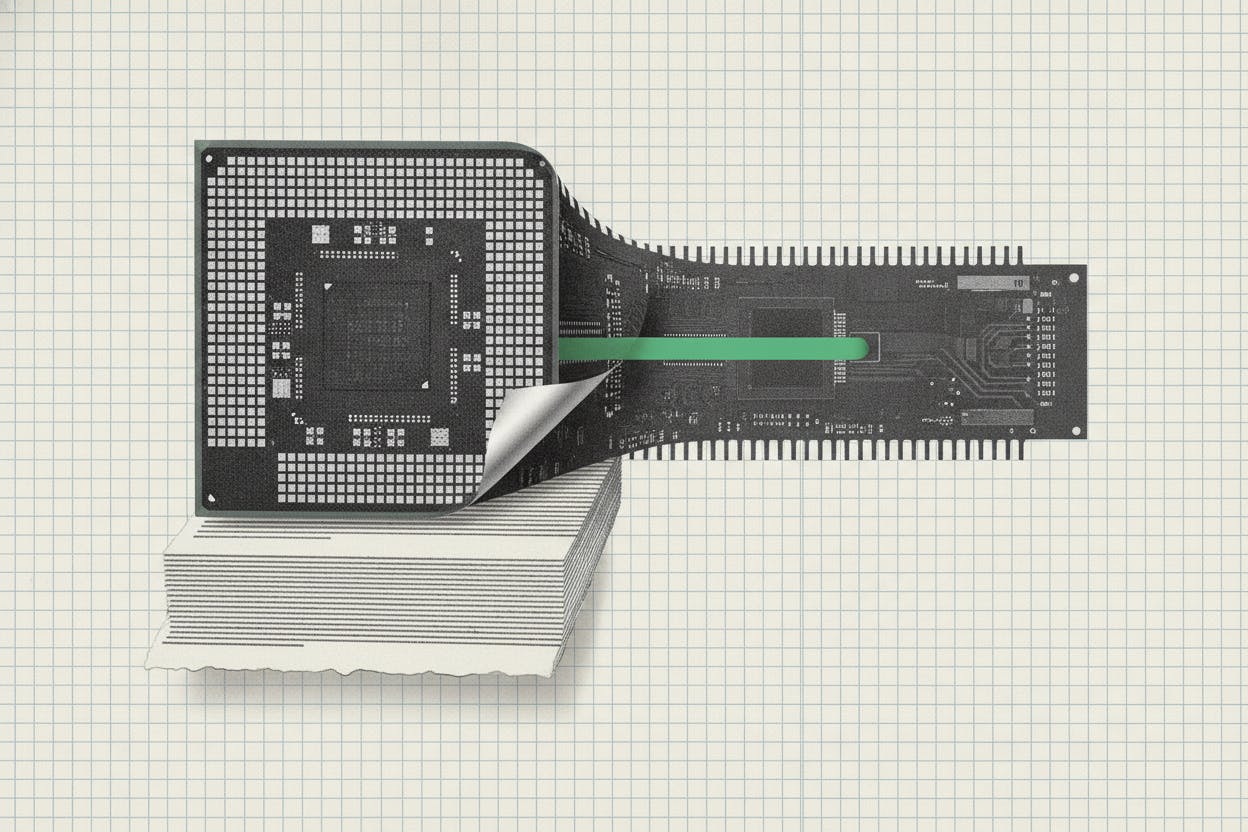
MediaTek, the Taiwanese chip designer best known for powering smartphones, is making a big bet on artificial intelligence. The company said its board has approved a discretionary budget of up to $5 billion to fund long-term growth, with custom AI chips for data centers as the centerpiece. The goal: generate more than $2 billion in revenue from those chips by 2026.
The announcement comes as MediaTek's core business struggles. Its mobile-chip revenue fell 20% in the second quarter compared with a year earlier, and the company expects global smartphone unit sales to drop about 15% this year. That double blow is pushing the company to look beyond handsets for growth.
Why MediaTek is pivoting
MediaTek is Taiwan's largest chip designer and a major supplier of processors for Android phones. For years, its fortunes have been tied to the smartphone cycle, which has matured and become more volatile. With consumers holding onto devices longer and upgrading less often, chipmakers that depend on phones are feeling the pinch.
Data-center AI chips are a different story. Demand for computing power to train and run AI models has surged, and companies are scrambling to secure supply. This isn't just a niche opportunity: Google's $15 billion AI data center project in Texas and Solstice's raised outlook on AI data center demand show how broadly this wave is spreading.
MediaTek's plan is to design custom AI chips for data-center operators, a shift from its usual role of making general-purpose processors for phones. Custom chips are tailored to specific workloads, offering better performance and efficiency than off-the-shelf parts. That's attractive to big tech firms that want to optimize their AI infrastructure.
What the $5 billion means
The $5 billion is a discretionary budget, meaning it's not a fixed spending plan but a ceiling the board has authorized. MediaTek can draw on it as opportunities arise. That flexibility is important because the data-center chip market is competitive and capital-intensive.
The company is targeting more than $2 billion in revenue from custom AI chips by 2026. To put that in perspective, MediaTek's total revenue was around $14 billion in 2023, so this would represent a meaningful new stream. But it's also a relatively small slice of the overall AI chip market, which is dominated by Nvidia and increasingly contested by AMD, Intel, and a host of startups.
MediaTek isn't starting from zero. It already has experience designing high-performance chips for phones and other devices, and it has relationships with major manufacturers. But data-center chips are a different beast, requiring different architectures, software ecosystems, and customer support. The company will need to prove it can compete on that turf.
What it means for investors
For everyday investors, this is a signal that MediaTek sees its future beyond smartphones. The move could diversify its revenue and reduce its vulnerability to phone-market swings. But it also carries risk: the $5 billion is a large commitment, and there's no guarantee the AI chip business will hit its revenue target.
Investors should watch how MediaTek executes. Key questions include: Who are its data-center customers? Can it win design wins against established players? And will the $2 billion target prove realistic? The company's next earnings reports will offer clues.
The broader trend is clear: AI is reshaping the chip industry, and even traditional mobile-chip makers are pivoting. Murata's raised outlook on data center demand and Alliant Energy's profit beat on data center demand show that the AI buildout is lifting companies across sectors, from components to utilities. MediaTek wants a piece of that action.
For now, the $5 billion budget is a statement of intent. Whether it pays off will depend on execution in a fiercely competitive market. But for a company that has long been tied to the smartphone cycle, it's a clear attempt to future-proof its business.