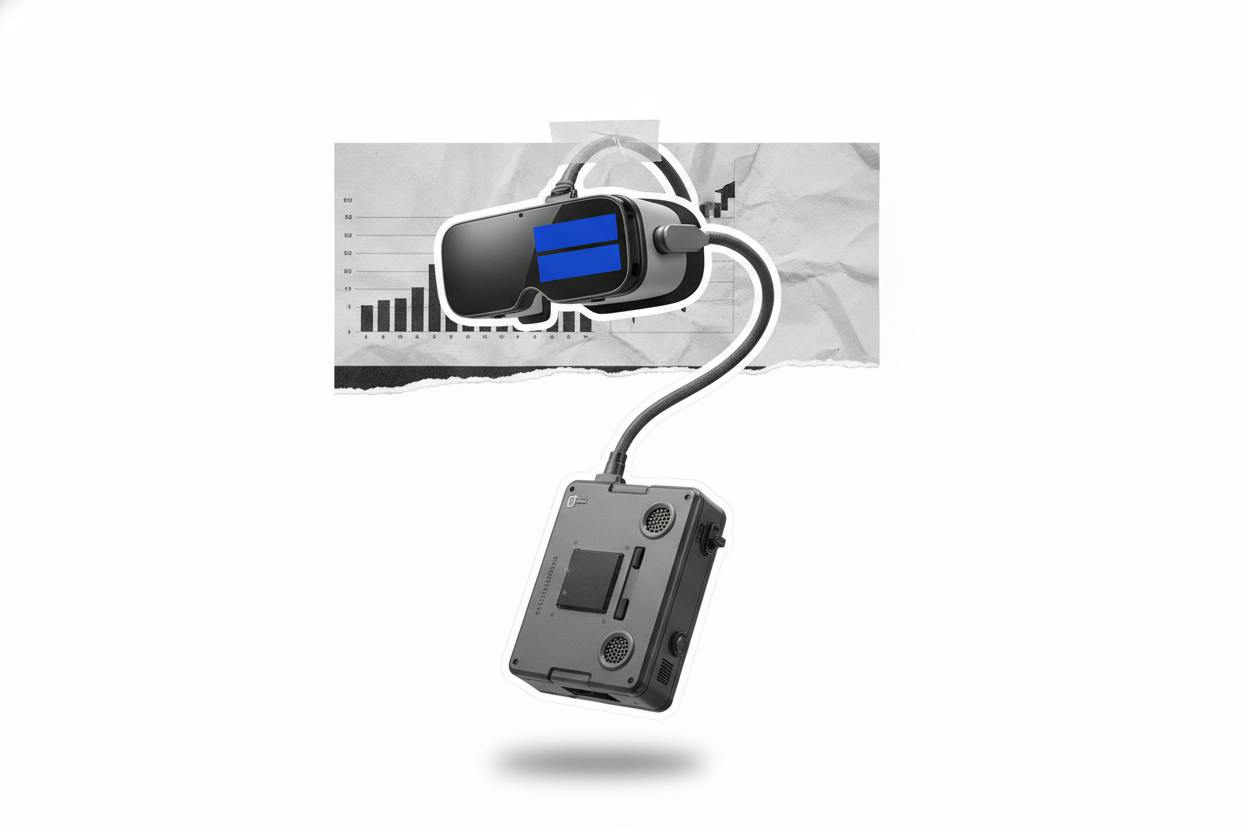
Meta has set a price and timeline for its next-generation virtual reality headset, aiming to push the technology beyond early adopters and into more everyday use. The company said it will sell the device, called “Meta VR Glasses,” for $1,299.99 starting in spring 2027.
The headset will use micro-OLED screens, a display technology known for sharper images and better contrast than the LCD panels used in many current models. It will also support multiple virtual monitors, letting users arrange several screens in a virtual workspace. A clip-on battery and processor pack is designed to shift weight off the face, addressing a common complaint about bulky headsets.
Why the price is high
The $1,299.99 tag is notably higher than Meta’s current flagship, the Quest 3, which starts at $499.99. The gap reflects the cost of micro-OLED displays, which are more expensive to source and manufacture at scale than traditional LCDs. That premium is a bet that better visuals and a lighter form factor will justify the price for consumers and professionals alike.
Meta, best known for its social media platforms, has been investing heavily in immersive hardware for years. The company’s Reality Labs division, which handles VR and augmented reality, has posted large operating losses as it funds research and development. The new headset is part of a broader strategy to turn these devices from “cool demo” into a daily tool for work, entertainment, and communication.
The spring 2027 launch date is still about two years away, giving Meta time to refine the hardware and software. It also means the product will compete in a market that is evolving quickly, with rivals like Apple and various Android-based headset makers pushing their own designs.
What it means for investors
For investors, the announcement is a signal that Meta remains committed to its hardware ambitions despite the financial drag. The high price point suggests the company is targeting a premium segment first, rather than trying to win over the mass market immediately. That approach could help recover some of the development costs, but it also limits the initial sales volume.
The use of micro-OLED screens is worth watching because it ties Meta to a supply chain that is still scaling up. Companies that produce these displays, such as Sony and Samsung, could benefit from increased demand if Meta’s headset sells well. However, the technology is also used in other high-end devices, so supply constraints could affect production timelines.
Meta’s push into AI features, which the company says will be part of the glasses, aligns with a broader industry trend. Tech giants are increasingly integrating AI assistants into hardware, and Meta has been investing in its own AI models. The success of these features could be a key differentiator in a crowded market.
Investors should also consider the competitive landscape. Apple’s Vision Pro, which launched at a much higher price, has seen mixed reception, and other companies are exploring lighter, more affordable designs. Meta’s decision to offer a clip-on battery pack is a direct response to comfort complaints, but it remains to be seen whether that will be enough to attract mainstream users.
For those holding Meta stock, the announcement is more of a long-term signal than a near-term catalyst. The headset won’t generate meaningful revenue for years, and the company’s core advertising business will continue to drive earnings. Still, the product shows that Meta is willing to take risks in hardware, which could pay off if the market for immersive computing grows as expected.
In the meantime, investors might keep an eye on how Meta manages its spending. The company has been cutting costs in other areas, and the VR division’s losses are a point of scrutiny. If the new headset can achieve better margins than previous models, it could help ease those concerns.
Overall, the $1,299.99 price tag is a clear statement: Meta is aiming for the premium end of the VR market, betting that better screens and a lighter design will win over users who have been waiting for a reason to upgrade. Whether that bet pays off will depend on execution, competition, and how quickly the technology becomes more affordable.