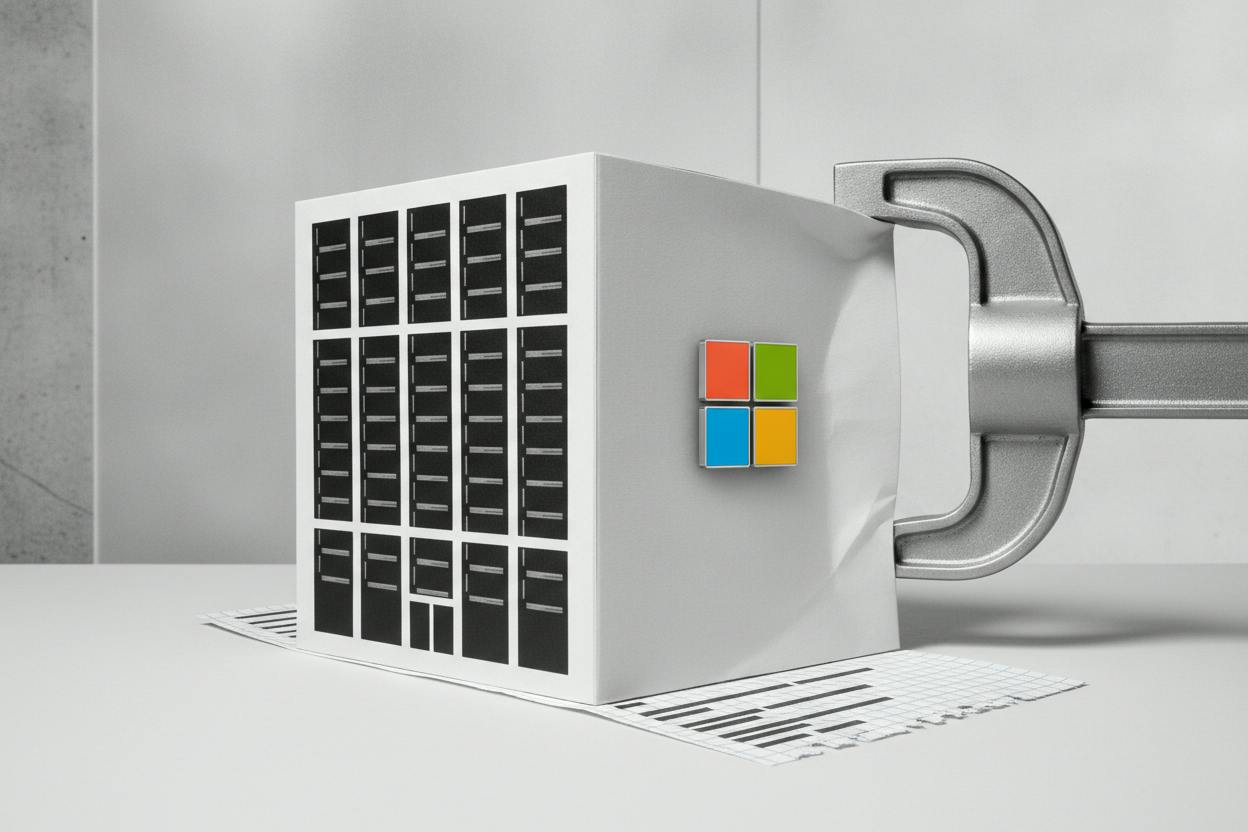
Microsoft is tightening its approach to so-called neocloud data center partners, according to a Bloomberg report, signaling a more cautious stance on the companies that provide the massive computing power behind the AI boom. The software giant is reportedly reconsidering new agreements and has decided not to expand its contract with Nscale, a neocloud provider, tied to a Texas facility.
Neoclouds are a newer breed of data center operators that specialize in renting out high-performance computing capacity, often powered by Nvidia's GPUs, to AI developers and enterprises. Unlike traditional cloud giants like Microsoft's Azure or Amazon Web Services, neoclouds focus on raw compute power rather than a full suite of cloud services. They have become critical to the AI supply chain, but they also carry significant financial and operational risks.
Why Microsoft is pulling back
The decision to step back from Nscale and other potential deals suggests Microsoft is becoming more selective about which partners it trusts with its AI infrastructure needs. Bloomberg's report indicates the company is worried about the financial stability and execution capabilities of some neocloud providers, which often rely on heavy debt to build out their data centers.
This is not an isolated move. Across the industry, there has been growing pushback on data center buildouts, from local communities concerned about power and water usage to investors questioning the massive capital spending. Microsoft itself has faced scrutiny over its own data center expansion plans, and the company appears to be applying that same caution to its external partnerships.
The Nscale contract, which was tied to a Texas site, will not be expanded, according to Bloomberg. That means Microsoft will not commit additional capacity or funding to that particular project, even as it continues to work with other providers.
What this means for the neocloud market
Neocloud companies have been on a growth tear, fueled by demand for AI training and inference. But they operate on thin margins and are highly sensitive to interest rates and equipment costs. When a major customer like Microsoft pulls back, it can send ripples through the sector.
Investors have already been jittery about data center economics. Political and regulatory headwinds have also emerged, with some towns and states pushing back on new facilities. The broader market has started to question whether the AI buildout can sustain its pace, and Microsoft's move adds to that uncertainty.
For neocloud providers, the challenge is twofold: they need to secure long-term contracts to justify their capital spending, but they also need to prove they can deliver reliably. Microsoft's caution could make it harder for smaller players to land deals, potentially leading to consolidation in the sector.
What it means for investors
For everyday investors, this news is a reminder that the AI boom is not without its risks. While big tech companies like Microsoft continue to invest heavily in AI, they are also becoming more disciplined about where they put their money. That could mean slower growth for some data center stocks, but it could also be a sign that the industry is maturing.
If you own shares in neocloud companies or data center REITs, it's worth watching how they respond to this shift. Companies that can demonstrate strong balance sheets and reliable operations may be better positioned than those that rely on a handful of big customers.
Microsoft's decision also highlights the importance of due diligence. Just because a company is a partner to a tech giant doesn't guarantee stability. The tech giant itself is now questioning those relationships.
Looking ahead, investors will likely focus on whether other hyperscalers follow Microsoft's lead. If Amazon, Google, or Meta also tighten their neocloud deals, it could signal a broader cooling in the AI infrastructure market. On the other hand, if Microsoft's caution is specific to Nscale and a few others, the impact may be limited.
For now, the takeaway is clear: the era of easy money for data center startups may be ending. As the industry matures, expect more scrutiny, more selective partnerships, and a greater emphasis on financial health. That's a shift that could ultimately benefit the strongest players, but it will likely leave some smaller companies struggling to keep up.