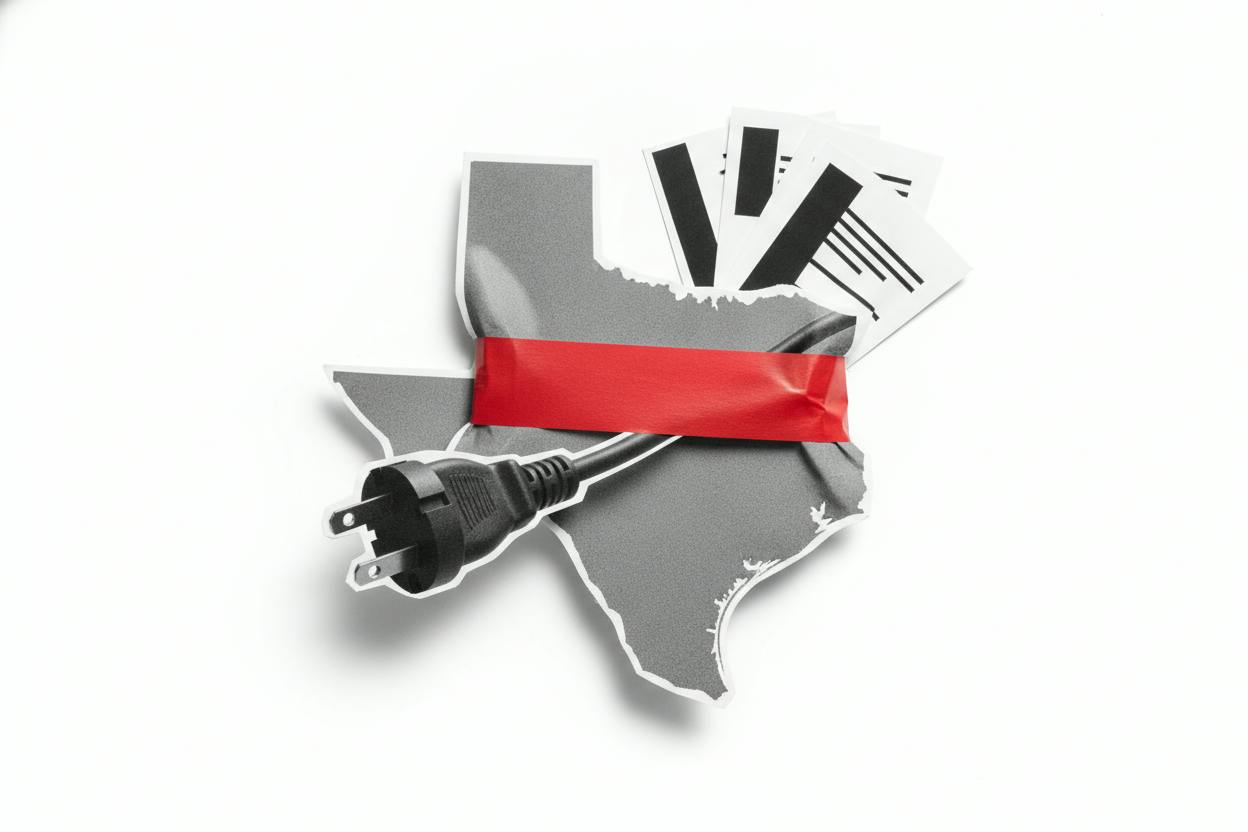
Texas, the epicenter of America's data-center construction boom, may be about to tap the brakes. Analysts warn that a permit freeze in the state could be extended and oversight tightened, potentially delaying projects tied to roughly a quarter of all planned US data-center capacity. The move, driven by local political dynamics, threatens to slow the artificial-intelligence buildout that has powered markets in recent years.
What's happening in Texas?
Data centers—the massive warehouses full of servers that power cloud computing and AI models—need three things above all: land, permits, and enormous amounts of electricity. In Texas, the permitting process has become a political flashpoint. Recent elections brought Democratic gains in several major data-center states, raising expectations of stricter regulatory scrutiny. In Texas, that has translated into talk of extending a freeze on new permits and adding tougher oversight requirements.
According to a Reuters factbox, Goldman Sachs estimates that Texas alone accounts for about 25% of planned US data-center capacity. That makes the state's regulatory climate a critical variable for the entire industry. If permits are delayed, construction timelines stretch, and the ripple effects are felt far beyond Texas.
Why this matters for the AI buildout
The AI boom has driven a surge in demand for data centers. Companies like Microsoft, Amazon, and Google have been pouring billions into new facilities to handle the computing needs of AI models. But the buildout is not just about the tech giants—it also supports a vast ecosystem of suppliers, from electrical equipment makers to construction firms and chip designers.
Morgan Stanley, cited in the brief, says the biggest near-term risk lands on companies that sell the equipment and services that go into data centers. These firms have been riding high on the AI wave, and any slowdown in construction could hit their revenue forecasts. The warning echoes a broader market concern: that the AI trade, which has driven much of the stock market's gains, may be more fragile than it appears.
Investors have already shown sensitivity to data-center politics. Democrats' midterm win hit AI and data-center stocks earlier this year, as markets priced in the possibility of stricter regulation. More recently, Nasdaq futures slipped as data-center pushback threatened the AI buildout, underscoring how quickly sentiment can shift.
What it means for investors
For everyday investors, the key takeaway is that the AI story is not just about technology—it's also about politics and regulation. Data centers are physical infrastructure, and they are subject to local zoning laws, environmental reviews, and community opposition. When a state like Texas, which has been a magnet for data-center investment, tightens the rules, it can have outsized effects.
The delay risk is not just for the companies directly building data centers. It also affects the suppliers that have become market darlings. For example, Legrand raised its 2026 forecast again as AI data centers drove sales, showing how dependent some firms are on the construction pipeline. If that pipeline slows, those forecasts could be at risk.
On the other hand, some companies are already adjusting. Microsoft pulled back on neocloud data-center deals and tightened terms, a sign that even the biggest players are becoming more cautious. And OpenAI dropped NDAs with towns as voters pushed back on data centers, indicating a broader shift toward community engagement.
What to watch next
The immediate question is whether Texas will actually extend the permit freeze and how strict the new oversight will be. Analysts will be watching for any official announcements from state regulators. Also on the radar: whether other states follow Texas's lead. If the political mood turns against data centers in multiple states, the cumulative effect on the AI buildout could be significant.
For now, the market is treating this as a risk to be monitored rather than a full-blown crisis. But the warning from analysts is clear: the AI buildout is not immune to politics. Investors who have piled into AI-related stocks should be aware that regulatory headwinds can emerge from unexpected places, and that the path to a data-center-powered future may have more roadblocks than the tech bulls anticipate.
As always, diversification and a long-term perspective are prudent. The AI trend is likely to continue, but the ride may be bumpier than the straight-line growth that recent stock charts suggest.