Canadian miner Millennial Potash says it may start its Banio potash project in Gabon at a larger scale than originally planned, as it lines up funding and gauges buyer interest. The company is now weighing an initial production capacity of 1 to 1.2 million tons per year, up from the 800,000 tons previously envisioned.
The project is still in the development stage. Millennial is running a definitive feasibility study—a detailed technical and financial blueprint that determines whether a mine is viable—alongside environmental and social impact assessments. Part of that work is backed by a $3 million commitment from the US International Development Finance Corporation (DFC), a US government agency that supports private investment in developing countries.
What is potash and why does it matter?
Potash is a key ingredient in many fertilizers, helping crops grow by supplying potassium, an essential nutrient for plant health. Global demand for potash is closely tied to population growth and food production, and prices can swing with agricultural cycles and geopolitical events. For everyday investors, potash is a commodity play: its price and the fortunes of producers are influenced by global supply, trade policies, and weather patterns affecting harvests.
Banio is located in Gabon, a Central African country that is not currently a major potash producer. If developed, it would add a new source of supply to a market dominated by a handful of large players, including companies in Canada, Russia, and Belarus. New entrants often face challenges in securing financing and long-term sales contracts, but a larger initial capacity could help attract buyers and improve the project's economics.
What the bigger start-up means
Raising the planned output from 800,000 to 1-1.2 million tons a year is a significant step. It suggests that Millennial sees enough demand to justify a larger investment, which could also make the project more attractive to lenders and future partners. However, a bigger mine also means higher upfront capital costs and more complex logistics, especially in a region where infrastructure may be limited.
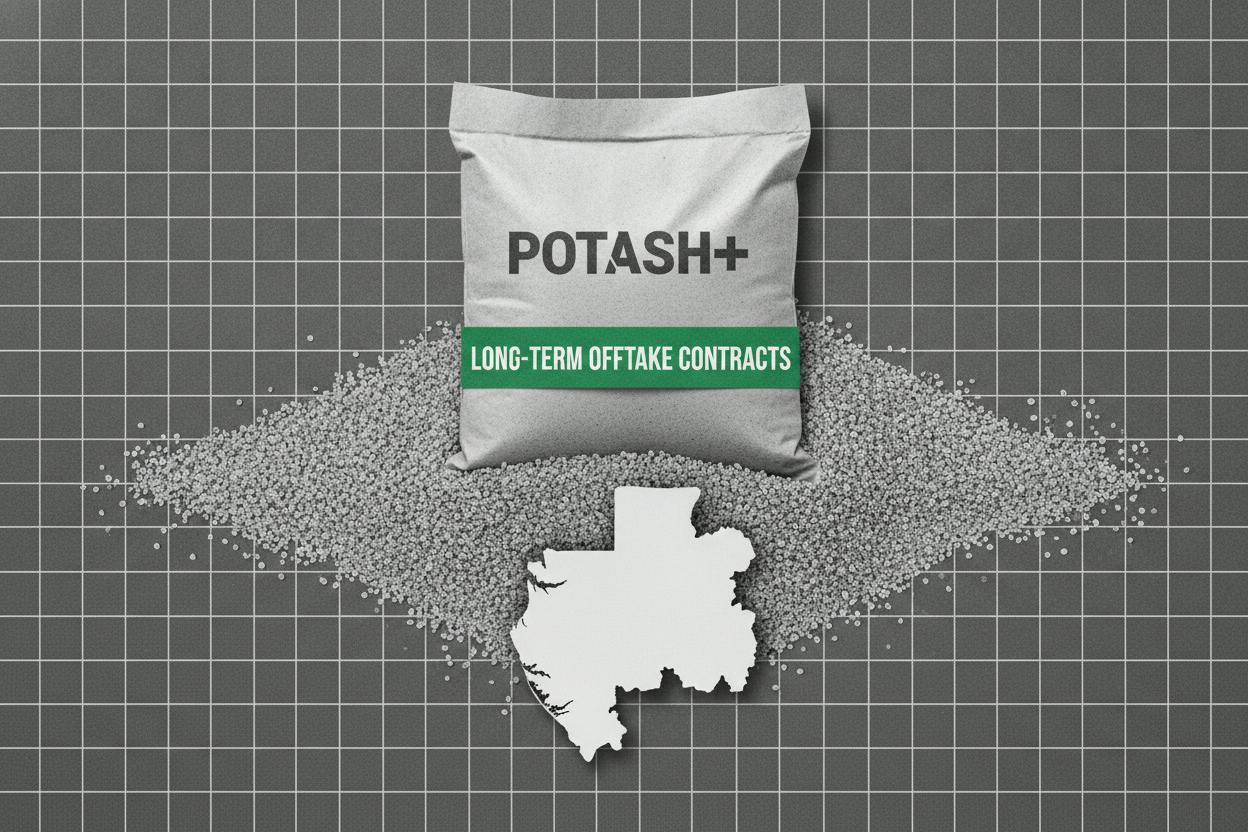
The company says buyer interest is a key factor behind the potential expansion. In the mining industry, securing offtake agreements—contracts with buyers to purchase a portion of future production—is often crucial to getting a project financed. Strong interest from potential customers can give lenders confidence that the mine will have a market for its output.
Construction is targeted for late 2027 or early 2028, which means the project is still several years away from producing any potash. That timeline is typical for large mining projects, which must clear permitting, financing, and engineering hurdles before breaking ground.
What it means for investors
For investors, Millennial Potash is a speculative, early-stage opportunity. The company has no revenue yet and its value depends on the successful development of Banio. The potential expansion is positive news, but it is far from a sure thing. The definitive feasibility study will provide a clearer picture of costs, reserves, and projected returns, but it is not yet complete.
The involvement of the US DFC adds a layer of credibility, as it signals that a government-backed institution sees merit in the project. However, that $3 million commitment is a small fraction of what a mine of this scale would ultimately cost.
Investors should also consider the broader context. Potash prices have been volatile in recent years, influenced by trade disruptions and shifts in global agriculture. A new mine in Gabon would add supply, but it would also face competition from established producers with lower costs and existing customer relationships.
For those watching the sector, the key milestones to track are the completion of the feasibility study, any offtake agreements, and progress on financing. Each of these will provide clues about whether Banio can move from paper to production.
In the meantime, Millennial's announcement is a reminder that mining projects are long-term bets. The timeline to construction is still years away, and many things can change between now and then—including commodity prices, political conditions in Gabon, and the company's ability to raise the necessary capital.
As with any early-stage miner, the risk is high, but so is the potential reward if the project comes to fruition. Investors should weigh that risk against their own portfolio goals and risk tolerance.