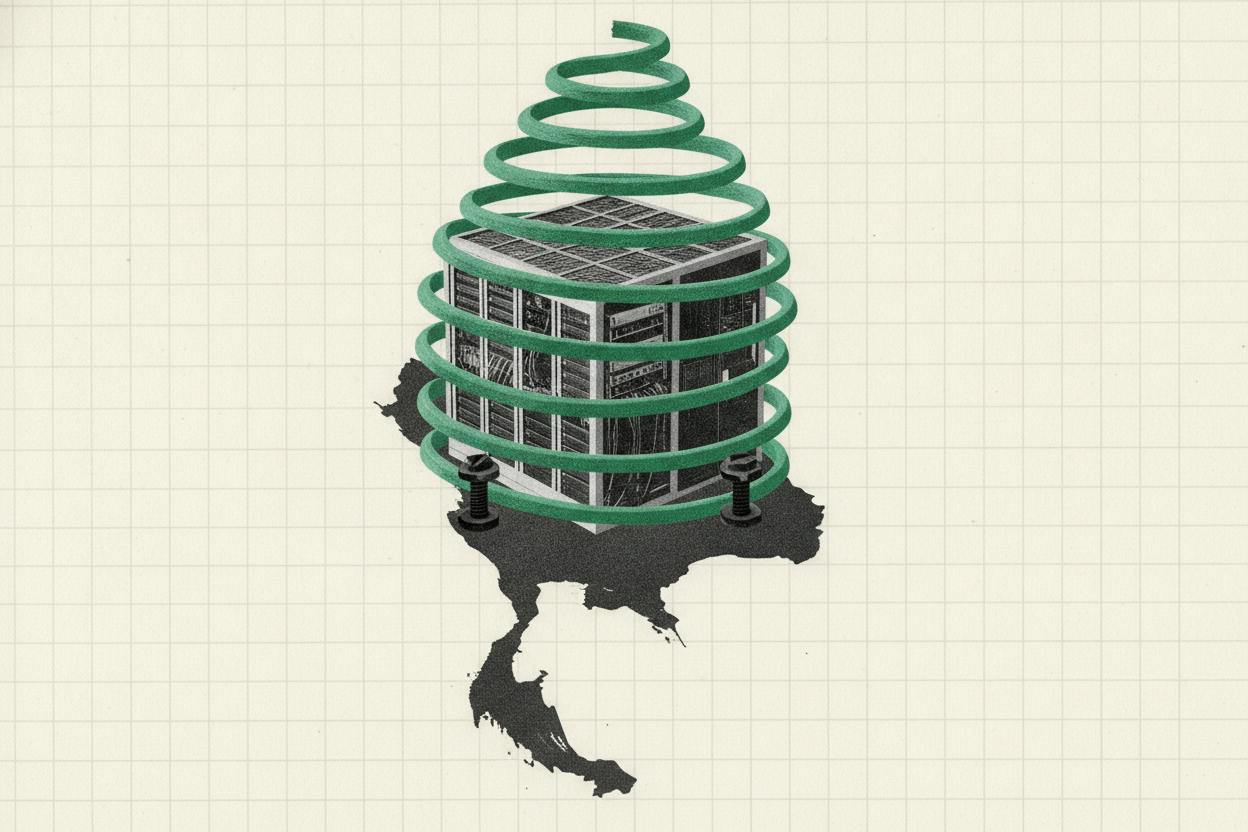
Thailand is moving to tighten the rules governing data centers, a step that could reshape how the country positions itself as a regional digital-infrastructure hub. Officials have outlined plans for seven tiers of regulation, determined by how much power a facility draws, with new applications expected to open in early 2027.
The framework adds baseline requirements covering location, fuel storage, and water use—areas that have become increasingly sensitive as data centers multiply across Southeast Asia. The move comes as governments worldwide grapple with the environmental and logistical footprint of the booming industry.
Why Thailand is acting now
Data centers are energy-hungry and resource-intensive. A single large facility can consume as much electricity as a small town, and cooling systems often rely on significant water supplies. By introducing tiered rules, Thai authorities appear to be trying to balance growth with sustainability—ensuring that new facilities meet minimum standards without scaring off investment.
The seven-tier structure, based on power demand, suggests a flexible approach. Smaller facilities might face lighter requirements, while the largest—those that strain local grids and water resources—would face stricter scrutiny. This mirrors trends in other markets where regulators are paying closer attention to the environmental impact of digital infrastructure.
Thailand's ambition to become a regional hub is not new. The country has courted tech investment for years, and its central location, relatively developed infrastructure, and growing internet economy make it an attractive base. But competition is fierce, with neighbors like Singapore, Malaysia, and Indonesia also vying for a slice of the data center boom.
What the new rules could cover
While the brief does not specify exact thresholds, the mention of location, fuel storage, and water use points to several likely requirements. Location rules might restrict building in flood-prone areas or near sensitive ecosystems. Fuel storage standards would address the diesel generators that back up most data centers, which can pose fire and environmental risks. Water use rules would target cooling systems, which can strain local supplies.
These are not new concerns. In other parts of the world, data center developers have faced pushback over water consumption and emissions. By setting clear baseline rules, Thailand may be trying to avoid such conflicts while still attracting investment.
The timeline is notable: applications opening in early 2027 gives the industry time to adapt. It also signals that the rules are not an emergency measure but a deliberate, forward-looking policy.
What it means for investors
For everyday investors, this is a story about regulatory risk and opportunity. Companies that build and operate data centers—whether in Thailand or elsewhere—could face higher compliance costs if they need to meet stricter standards. That could squeeze margins, especially for smaller operators.
On the other hand, clear rules can reduce uncertainty. Investors often prefer predictable regulation over a patchwork of ad hoc decisions. If Thailand's framework is seen as sensible and business-friendly, it could make the country more attractive to global tech firms and their financiers.
The broader context matters too. Data centers have become a hot investment theme, driven by the explosion in artificial intelligence and cloud computing. Demand for data center capacity has lifted sales for companies across the supply chain, from electrical equipment makers to construction firms. But that growth has also exposed bottlenecks, particularly around power. Power shortages have already delayed some AI server rollouts, and regulators are increasingly in the spotlight.
Thailand's move is part of a global trend. Governments from Europe to Asia are updating rules for digital infrastructure, often with an eye on energy and water. Regulators elsewhere are also trying to balance oversight with growth, though in different sectors.
For investors, the key takeaway is that data center growth is no longer just a technology story—it's also an infrastructure and policy story. Companies that can navigate new rules efficiently may thrive, while those that lag could face delays or higher costs.
Thailand's seven-tier system, with its focus on power demand, suggests that energy will be a central battleground. Financing for AI data centers has become a major theme, and power availability is often the limiting factor. As more countries impose requirements, the cost of compliance will likely factor into project economics.
For now, the details remain sketchy. Investors should watch for the final rules, expected before applications open in 2027. The specifics—such as exact power thresholds, location restrictions, and water-use limits—will determine how much impact the regulations have on existing and planned projects.
In the meantime, the announcement is a reminder that the data center boom is entering a new phase, one where governments are setting the terms. For Thailand, the challenge is to attract investment while protecting its resources. For investors, the challenge is to understand which companies are best positioned to thrive under the new rules.