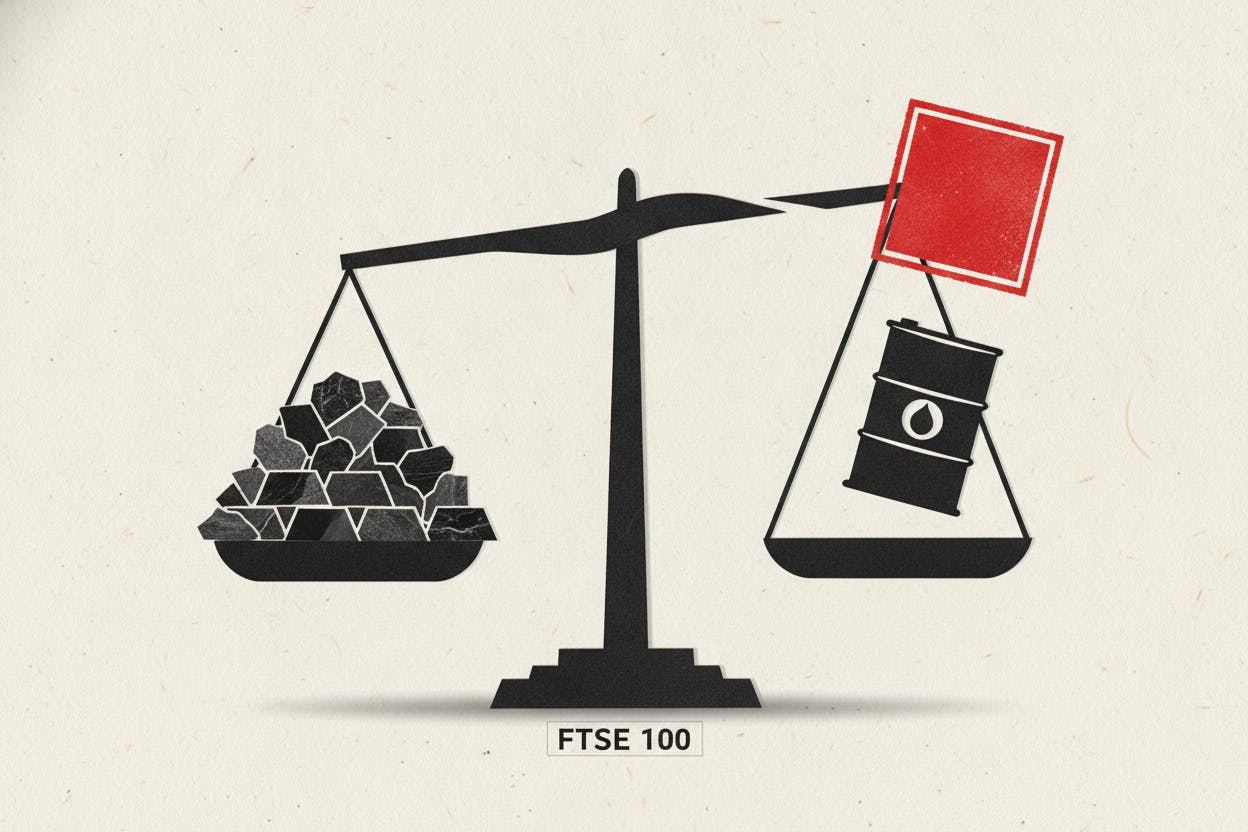
London's FTSE 100 edged up on Tuesday, with mining heavyweights leading the gains while oil majors slipped as investors braced for potential US sanctions on Iran. The blue-chip index rose 0.2% in late morning trading, while the mid-cap FTSE 250 was flat, according to Reuters.
Rio Tinto and Anglo American both advanced, helped by firmer metal prices. Meanwhile, BP and Shell traded lower as crude prices softened on the day, even as geopolitical tensions in the Middle East remained in focus.
Why miners are moving
Mining stocks are sensitive to the prices of the metals they produce, from copper and iron ore to gold and platinum. When those prices rise, investors expect miners to earn more from each tonne they dig out of the ground, which tends to lift their share prices.
Tuesday's gains for Rio Tinto and Anglo American came as metal prices firmed, continuing a recent trend that has also supported miners in other markets. A similar pattern was visible in Australia, where a copper rally lifted miners and helped the ASX 200 edge higher.
For everyday investors, the message is straightforward: when commodity prices rise, mining stocks often follow. But that also means they can be volatile, as swings in global demand and supply can quickly change the outlook.
Oil giants under pressure
BP and Shell, two of the FTSE 100's largest companies, slipped as crude prices eased. Oil prices have been volatile in recent weeks, with traders weighing concerns about global demand against the risk of supply disruptions from the Middle East.
The expected US sanctions on Iran are a key factor. Washington has signaled it may target countries and companies that trade with Iran, which could tighten global oil supply and push prices higher. But on Tuesday, the market seemed to take a more relaxed view, with crude trading lower.
Sanctions on Iran are not new. The US has reimposed them in the past, and they have often led to short-term spikes in oil prices before the market adjusts. However, any escalation in the region could still disrupt shipping routes, particularly through the Strait of Hormuz, a critical passage for oil tankers.
For investors in energy stocks, the key question is how much oil prices will rise if sanctions are tightened. Higher oil prices generally boost the profits of producers like BP and Shell, but they can also hurt the broader economy by raising costs for consumers and businesses.
Geopolitics and markets
The FTSE's modest gain reflects a market that is cautiously optimistic but not complacent. Investors are watching for the exact details of the US measures, which could include restrictions on Iran's oil exports or penalties for countries that continue to buy Iranian crude.
Similar concerns have been rippling through other markets. In Asia, Indian stocks eyed a higher open but traders remained wary of the impact of sanctions on oil prices. In Europe, stocks edged lower as investors juggled the Iran situation with a busy earnings calendar.
The situation also has implications for emerging markets. In Africa, markets are eyeing the sanctions as they could affect oil-importing nations and those with trade ties to Iran.
What it means for investors
For the average investor, the day's moves are a reminder that markets are driven by a mix of company-specific news and broader geopolitical events. Mining stocks can offer a hedge against inflation, as metal prices often rise when the cost of living increases. But they also carry risk if global growth slows and demand for raw materials drops.
Energy stocks, meanwhile, are a classic 'value' play, but their fortunes are closely tied to the oil price. If sanctions on Iran lead to a sustained rise in crude, BP and Shell could benefit. But if the market sees the risk as overblown, they may continue to drift.
As always, diversification is key. Holding a mix of sectors—miners, energy, financials, and consumer goods—can help smooth out the bumps from any single geopolitical event.
The FTSE's steady performance on Tuesday suggests investors are taking a 'wait and see' approach. The next few days will likely bring more clarity on the sanctions, and with it, more direction for both the oil price and the broader market.



