Morgan Stanley has weighed in on Dell Technologies with a bullish take, calling the company the “best athlete” in enterprise hardware. The investment bank's optimism is rooted in two key trends: the current surge in AI server demand and the potential for a second wave of growth as more companies run AI workloads on their own premises rather than in the cloud.
The note comes ahead of a scheduled meeting with Dell's chief operating officer on September 22, which investors will be watching for updates on the company's AI strategy and order pipeline.
Why Dell stands out
Morgan Stanley's “best athlete” label reflects Dell's position across the enterprise hardware landscape. The company has been a major beneficiary of the AI infrastructure buildout, with its PowerEdge servers and storage arrays in high demand as businesses upgrade their data centers to handle AI workloads.
The bank pointed to Dell's latest earnings, which showed AI server orders continuing to build. This suggests that the initial wave of AI-driven spending is not slowing down, and that Dell is capturing a meaningful share of that market.
Beyond servers, Morgan Stanley highlighted storage as another tailwind. Industry data indicates that Dell is gaining share in the storage market, a segment that is often overlooked but is critical for AI because of the massive amounts of data that need to be stored and accessed quickly.
The on-prem AI angle
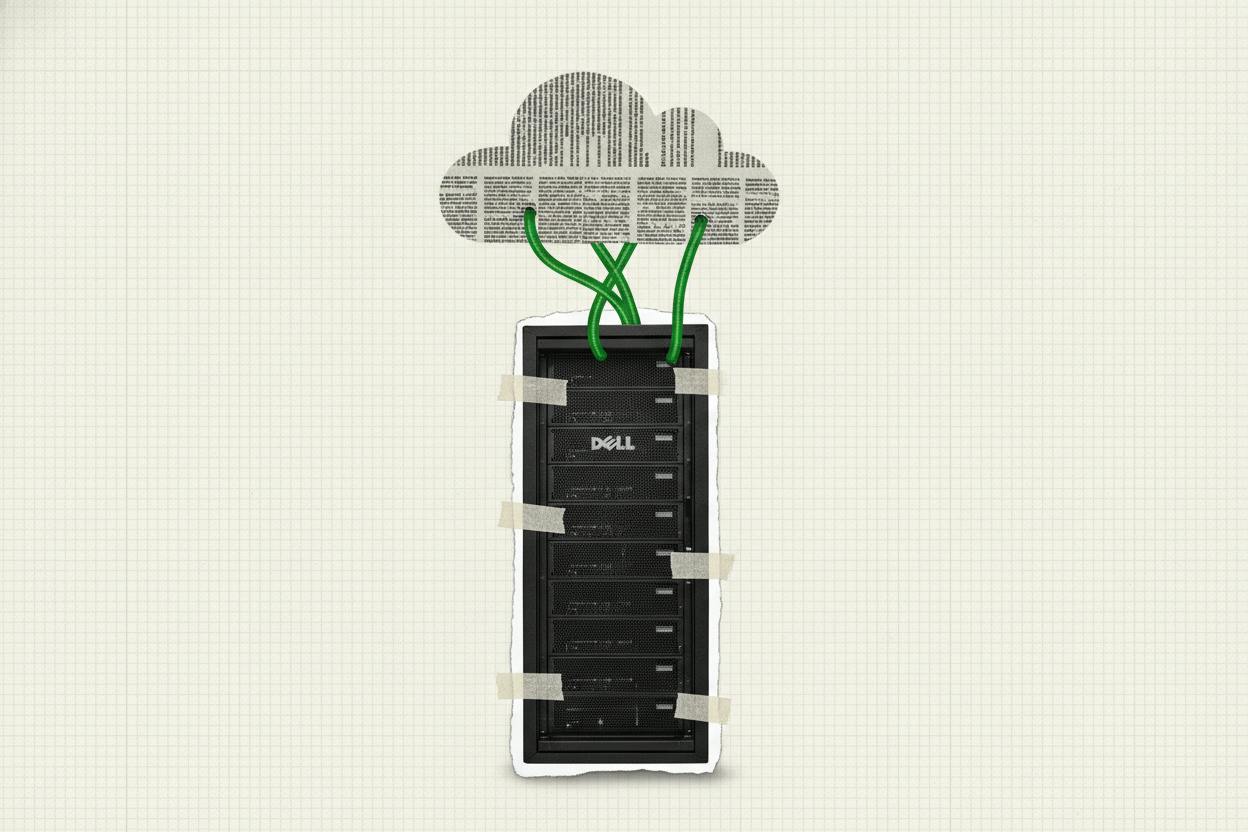
The more intriguing part of Morgan Stanley's thesis is the potential for “on-prem” AI. Most of the current AI boom has been driven by hyperscale cloud providers like Amazon Web Services, Microsoft Azure, and Google Cloud, which buy servers in bulk for their data centers. But many enterprises, especially those in regulated industries like finance and healthcare, are hesitant to send sensitive data to the cloud. They prefer to run AI models on their own hardware, behind their own firewalls.
If that preference becomes a broader trend, it could create a second leg of demand for Dell. The company has a strong presence in enterprise IT, with a large installed base of corporate customers. As those customers look to deploy AI, they are likely to turn to Dell for the servers, storage, and networking gear needed to do so.
This is not a new idea, but it is gaining traction. The rise of open-source AI models and the increasing availability of AI software that can run on-premises are making it more feasible for companies to keep their AI workloads in-house. Dell is well-positioned to benefit from this shift, given its established relationships and its broad portfolio of hardware and services.
What it means for investors
For everyday investors, the key takeaway is that Dell is not just a PC maker anymore. It has transformed into a key player in the AI infrastructure boom, and its stock has rallied significantly over the past year as a result.
However, it's important to remember that the AI hardware market is highly competitive. Dell faces rivals like Hewlett Packard Enterprise, Super Micro Computer, and the major cloud providers themselves, which also sell servers. Morgan Stanley's “best athlete” comment is a strong endorsement, but it is just one analyst's opinion.
Investors should also be aware that the AI server business can be volatile. Orders can be lumpy, and margins on AI servers are often thinner than on traditional enterprise hardware. Dell's storage business, which is more profitable, could provide a buffer if AI server margins come under pressure.
The upcoming COO meeting on September 22 could provide more color on Dell's AI pipeline and its outlook for the second half of the year. Investors will be listening for any signs that AI demand is slowing, or that Dell is losing share to competitors.
In the broader context, Dell's story is part of a larger trend of enterprise spending shifting toward AI. Companies are investing heavily in the infrastructure needed to train and run AI models, and that spending is likely to continue for the foreseeable future. For investors, that means companies like Dell that provide the “picks and shovels” for AI could see sustained demand.
But as with any investment, it's crucial to do your own research and consider the risks. The AI boom has already driven up valuations across the tech sector, and there is always the possibility that the market has gotten ahead of itself. Dell's stock is not cheap, and any disappointment in earnings or guidance could lead to a sharp pullback.
In the meantime, Morgan Stanley's bullish stance adds to the chorus of analysts who see Dell as a winner in the AI era. Whether that proves to be the case will depend on how well the company executes and how the broader AI market evolves.