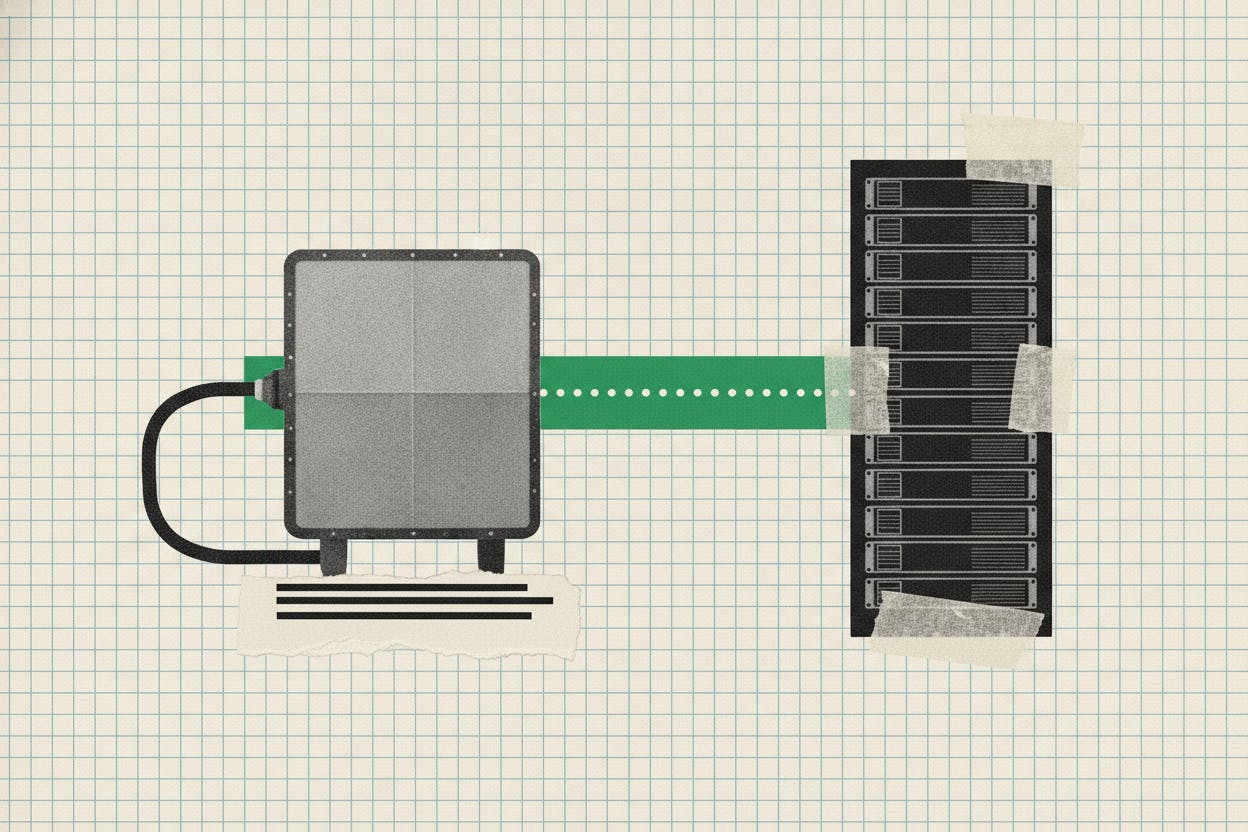
Nano Nuclear Energy said Monday it has signed a nonbinding commercial framework with Tillman Global, a US infrastructure firm, and its data-center platform Tillman Digital Gateway. The goal: explore using Nano Nuclear's KRONOS microreactors to power planned “AI industrial zones” in the United States.
The framework targets 2 gigawatts of advanced nuclear capacity by the mid-2030s. For scale, 2 gigawatts is roughly enough to power 1.5 million average American homes, or a cluster of large data centers. The agreement also includes warrants tied to $100 million in shares, giving Tillman the right to buy Nano Nuclear stock at a set price in the future.
What the framework actually does
This is not a purchase order. The framework is essentially a roadmap: the companies will start with site screening and feasibility studies, then move through licensing and development planning. Only later would they decide whether to actually build anything. That distinction matters because nonbinding deals don't guarantee sales, and markets often discount them until a contract locks in demand.
Still, the partnership signals how seriously big infrastructure players are taking the electricity needs of artificial intelligence. Data centers are power-hungry, and AI workloads are far more energy-intensive than traditional cloud computing. As data centers push farther from cities to find cheaper power, nuclear is emerging as a potential solution because it can run around the clock without emitting carbon.
Nano Nuclear's KRONOS is a microreactor design, a type of small modular reactor (SMR) that is still in development. Unlike traditional nuclear plants that take a decade or more to build, microreactors are meant to be smaller, factory-built, and quicker to deploy. But they are not yet commercially available, and they must clear rigorous safety reviews from the US Nuclear Regulatory Commission before they can power anything.
Why AI is driving the nuclear push
The demand for electricity from data centers is growing at a pace that has caught many utilities off guard. Tech giants are racing to build new AI capacity, and they need reliable, around-the-clock power. That has sparked a wave of interest in nuclear energy, from large reactors to smaller modular designs.
Other companies are also positioning for this boom. CoVolt Power recently filed for an IPO to ride the AI data center electricity wave, and Broadcom is reportedly weighing a $100 billion debt package as Nvidia eyes power and software deals. The message is clear: power is becoming a bottleneck for AI, and investors are paying attention.
The framework with Tillman is one of the more concrete steps yet by a microreactor developer to tie its technology to a specific data-center pipeline. Tillman Global is an infrastructure firm with experience in energy and digital projects, and its Tillman Digital Gateway arm is focused on data-center development.
What it means for investors
For everyday investors, this news is a reminder that the AI trade is no longer just about chipmakers. The companies that supply the electricity, cooling, and physical infrastructure for AI are becoming just as important. Firms that provide power infrastructure are seeing their fortunes tied to data center demand.
But it's also a cautionary tale about hype. Nonbinding frameworks are common in the energy sector, and many never turn into actual projects. The warrants give Tillman a stake in Nano Nuclear's upside, but they don't guarantee that a single reactor will be built. Licensing alone can take years, and the technology still has to prove itself.
Investors should watch for a few things: whether the companies move from feasibility to a binding contract, whether Nano Nuclear's microreactor design clears regulatory hurdles, and whether the 2-gigawatt target holds up as the timeline stretches toward the mid-2030s. Until then, treat this as an exploratory step, not a done deal.
For those looking at the broader picture, the deal underscores a growing consensus: AI's future depends on power, and nuclear is one of the few sources that can deliver it at scale without emissions. That's why even nonbinding agreements like this one are generating attention.