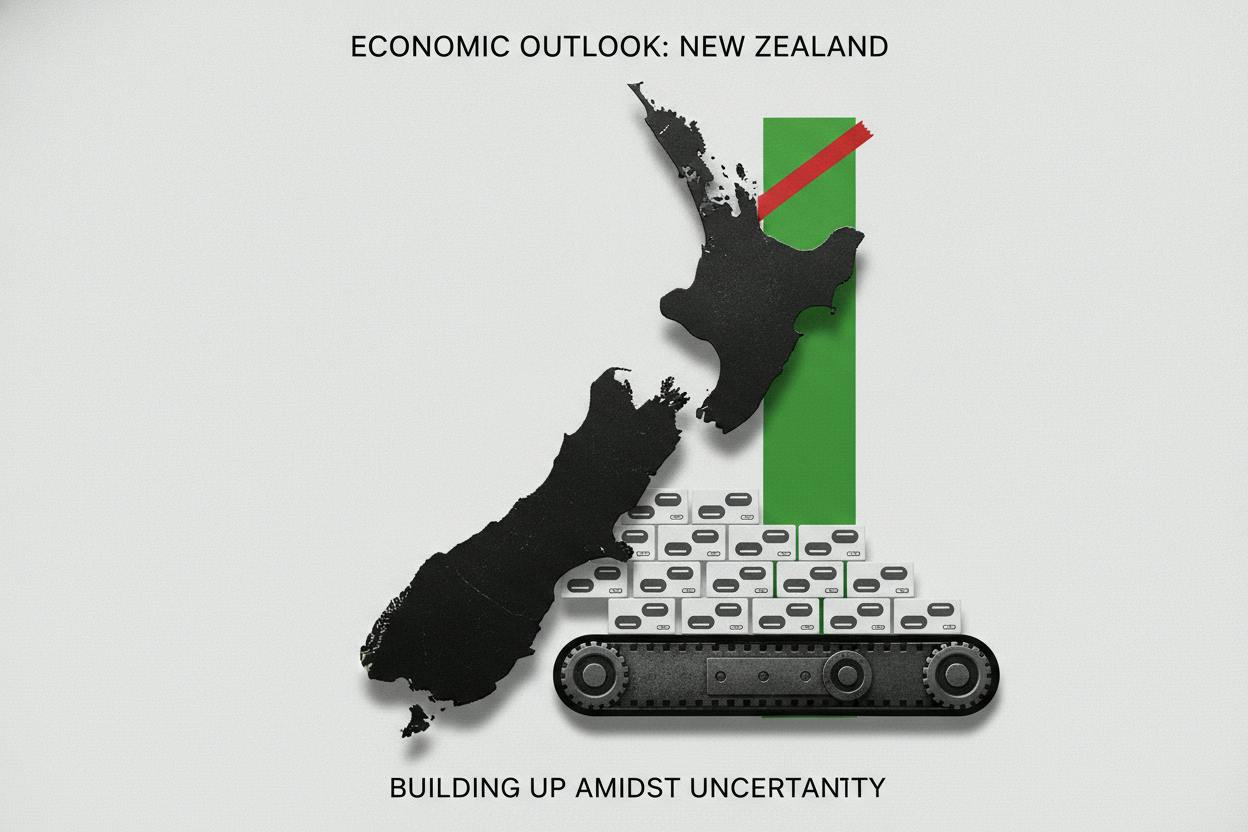
New Zealand's factories picked up the pace in September, with a key gauge of manufacturing activity climbing to its highest level in months. The BusinessNZ performance of manufacturing index (PMI) rose to 56.5, up from August's 53.3, extending a 15-month run of expansion even as election-related uncertainty weighed on business sentiment.
A reading above 50 signals that the manufacturing sector is growing, while a reading below 50 points to contraction. September's figure was comfortably above the survey's long-term average of 52.5, indicating that the sector is not just growing, but growing faster than its historical norm.
What's driving the gains?
The strongest contributions came from the supply-chain side of the business. Finished-goods inventories climbed to 59, and supplier deliveries improved to 58.8, both well into expansion territory. Production and new orders also rose, each hitting 57, suggesting that the build-up in stockpiles was a sign of stronger activity rather than a pile-up of unsold goods.
That combination—rising orders, production, and inventories—points to a manufacturing sector that is humming along. Businesses appear to be restocking in response to demand, and suppliers are keeping up with the flow of goods.
Still, the survey noted that election uncertainty weighed on sentiment. With a general election looming, some firms held back on long-term commitments, even as day-to-day operations remained brisk. This is a common pattern in economies facing political transitions, as businesses wait for clarity on policy before making big investment decisions.
What this means for the broader economy
Manufacturing is a relatively small slice of New Zealand's economy, but it is a bellwether for broader business conditions. A sustained expansion in factory activity suggests that the domestic economy retains some momentum, even as global growth slows and inflation pressures persist.
The PMI data also feeds into the Reserve Bank of New Zealand's thinking. Stronger economic activity could give the central bank more room to keep interest rates higher for longer, as it tries to bring inflation back to its target range. Conversely, if the election uncertainty leads to a slowdown in business investment, that could cool the economy and ease the pressure on policymakers.
For everyday investors, the PMI is a useful gauge of the economy's health. A reading above 50 for 15 straight months is a positive sign, but the election-related caution is a reminder that political events can create short-term wobbles in business confidence.
What to watch next
Investors will be watching the election outcome and its aftermath for clues about fiscal policy, trade, and regulation. A clear result could lift business confidence and encourage firms to release pent-up investment plans. A prolonged or contested outcome could keep sentiment subdued.
Also on the radar are inflation figures and central bank policy. New Zealand has been battling high inflation, and the Reserve Bank has raised rates aggressively over the past year. If manufacturing strength translates into broader price pressures, the central bank may need to keep rates elevated, which could weigh on stocks and property prices.
For those with exposure to New Zealand equities, the PMI data is a modest positive. It suggests that the industrial and materials sectors are holding up, even as other parts of the economy show signs of strain. However, the election uncertainty means that investors should brace for potential volatility in the coming weeks.
In the meantime, the global backdrop remains mixed. Recent data from the United States showed inflation running hotter than expected, which has raised the odds of further Federal Reserve rate hikes. That could spill over into New Zealand via currency movements and capital flows. Meanwhile, New Zealand stocks have shown resilience even as Asian markets slipped on the US inflation news.
For now, the manufacturing sector's resilience is a bright spot. But with an election on the horizon and global inflation still a concern, the path ahead is far from smooth.