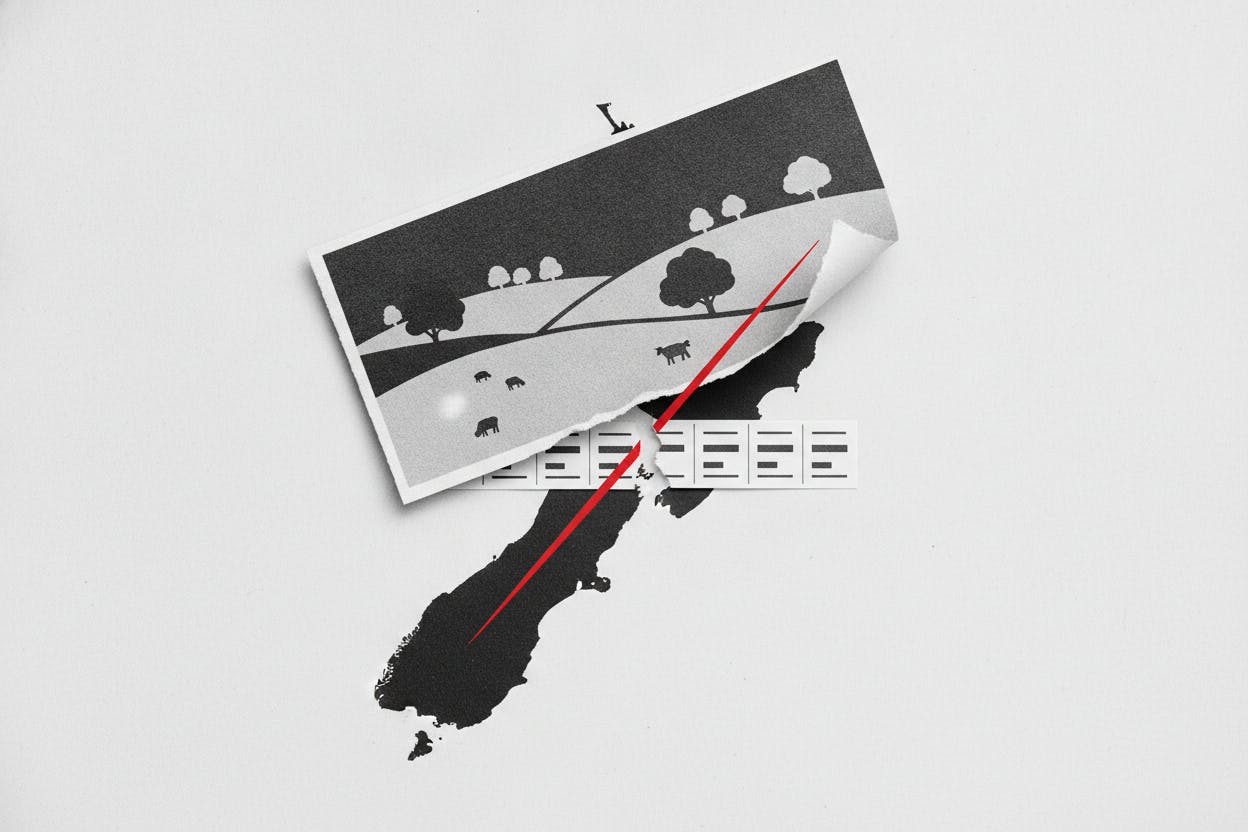
New Zealand Rural Land, a listed owner of agricultural properties, has pulled its fiscal 2026 earnings guidance after a major tenant walked away from its Hawke's Bay leases, leaving NZ$300,000 in unpaid rent as of June 30th.
The company disclosed in a filing to the NZX on Wednesday that Kiwi Crunch Farms had vacated the Hawke's Bay sites "effective immediately" after its receiver stepped in. The properties are held within the New Zealand Rural Land Investments Limited Partnership, in which the company owns a 75% stake.
What Happened
Kiwi Crunch Farms, which operated on the leased land, abruptly exited the properties without notice, triggering a default on its rental obligations. The NZ$300,000 in unpaid rent represents a significant shortfall for the partnership, which now faces the task of finding new tenants or selling the sites.
The company's decision to withdraw its fiscal 2026 guidance reflects the uncertainty created by the sudden loss of rental income. Guidance is a forward-looking estimate of financial performance that companies provide to help investors set expectations. When a material event like this occurs, pulling guidance is a standard way to signal that previous forecasts are no longer reliable.
New Zealand Rural Land said it is evaluating options for each property, including re-leasing the land to new agricultural operators or selling the sites outright. The outcome will depend on market conditions and the specific characteristics of each property.
Broader Context
The news comes against a backdrop of persistent inflationary pressures in New Zealand. Recent data showed the country's inflation rate remains elevated at 4.1%, driven in part by rising fuel costs. High inflation has squeezed farm operators, who face higher input costs for fertilizer, feed, and transportation, while also dealing with fluctuating commodity prices.
New Zealand's agricultural sector has been under strain from a combination of rising interest rates, which increase borrowing costs for farmers, and softer global demand for some exports. The country's stock market has also been volatile, with New Zealand stocks dipping recently as geopolitical tensions and sticky inflation rattled investor sentiment.
For listed farmland owners like New Zealand Rural Land, tenant defaults are an inherent risk. The company's business model relies on leasing agricultural land to operators who generate income from farming. When a tenant fails, the landlord must absorb the lost rent and bear the costs of finding a replacement or selling the property.
What It Means for Investors
For everyday investors, this event highlights the risks associated with real estate investment trusts and farmland-focused companies. While these assets can provide steady rental income and potential capital appreciation, they are not immune to tenant troubles.
The withdrawal of guidance means investors have less visibility into the company's near-term earnings. Without a clear forecast, analysts and shareholders will need to wait for the next update to assess the financial impact. The company's ability to quickly re-lease or sell the Hawke's Bay properties will be a key factor in determining how much the default ultimately costs.
Investors should also consider the broader economic environment. Persistent inflation and high interest rates in New Zealand could make it harder for the company to find new tenants willing to pay comparable rents. If the properties remain vacant for an extended period, the lost income could weigh on the company's earnings and potentially its share price.
On the other hand, if the company successfully re-leases the sites at similar or better terms, the impact may be temporary. The NZ$300,000 in unpaid rent is a relatively modest sum for a listed company, but the uncertainty around future income is what prompted the guidance withdrawal.
For context, other companies have recently adjusted guidance due to changing conditions. For example, Northrop Grumman lifted its guidance after a record backlog, while Belimo's strong first half failed to impress as its 2026 guidance disappointed. In New Zealand, the local stock market has been navigating a tricky environment of inflation and geopolitical risks.
Investors in New Zealand Rural Land will be watching closely for updates on the Hawke's Bay properties. The company's next move—whether to lease or sell—will signal its confidence in the agricultural market and its ability to recover from this setback.